Lonza has raised its full-year margin outlook after reporting first-half sales of CHF3.4 billion, supported by demand across biologics, drug products, bioconjugates, microbial manufacturing, and small molecules.
Sales from continuing operations increased by 16% at constant exchange rates and 11.2% at actual rates. Core earnings before interest, tax, depreciation, and amortisation reached CHF1.2 billion, producing a margin of 34.8%.
During the period, the company generated CHF0.4 billion of free cash flow and recorded double-digit constant-currency sales growth across each of its three principal business platforms. Mammalian biologics produced the largest absolute increase, while advanced synthesis and specialised modalities delivered particularly strong percentage growth.
Lonza has upgraded its full-year core EBITDA margin guidance to between 33% and 34%, compared with its earlier expectation of more than 32%. The sales forecast remains unchanged at growth of 11% to 12% at constant exchange rates.
Management expects growth and profitability to be less heavily weighted towards the second half because of project phasing, product mix, and a stronger comparison with the previous year. Foreign exchange will also create a sales headwind if mid-July rates persist.
A large-scale mammalian biologics asset at Visp entered commercial service during the first half, adding production capacity for medicines manufactured using mammalian cell culture. The process remains one of the principal industrial routes for monoclonal antibodies and other complex protein therapies.
Lonza is also expanding payload-linker manufacturing at Visp for antibody-drug conjugates and will add another commercial-scale aseptic filling line at Stein. Backed by a long-term customer agreement, the Stein line is expected to begin operating in 2030.
Antibody-drug conjugates combine a targeting antibody with a highly potent therapeutic payload through a chemical linker. Their manufacture brings together biological production, payload synthesis, linker chemistry, conjugation, purification, containment, analytical testing, and aseptic filling.
Outsourcing concentrates specialist production
Pharmaceutical companies continue to assess which capabilities should remain internal and which should be placed with contract development and manufacturing organisations. Complex therapies require specialist facilities, quality systems, and experienced employees that may be difficult to justify for a single product.
Using an established manufacturer provides access to process equipment, analytical methods, regulatory experience, and qualified operating systems, while transferring part of the capital requirement away from the drug developer. Capacity still has to be reserved early enough to avoid delays as products progress through clinical development.
Lonza’s investment programme increasingly combines several stages of the manufacturing route within a coordinated network. A customer developing an antibody-drug conjugate may require antibody manufacture, chemical synthesis, conjugation, testing, formulation, and fill and finish before the medicine is ready for distribution.
Bringing those stages under connected management can reduce transfers between suppliers and clarify technical responsibility, although each operation retains distinct equipment, containment, cleaning, material-handling, and quality requirements.
Highly potent payloads demand stringent occupational controls, while biological products remain sensitive to contamination, temperature, shear, storage conditions, and handling. Connecting the processes therefore requires more than placing them at sites owned by the same organisation.
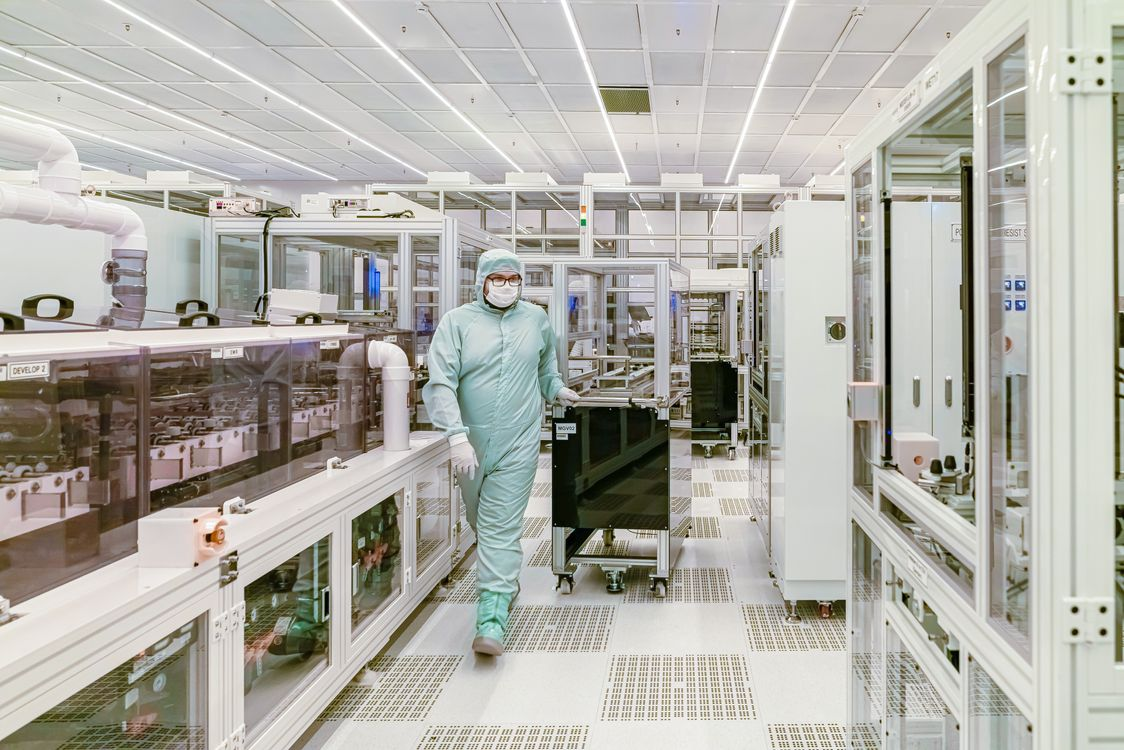
New capacity also moves gradually from construction into productive use. Equipment must be commissioned, utilities qualified, procedures approved, employees trained, customer methods transferred, and processes validated before regulated batches can be released.
The Visp mammalian asset beginning commercial operations represents the point at which a major capital project starts moving into routine production. Its contribution will depend on utilisation, batch success, customer scheduling, and the efficiency with which several products can be managed through the facility.
Capital spending is beginning to normalise after a period of rapid expansion, with CHF0.5 billion invested during the first half and some planned work shifting from 2026 into 2027. The group is simultaneously simplifying its portfolio through the proposed disposal of its Capsules and Health Ingredients business.
Completing that sale would leave Lonza more closely focused on contract drug development and manufacturing, concentrating investment on operations where technical barriers, regulatory requirements, and customer switching costs remain high.
Demand is still exposed to pharmaceutical funding cycles, clinical failures, inventory decisions, and the timing of regulatory approvals. Large facilities carry substantial fixed costs, making utilisation, project mix, and production reliability decisive to financial performance.
First-half demand is absorbing capacity as recent investments reach operation, while the Visp and Stein projects extend the company’s position in complex biologics and conjugated medicines. Sustained performance will require those assets to secure stable programmes while maintaining the quality and scheduling discipline expected across increasingly complicated products.