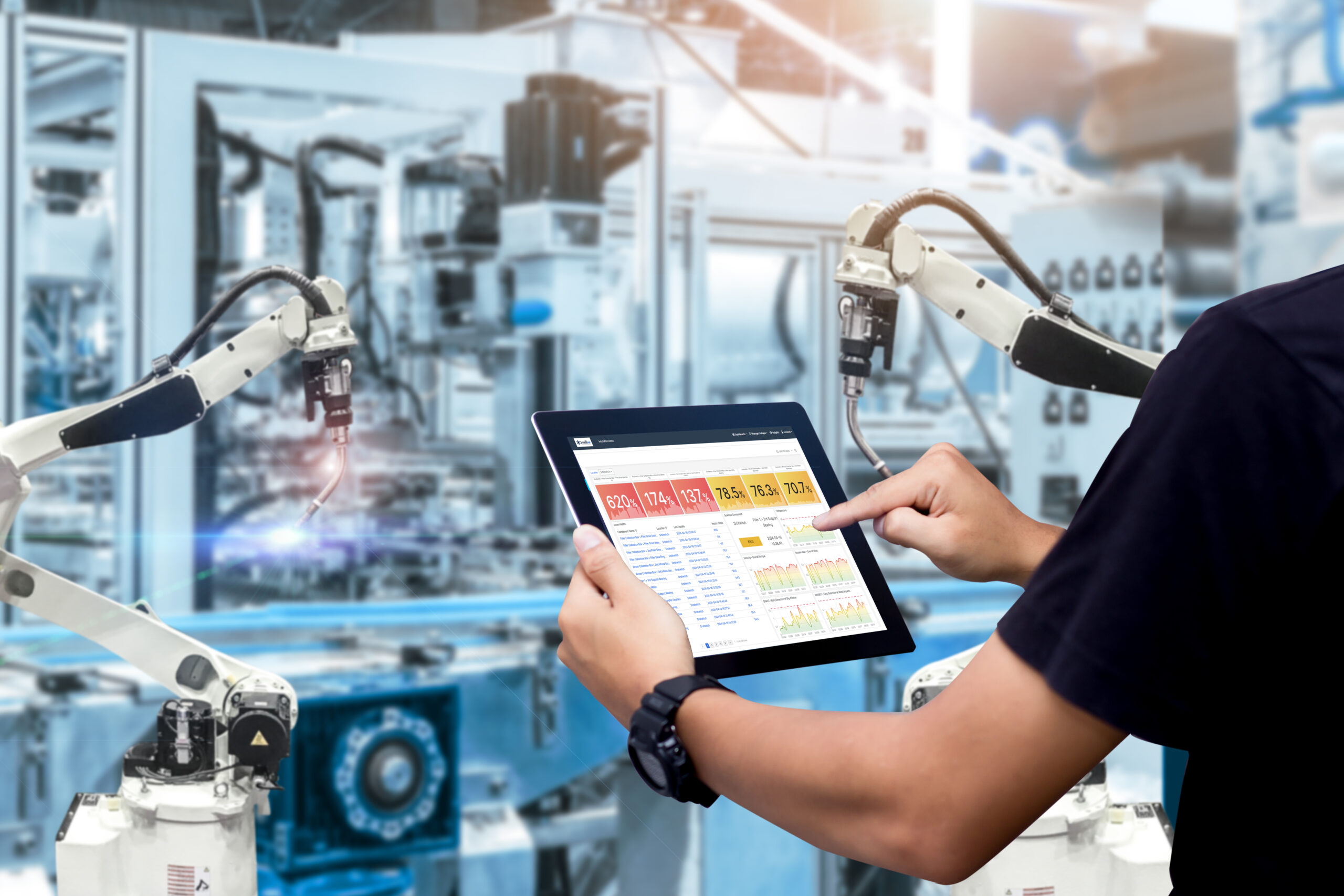
IntelliAM AI has launched Enigma, an agentic artificial intelligence layer designed to turn factory performance data into recommended or directly initiated operational actions.
Unveiled at the London Stock Exchange, Enigma becomes the third part of IntelliAM’s Industrial Intelligence Platform, joining IntelliAM 53 for the creation of trusted industrial data and Decipher for operational interpretation.
The complete system processes more than 16 billion industrial data points each year and has been developed around live manufacturing environments. Rather than relying solely on a general-purpose language model, it combines factory data with more than a decade of asset-management and production knowledge.
Enigma is intended to interpret production-line performance within its operating context. An agent can examine equipment condition, maintenance history, production priorities, and established engineering knowledge before recommending a response or initiating a controlled workflow.
Possible uses include investigating a developing equipment problem, prioritising maintenance activity, identifying a likely cause, or escalating an issue to the appropriate engineer. The level of autonomy can be limited according to the process, integration, permissions, and safety requirements established by each manufacturer.
IntelliAM works with half of the world’s twelve largest food and drink manufacturers and has developed the new layer through live deployments involving businesses including Müller, Hovis, and SKF.
At one Müller site, the company recorded a 215% improvement in mean time between failures over twelve months. The measure indicates that equipment operated substantially longer between breakdown events, although the total production benefit also depends on repair duration, output, product mix, and the criticality of the affected assets.
Agentic systems move beyond conventional predictive maintenance by linking an expected condition to a decision and workflow. A predictive model may identify that failure risk is increasing; an agent can combine that assessment with maintenance records, staff availability, production schedules, and operating instructions before determining what should happen next.
Factories frequently lose time because relevant information sits across separate systems or reaches the responsible person after the operating condition has changed. Automated investigation and workflow creation can shorten that delay, allowing engineers to concentrate on physical inspection, intervention, and process improvement.
Greater autonomy also raises the consequence of incorrect analysis. A poor recommendation can interrupt production, create unnecessary maintenance, or direct attention away from the actual fault, so every deployment requires defined boundaries around what the agent may perform independently and what remains subject to human approval.
Data quality determines whether those decisions reflect the physical process. Industrial datasets contain missing readings, inconsistent equipment names, product changes, maintenance interventions, altered operating modes, and instruments that drift or fail. A model can produce a confident but inaccurate response when those conditions are not recognised.
IntelliAM 53 provides the structured data layer beneath the platform, after which Decipher adds operational context and Enigma determines the appropriate response. The architecture reflects the growing recognition that industrial AI depends as much on data engineering and asset knowledge as on the underlying model.
Research into the gap between factory AI trials and mature deployment has shown that many manufacturers are experimenting with the technology while relatively few have integrated it consistently across operations. Legacy equipment, cyber controls, workforce trust, and responsibility for decisions continue to slow adoption.
Agentic AI intensifies those requirements because it interacts with maintenance systems, enterprise platforms, production databases, and potentially operational technology. Each connection grants permissions that must be limited, monitored, and recorded.
Direct write access to control systems requires particularly strict governance. Authentication, separation of duties, logging, rollback, safe-state behaviour, and human approval should be established before any agent is permitted to influence physical operation.
The platform is also intended to extend scarce engineering knowledge across shifts and sites. Experienced personnel often understand the history, sound, behaviour, and recurring weaknesses of a production line, but that knowledge can remain undocumented or unavailable when the individual is absent.
Capturing part of that expertise can improve consistency, provided the information is reviewed as machinery, materials, and operating practices change. Outdated guidance incorporated into an automated workflow can be more damaging than an incomplete maintenance record because it may be applied repeatedly.
Enigma’s commercial performance will be judged through sustained, auditable improvements across factories with different assets, products, systems, and working practices. The move from prediction towards action offers greater operational value, while placing data quality, engineering governance, and cybersecurity at the centre of industrial AI deployment.