Intel has committed €5bn to expand semiconductor manufacturing at its Leixlip campus in Ireland, increasing capacity for Xeon server processors produced on the Intel 3 process node.
The programme includes upgrades to existing fabrication space, installation of advanced production equipment, additional research and development work, and an extension of the automated track system that moves wafers and materials across the campus. Execution began earlier in 2026.
Leixlip currently employs around 4,900 people, and the latest programme is expected to support permanent high-technology roles alongside construction, facilities, and equipment-installation work. Intel says its cumulative investment in Ireland has exceeded €30bn since operations began there in 1989.
The additional capacity will support Intel Xeon 6 and future Xeon processors aimed at data centres, high-performance computing, and artificial intelligence infrastructure. Those markets are demanding more compute density, memory bandwidth, and energy efficiency, while customers expect suppliers to maintain product availability across long deployment cycles.
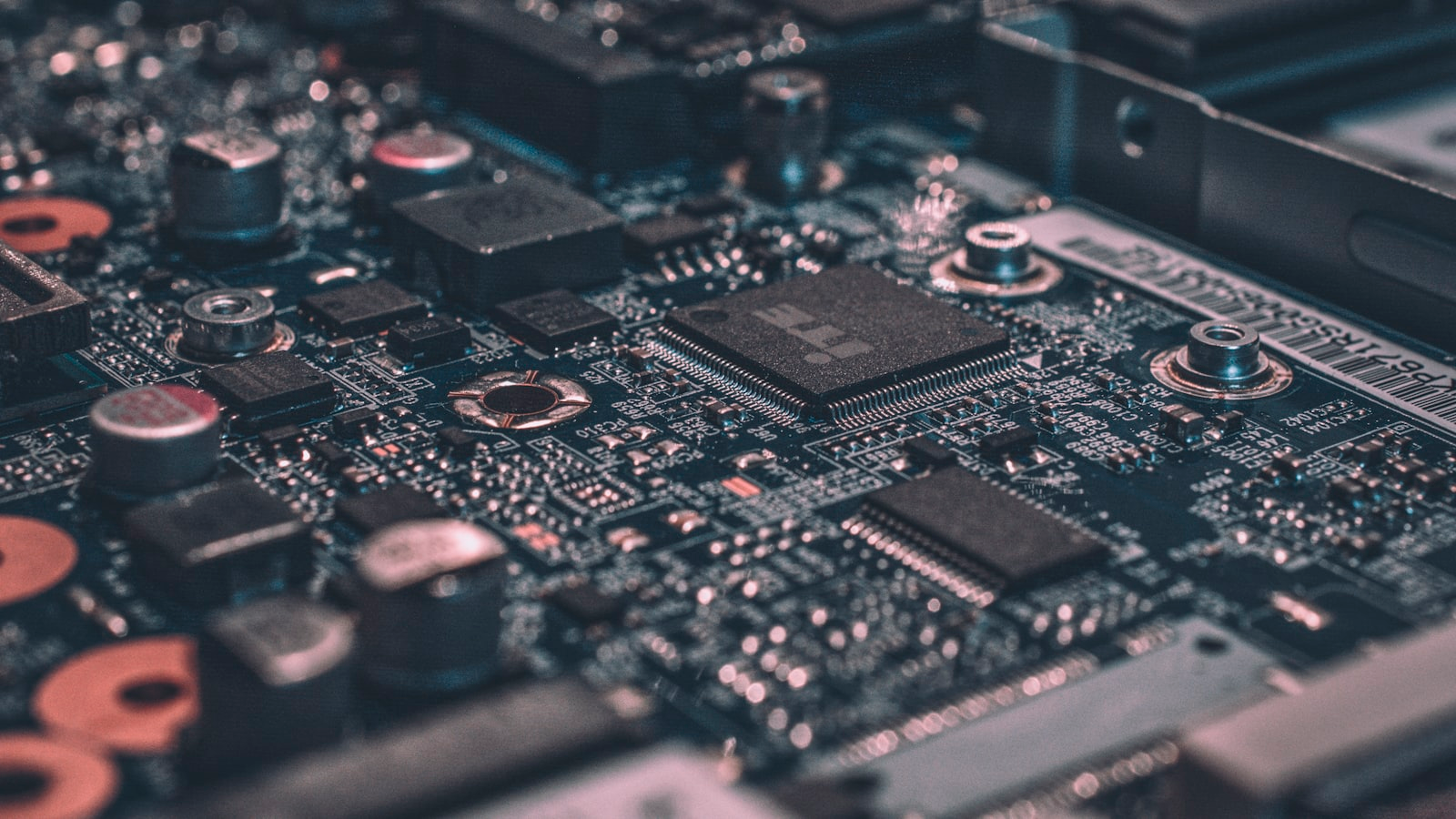
Using established cleanroom capacity should shorten part of the expansion compared with a greenfield fabrication plant, although the engineering work remains extensive. Semiconductor factories combine vibration control, ultrapure water, process gases, power conditioning, vacuum systems, contamination control, metrology, and tightly managed environmental conditions.
Installing new tools inside an operating campus adds further constraints, because each system must be positioned, connected, calibrated, and qualified without destabilising current production. Utility capacity has to increase alongside equipment loads, while process changes must preserve yield and cycle time across existing lines.
The enlarged automated track system forms a central part of that work. Modern wafer fabrication involves hundreds of tightly sequenced process stages, and poor material dispatching can leave expensive tools waiting for work even when nominal capacity appears sufficient.
By connecting campus modules through a faster and more unified material-flow network, Intel can improve visibility of work in progress and respond more quickly to tool availability, rework, maintenance, and changing product priorities. The gains depend on software scheduling, carrier reliability, sensor accuracy, and disciplined integration with manufacturing execution systems.
Capacity at Leixlip also strengthens Europe’s position in advanced logic production, although semiconductor resilience extends well beyond wafer fabrication. Design tools, intellectual property, chemicals, gases, process equipment, packaging, testing, substrates, and customer demand all influence whether regional capacity can operate competitively.
An open chiplet assembly design route developed through IHP addresses another part of that industrial chain by giving engineers a clearer path from multi-die architecture into packaging and fabrication. Advanced products increasingly combine several process nodes rather than relying on a single monolithic chip.
That shift changes the economics of manufacturing. Logic, memory, analogue, radio-frequency, and power functions can be produced on the processes best suited to them, but packaging, thermal control, interconnect, and verification become more demanding, which raises the value of manufacturing sites able to work within a broader design and assembly ecosystem.
Artificial intelligence investment is currently supporting demand for server processors, yet the market is concentrated around a relatively small number of hyperscale customers and platform decisions. Fabrication capacity must be planned years before final demand is known, leaving manufacturers exposed to changes in utilisation, pricing, product mix, and competitive performance.
Intel’s foundry strategy increases the operational burden because its plants must support internal product groups and external customers with different designs, qualification standards, delivery schedules, and commercial expectations. Stable yields and predictable cycle times at Leixlip will therefore influence more than the output of a single processor family.
Ireland provides an established cluster of semiconductor skills, universities, equipment suppliers, and specialist contractors, but continued expansion will intensify competition for engineers, grid capacity, water, construction resources, and technical services. Pharmaceutical plants, data centres, energy projects, and other advanced manufacturing sites draw on many of the same capabilities.
Power availability is particularly significant because wafer fabrication combines continuous high electrical demand with strict quality requirements. Grid interruptions, voltage disturbances, or delayed connections can undermine production plans even when the manufacturing equipment itself is ready.
The €5bn commitment gives Intel a route to increase output from a proven European campus, but capital installation is only the first stage. New equipment must reach production qualification, yields must improve to commercial levels, and the expanded material-flow system must sustain higher throughput without weakening process control.
Leixlip will consequently test both Intel’s manufacturing execution and Europe’s capacity to support advanced semiconductor production beyond the initial investment cycle. The factory expansion is under way; its longer-term value will be measured in dependable, competitive processor output.