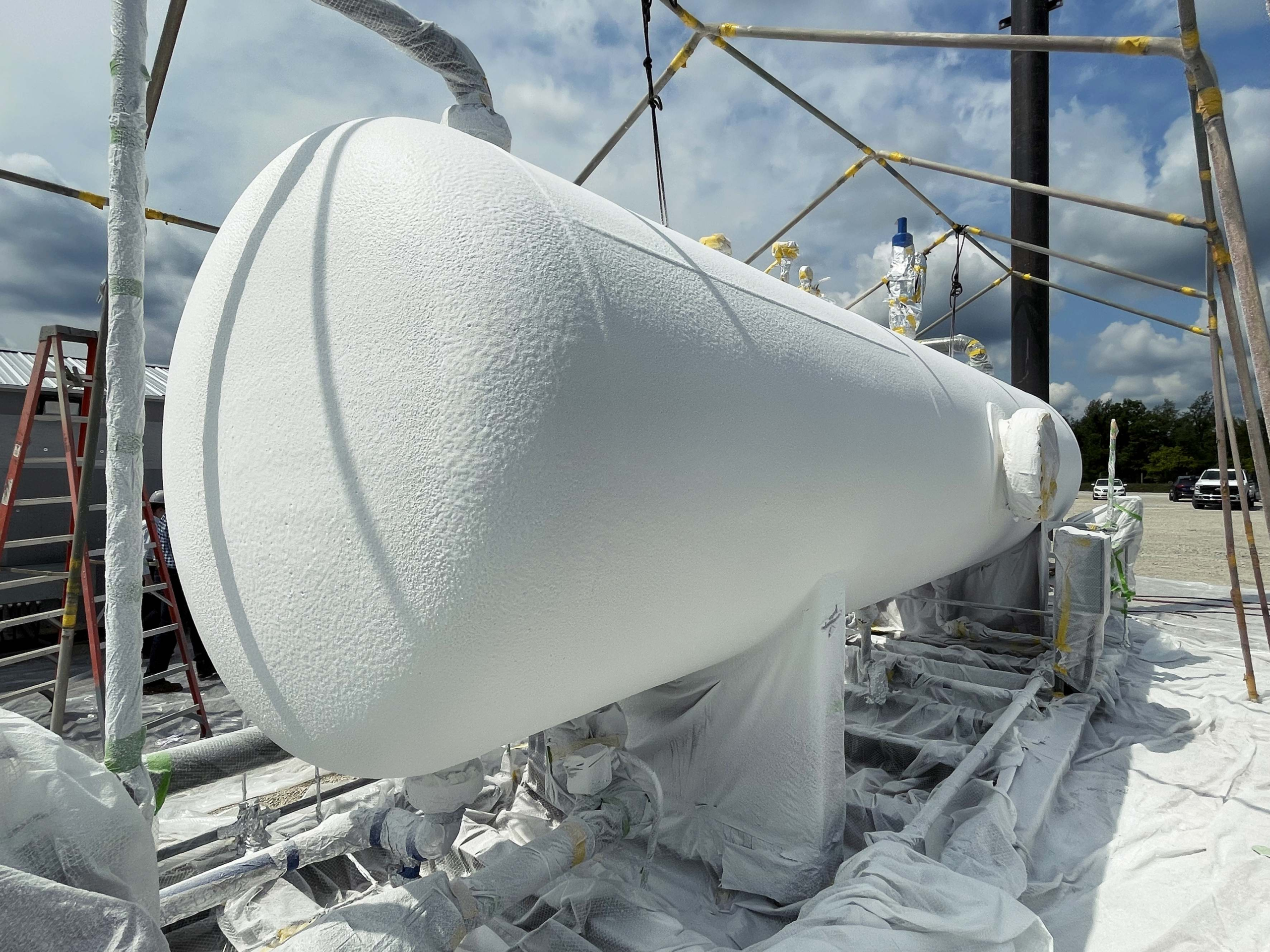
Sherwin-Williams Protective & Marine has introduced Heat-Flex AEB, an advanced energy barrier coating designed to replace traditional mineral-based insulation systems on tanks, process vessels, and piping.
The coating targets corrosion under insulation, one of the most persistent integrity problems in process plants. CUI occurs when water penetrates insulation and becomes trapped against metal surfaces, creating a hidden corrosive environment beneath cladding and insulation layers.
Heat-Flex AEB replaces conventional insulation with a thick film of thermal insulative coating material. Sherwin-Williams says the system can retain operating temperatures up to 177°C, with excursions to 204°C, while removing the physical insulation layer under which CUI would normally develop.
The product is designed for storage tanks, process vessels, piping, furnaces, stacks, containers, and other industrial assets where heat retention, personnel protection, and corrosion risk have to be balanced. It is applied as a one-component coating, using spray application rather than manual insulation wrapping, banding, and cladding installation.
Neil Wilds, global product director for CUI at Sherwin-Williams Protective & Marine, said corrosion under insulation requires the presence of insulation. By replacing the insulation system with a thermal insulative coating, the company argues that the conditions needed for CUI formation can be removed at source.
The safety and maintenance consequences are considerable. Traditional insulation systems can hide corrosion until it is advanced, making inspection difficult and increasing the risk of leaks, unplanned shutdowns, structural degradation, or hazardous releases. Removing insulation from selected applications gives asset owners a different inspection and maintenance profile.
Heat-Flex AEB also has an energy and sustainability component. Traditional insulation systems can lose efficiency once moisture enters the insulation layer. Sherwin-Williams says the coating maintains consistent thermal efficiency, supporting process temperature control without the same moisture-related degradation associated with mineral wool systems.
Process reliability often depends on component and material choices that receive attention only after problems emerge. Process hose performance in Cornish Lithium’s plant shows how specific equipment decisions can affect continuity, maintenance, and stability. CUI occupies similar territory: a hidden failure mechanism that can create major operational consequences if not managed properly.
The application method is part of the product’s appeal. Installing conventional insulation requires personnel to work close to hot assets while wrapping, banding, and covering insulation materials. Heat-Flex AEB is spray applied, and Sherwin-Williams says assets can operate at up to 148°C during application where conditions allow, reducing disruption compared with shutdown-dependent work.
A single applied coat can reduce surface temperature, helping address burn risk for workers near hot equipment. New assets can also be coated in pre-assembly yards rather than only in situ, which may simplify scheduling, reduce work in congested plant areas, and improve quality control before equipment is installed.
Existing assets will require careful assessment before conversion. Coating selection will depend on substrate condition, surface preparation, primer compatibility, access, operating temperature, shutdown windows, and inspection requirements. Process teams will also need to determine where insulation is required for heat conservation, freeze protection, personnel protection, process stability, condensation control, or noise reduction.
Heat-Flex AEB is therefore unlikely to replace all traditional insulation. Its strongest applications are likely to be assets where CUI risk is high, inspection access is difficult, and conventional insulation creates a recurring maintenance burden. Tanks, vessels, and pipework operating within the coating’s temperature envelope may provide suitable early use cases.
CUI remains difficult because it is both common and concealed. Inspection regimes can identify risk areas, but the underlying problem persists where moisture, insulation, and steel remain together. Heat-Flex AEB changes that configuration by removing one part of the equation. Performance across varied plant conditions, installation practices, and long service periods will determine how far the coating moves from specialist option to standard asset integrity tool.