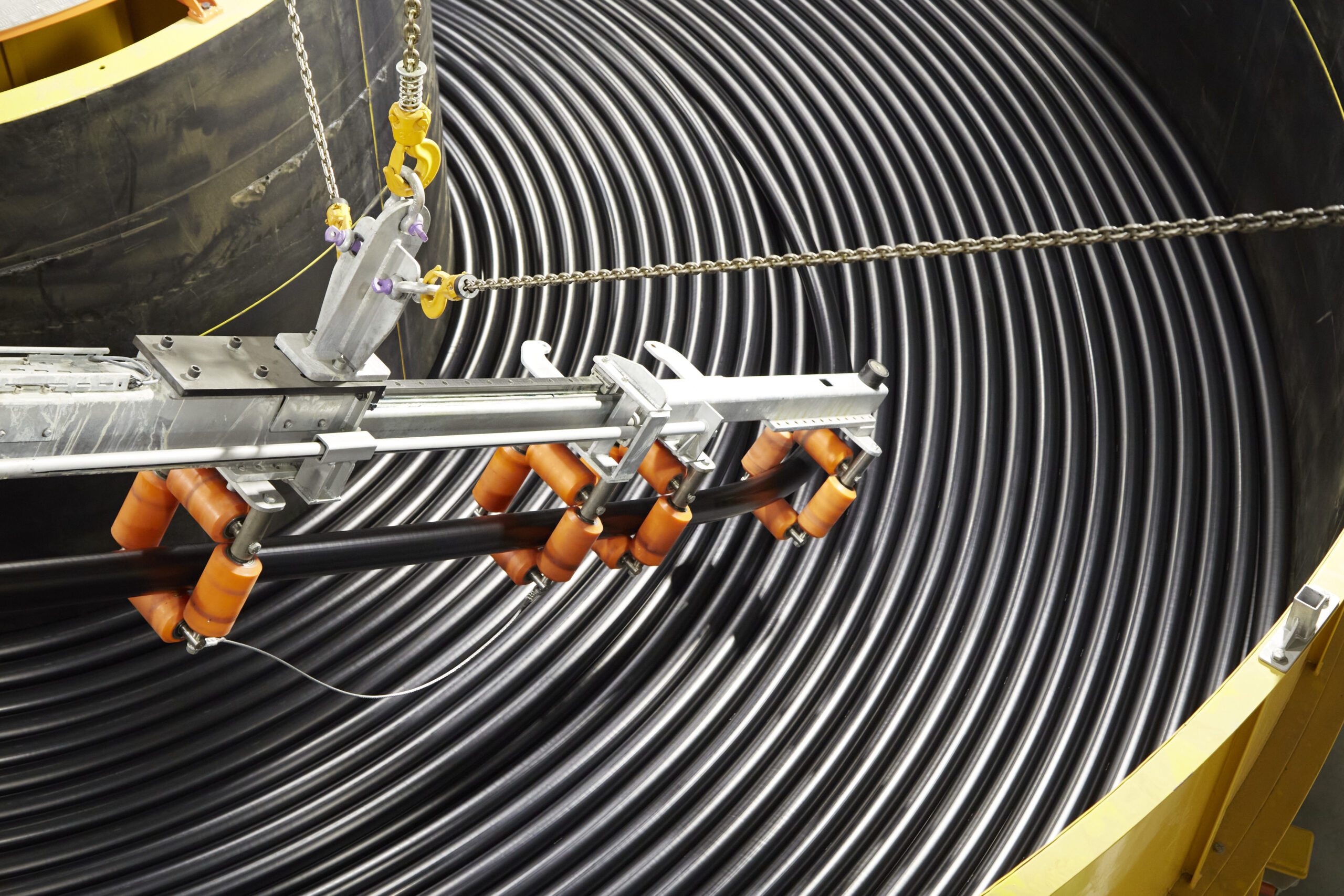
Nexans has completed manufacturing and Factory Acceptance Testing of the high-voltage subsea cable for the Malta-Sicily second interconnector, moving the project into readiness for load-out and installation.
The second interconnector, known as IC2, will deliver an approximately 122km, 225MW HVAC electrical link between Malta and Sicily. Nexans’ scope covers the design, manufacturing, and delivery of 100km of subsea cable, alongside 4km of spare cable.
The Factory Acceptance Testing milestone was reached just over 13 months after the contract was signed. With the cable manufactured and tested, the project can move toward installation and eventual commissioning, when it will increase the available interconnection capacity between Malta and Italy.
The link follows the first Malta-Sicily interconnector, commissioned in 2015, which connected Malta to the European electricity grid for the first time. That first cable ended the country’s electrical isolation and gave the Maltese system access to a more diversified source of electricity.
The second cable is intended to add further capacity and resilience. Island systems operate with less room for error than larger interconnected networks, particularly during periods of maintenance, demand pressure, or generation disruption. Additional interconnection improves operating flexibility and gives system planners more options.
Nexans will draw on experience from the first interconnector while using deep burial techniques for the second cable, including its Capjet system, to provide additional protection. Subsea cable protection is critical because damage risk can come from anchors, fishing activity, seabed movement, installation conditions, and long-term environmental exposure.
The project is funded by the European Union under the 2021-2027 ERDF programme for Malta. That places the interconnector within a broader European effort to reinforce grid infrastructure, improve energy security, and enable more flexible power flows across borders.
Electricity interconnection is becoming a strategic part of power engineering, from hybrid offshore interconnector models to new Europe-North Africa HVDC links. The Malta-Sicily project is smaller than some of those flagship schemes, but its value to Malta’s system is direct.
Subsea interconnectors combine several demanding engineering disciplines. Cable design has to account for voltage, current rating, insulation, thermal behaviour, mechanical loads, water depth, seabed conditions, route risk, joints, terminations, and installation vessel capability. Factory acceptance testing confirms that the manufactured cable meets defined requirements before it leaves the controlled production environment.
Installation then introduces a different risk profile. Cable load-out, handling, laying, burial, route control, vessel weather windows, shore landings, and interface works with substations all have to be managed carefully. A defect or damage event at sea can be expensive and time-consuming to resolve, making manufacturing quality and pre-installation assurance especially important.
Additional interconnection capacity can support Malta’s electricity system as demand grows and transition pressures increase. It can also improve operational options by allowing imports, exports, balancing, and maintenance planning to be managed with greater headroom.
Interconnectors do not remove the need for domestic generation, network reinforcement, storage, or demand management. They do, however, give small or isolated systems another operating tool. A single connection creates dependence as well as opportunity; a second link adds redundancy and reduces exposure to reliance on one route.
The cable manufacturing milestone marks the point at which a complex factory-made electrical asset is ready to become part of Malta’s national energy infrastructure. The remaining challenge lies offshore and at the grid interfaces, where manufacturing assurance must now translate into installation reliability and long-term system value.