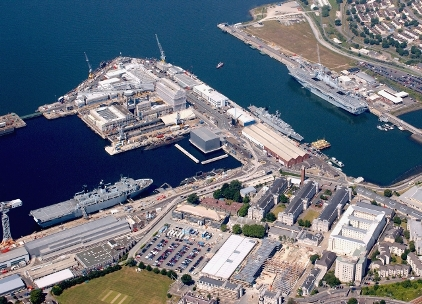
ADS has hosted more than 160 senior defence industry representatives aboard HMS Warrior in Portsmouth, with manufacturing capacity and industrial readiness high on the agenda ahead of the next NATO summit.
The gathering took place during the UK NATO Industrial Advisory Group Plenary, held in Portsmouth from 23 to 25 June. The Princess Royal joined the dinner, adding visibility to a discussion that has become increasingly central to alliance planning.
Member states are scrutinising how quickly industry can supply equipment, replenish stockpiles, and support sustained operational demand. Defence capacity has moved from a commercial consideration into a strategic measure of readiness, particularly as European nations increase spending and reassess the depth of their industrial bases.
The operating environment has changed sharply since Russia’s full-scale invasion of Ukraine. Demand has increased across ammunition, missiles, air defence, electronic warfare, unmanned systems, armoured vehicles, sensors, secure communications, and support infrastructure. The question is no longer whether European companies can design capable systems, but whether they can produce, test, certify, and deliver them quickly enough.
That pressure is bringing production engineering closer to defence strategy. Factories need skilled labour, qualified suppliers, machine capacity, explosives handling capability, secure electronics, specialist materials, and long-term order visibility. A sudden increase in demand can expose bottlenecks rapidly if production has been held at low rates for years.
The Portsmouth discussions sit alongside wider moves toward distributed capability and faster support models. Additive manufacturing at the point of need, including dockside support for submarine maintenance at Clyde, shows how production capability is moving closer to operational environments in selected applications.
Across NATO, the industrial challenge is broader than any single technology. Governments are trying to align national procurement, alliance requirements, interoperability, and supplier capacity without losing control of sovereign capability. A highly specialised production line can deliver excellent quality, but it can also become a constraint when demand rises faster than capacity. A wider supplier network improves resilience only when standards, security, qualification, and configuration control are maintained.
The pressure is visible in munitions and air defence, but it extends across the manufacturing base. Aerospace structures, propulsion systems, secure processors, rugged electronics, radar modules, naval equipment, armoured systems, optical assemblies, and test infrastructure all depend on specialist industrial depth. A shortage in one layer can delay a programme whose headline contract may already have been announced.
Supply resilience is also becoming a technical discipline rather than a purchasing slogan. Defence companies need to know where castings, forgings, energetic materials, microelectronics, critical minerals, precision assemblies, and software components originate. They also need contingency options where export controls, transport disruption, geopolitical risk, or capacity shortages could affect delivery.
Military interoperability has been a NATO priority for decades. Industrial interoperability is now moving into the same frame. Manufacturers, integrators, and governments need to coordinate production, repair, certification, upgrade activity, and data exchange across borders while protecting security and intellectual property.
That process is made harder by procurement cycles that have not always supported sustained production. Defence factories cannot retain skilled teams, supplier commitments, and specialist lines indefinitely without orders. Governments seeking higher readiness will need to translate spending pledges into programmes that give industry enough confidence to invest ahead of demand peaks.
The Portsmouth meeting placed that reality in a visible setting, but the practical test will be measured in machine shops, electronics plants, depots, test ranges, and supplier contracts. Defence readiness depends on equipment being available when required, with spares, maintenance capacity, and upgrade routes in place. Alliance intent will carry little weight if the industrial base cannot turn it into repeatable output.