Prysmian has received notice to proceed for construction of the Elmed submarine power interconnector between Italy and Tunisia, moving the €460 million cable contract into its project backlog.
The notice was issued by Terna, the Italian transmission system operator, and STEG, Tunisia’s electricity grid and gas operator. The project will create the first direct current link between Europe and Africa, connecting the Partanna electrical substation in Sicily with the Mlaabi substation on Tunisia’s Cap Bon peninsula.
Elmed will run for 220 km in total, including 200 km of undersea cable. The bidirectional connection will have a capacity of 600 MW and will cross the Strait of Sicily at a maximum depth of around 800 metres.
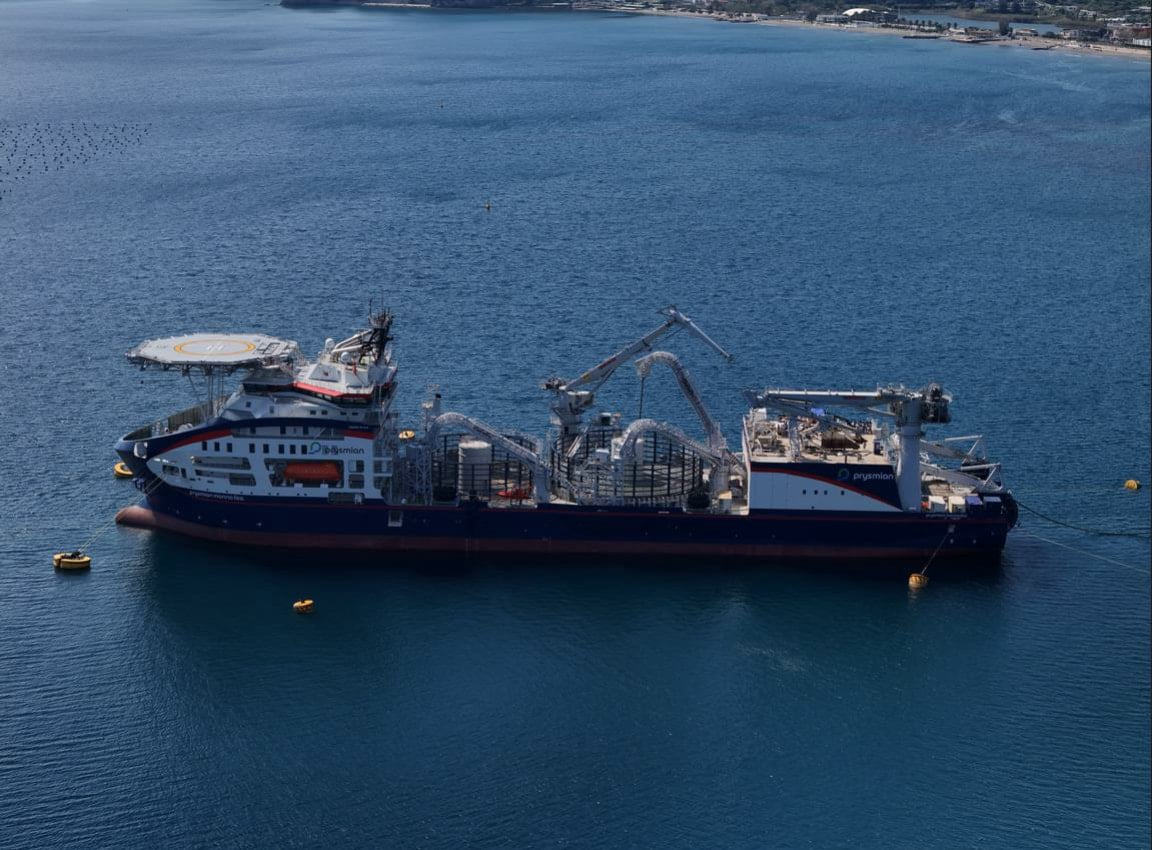
Prysmian was selected for the submarine power interconnection in September 2025. The company’s cable laying vessel Monna Lisa is expected to carry out the installation, supported by Italian manufacturing and operational assets including the Arco Felice submarine cable factory near Naples and asset monitoring capability based in Palermo.
The project combines high voltage cable manufacturing, deepwater installation, subsea route engineering, grid integration, and cross-border electricity planning. Submarine interconnectors have become central assets in energy systems that must balance variable generation, regional demand differences, and long distance transmission requirements.
The Italy-Tunisia link gives Europe a direct route into North African generation potential while giving Tunisia access to the European electricity grid. The connection is designed to allow bidirectional flows, which can support supply security, system balancing, renewable integration, and more efficient use of generation across the Mediterranean region.
High voltage submarine cables now sit among the most strategically important components in energy infrastructure. They require specialist factories, long production planning, complex materials, qualified joints and terminations, dedicated installation vessels, subsea engineering, and through-life monitoring. Limited global manufacturing and installation capacity means cable suppliers increasingly influence the pace at which offshore wind, interconnectors, island links, and grid reinforcement projects can be delivered.
Elmed also shows how offshore engineering is broadening beyond oil and gas. Marine project disciplines developed around hydrocarbon infrastructure are being applied to power transmission, renewable integration, and cross-border grid systems. Cable laying, seabed survey, burial assessment, route clearance, vessel scheduling, and marine operations planning remain essential skills, although the end market is increasingly tied to electrification.
The engineering demands are substantial. Deepwater cable installation requires detailed route assessment, seabed preparation, protection strategy, laying control, and post-installation monitoring. Once operational, cables must be protected against seabed movement, anchoring, fishing activity, thermal loading, and faults that can be expensive and slow to repair. A single failure can remove a major transmission asset from service, making reliability a central design and operational requirement.
Major power infrastructure is increasingly defined by long technical and regulatory pathways rather than single procurement events. Work on advanced nuclear assessment in the UK has shown how energy projects depend on engineering evidence, supply chain readiness, and regulatory sequencing long before generation assets are built. Elmed operates in a different part of the system, but it depends on the same combination of manufacturing capability, project control, and technical assurance.
The use of Prysmian’s Italian manufacturing and installation assets gives the project a domestic industrial dimension as well as an international infrastructure role. The Arco Felice plant, the Monna Lisa vessel, and Palermo-based monitoring capability strengthen Italy’s position in the high voltage subsea cable market, where industrial capacity is becoming a competitive asset.
With the notice to proceed now issued, Elmed moves from contract award towards delivery. Manufacturing, installation, integration, and commissioning will determine how quickly the interconnector can begin supporting electricity flows between the two continents. If delivered as planned, the project will strengthen the Mediterranean’s role as an energy transmission corridor and add another example of offshore engineering’s shift towards grid infrastructure.