X-FAB is expanding its Erfurt site into a microsystems technology hub, supported by €127.4 million from the German federal government and the Free State of Thuringia.
The funding will support construction of a new cleanroom at X-FAB MEMS Foundry GmbH, increasing manufacturing capacity for micro-electro-mechanical systems, highly integrated microsystems, photonics, heterogeneous integration, and advanced wafer scale assembly. Initial production at the new facility is scheduled to begin by the end of 2028.
The grant notification was presented in Erfurt by Thuringia’s Minister President Mario Voigt, Thuringia’s Minister of Economic Affairs Colette Boos-John, and Erfurt Mayor Andreas Horn. Around €80.3 million will come from the German federal government, with Thuringia contributing €47.1 million.
The Fab4Micro project is among the largest recent industrial investments in Thuringia and forms part of the European semiconductor strategy under the European Chips Act. The European Commission approved the public funding in December 2025.
MEMS combine electronic, sensing, and mechanical functions at micro and nanometre scale. They are used in vehicles, medical devices, industrial systems, communications equipment, consumer electronics, and other applications where sensing, actuation, and signal processing must be integrated into compact, reliable components.
The Erfurt expansion will also support high performance microsystems that use heterogeneous integration to combine electronic and optical functions within a single component or package. That capability is becoming more valuable as data centres, optical systems, industrial sensors, and advanced communications place greater demands on signal performance, density, and energy efficiency.
Europe’s semiconductor strategy is increasingly moving beyond headline wafer volume into areas where the region already has industrial strengths. Advanced packaging, MEMS, silicon photonics, power devices, sensors, test, and application-specific processes all support sectors where European companies retain deep manufacturing and engineering expertise. X-FAB’s expansion fits that more specialised pattern.
Automotive, industrial, medical, aerospace, and energy markets often require long life devices, robust qualification, and close collaboration between customer and foundry. The technologies do not always need the smallest geometry available, but they do require process stability, traceability, reliability, and the ability to support complex physical functions. That makes specialty semiconductor manufacturing a strategic industrial capability rather than a niche activity.
The same pattern is visible elsewhere in European electronics production. A French system-in-package initiative has strengthened advanced chip packaging capacity, while semiconductor manufacturing cooperation between Rapidus and the UK has added another strand to Europe’s advanced semiconductor ecosystem. Erfurt adds capacity in microsystems, where sensors, photonics, and wafer scale assembly sit close to industrial end markets.
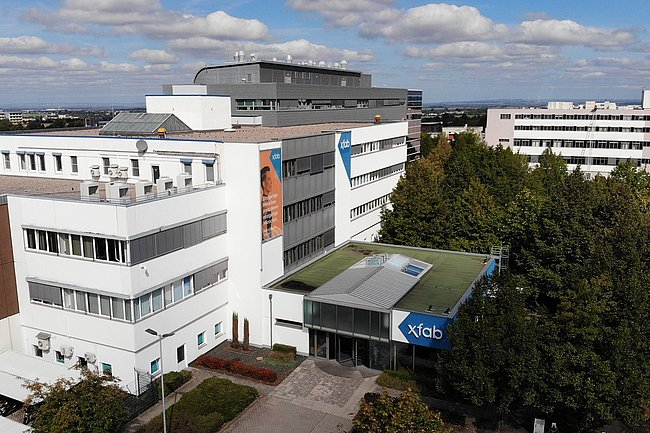
The location also carries industrial weight. X-FAB’s history began in Erfurt more than 30 years ago, and the company now operates six wafer fabs across Malaysia, Germany, France, and the United States. Expanding the site into a microsystems hub strengthens Thuringia’s position in the European microelectronics landscape while creating high skill manufacturing and engineering roles.
The investment also shows how semiconductor sovereignty depends on layers of capability that are less visible than leading edge logic. Automotive safety systems, medical diagnostics, factory automation, communications infrastructure, and energy systems rely on sensors, photonics, packaging, power management, and robust analogue and mixed signal technologies. Control over those areas can matter as much as control over advanced processors.
By adding cleanroom capacity for MEMS, photonics, heterogeneous integration, and wafer scale assembly, X-FAB is increasing Europe’s ability to manufacture components that sit at the centre of industrial digitalisation. The project strengthens a regional cluster, supports the European Chips Act’s capacity goals, and gives customers a more substantial base for complex microsystem production.