Starrag will present aerospace machine tool technologies at Farnborough International Airshow 2026, covering blisks, engine casings, titanium and aluminium structural parts, rings, turbine blades, and large airframe components.
The company will exhibit in the Swiss Pavilion in hall 4, stand 4517, from 20 to 24 July. Its display will include example aerospace components alongside video and virtual reality demonstrations showing machining platforms that cannot be brought onto the stand in full scale.
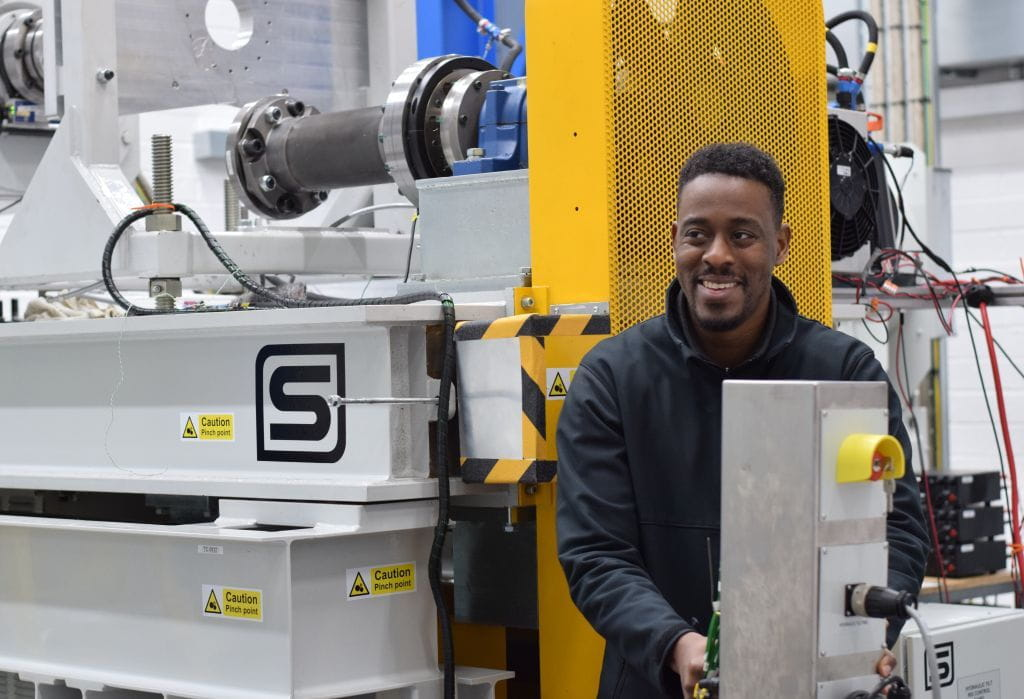
One of the central technologies in the showcase is the hydrostatically guided Starrag S1250 HD 5-axis machining centre. The machine achieved a titanium material removal rate of 1,516 cm³ per minute in Ti6Al4V during tests witnessed by Airbus, a result Starrag describes as a world-best performance. Airbus has since ordered five S1250 HD machines for its site in Varel, Germany.
The S1250 HD uses hydrostatic guideways designed to reduce friction, wear, tool consumption, cycle times, and energy use when machining titanium. Titanium remains one of the most strategically important materials in aerospace because of its strength, weight, corrosion resistance, and high temperature performance, although those same properties make it demanding and expensive to machine.
Starrag will also present the Heckert X-series of 5-axis machining centres for dynamic complex parts such as blisks and integrally bladed rotors. The X50, X70, X80, and X90 variants offer rapid traverse rates of up to 80 metres per minute, tool magazines holding up to 600 tools, and a footprint said to be 20% smaller than previous generations.
The company’s wider portfolio extends into heavy rotating and large structural parts. The Dörries VT 28 vertical turning centre can machine components weighing up to 17 tonnes and measuring 2.8 metres in diameter, while the 6-axis Droop+Rein FOGS HD gantry centre offers X-axis travel of up to 31 metres for large aerospace structures.
Aerospace production relies on a wide spectrum of machining requirements, from compact high value aerofoils to large structural assemblies. Each class of part brings different pressures around material removal, thermal behaviour, tool life, access, fixturing, measurement, and process validation. As manufacturers work to increase output, machine tools are being judged by stability, repeatability, energy performance, automation readiness, and integration with wider factory systems.
Titanium machining remains a particularly severe test of production capability. High material removal rates can shorten cycle times, but only if tool wear, heat, vibration, and dimensional control remain manageable. A performance improvement that reduces machining time without undermining process stability can alter the economics of aircraft component production, especially where expensive billets and long cycle times leave little room for scrap or rework.
UK aerospace suppliers are also strengthening specialist processes that support high integrity production. Wall Colmonoy’s work to bring vacuum casting capacity into the defence supply base shows how materials, machining, and process qualification are being drawn into wider discussions around resilience. Machine tool capability sits at the centre of that discussion because many advanced components depend on difficult cutting operations before they can become qualified parts.
The Farnborough display also reflects how aerospace manufacturing technologies often spill into adjacent markets. Machine tools developed for aircraft components can influence capability in defence, space, energy, motorsport, and high performance industrial equipment. Across those sectors, the same requirements repeat: difficult materials, tighter tolerances, larger parts, lower energy use, and more reliable throughput.
Starrag’s presentation is therefore less about individual machines than the production environments they support. A machining centre must work with tool management, inspection, part handling, process monitoring, maintenance, and operator training. Aerospace customers want machines that can be embedded into controlled industrial systems, not isolated islands of capability.
Farnborough will give Starrag a platform to show how its portfolio addresses that full production range. The company is targeting manufacturers that need to machine critical components consistently, document performance, and improve throughput without compromising quality. In aerospace, the ability to cut difficult materials is only the starting point; the harder requirement is proving that the process can be repeated under production conditions.