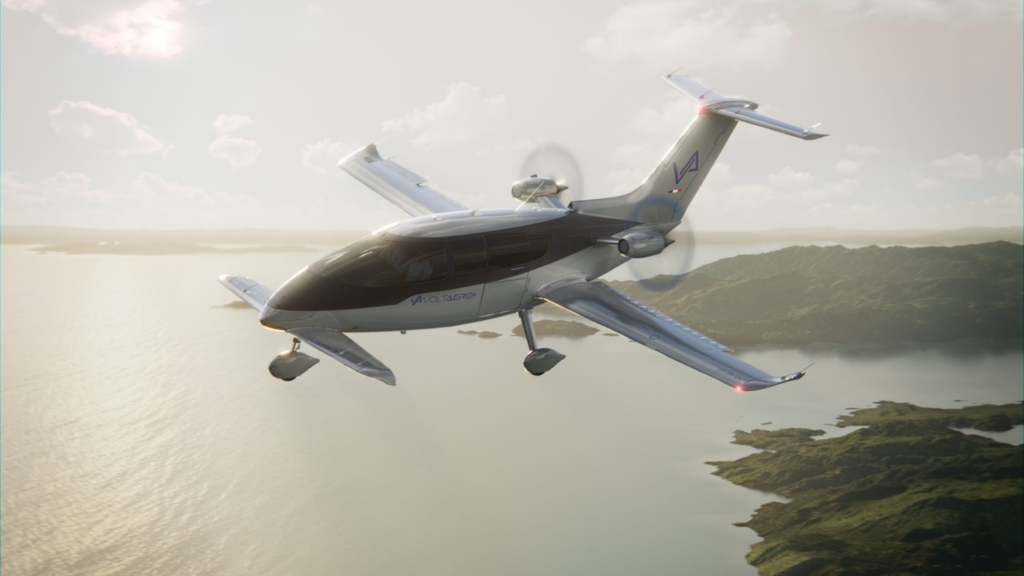
Aura Aero has acquired VoltAero assets, including the Cassio S hybrid electric demonstrator, industrial facilities, patents, flight test data, and specialist expertise in propulsion system integration.
The transaction gives the Toulouse-based aircraft manufacturer access to 2,400 sq m of industrial facilities and hybrid electric technologies developed by VoltAero over several years. It also brings experience in aircraft design, system integration, testing, flight operations, and data analysis.
The Cassio S demonstrator is the most visible asset in the acquisition. Since flight testing began in 2019, the aircraft has completed 270 flights and covered around 25,000 km under varied operating conditions. Aura Aero will use the acquired assets to support its own electric and hybrid electric aircraft development work.
The deal consolidates French hybrid electric aviation capability at a point when the sector is moving from early technology enthusiasm towards harder industrial questions. Aircraft developers must now prove that low carbon propulsion concepts can be certified, manufactured, maintained, and operated within viable economics.
Aura Aero’s existing portfolio includes the Integral family of training aircraft and the ERA regional aircraft programme. VoltAero’s assets add practical test experience and infrastructure that could reduce development risk, particularly around hybrid electric architectures where propulsion, thermal management, batteries, generators, flight controls, and safety systems must operate as one aircraft system.
Hybrid electric aircraft sit between fully electric and conventional aviation. Battery electric aircraft remain constrained by energy density, especially where payload and range increase, while conventional aircraft continue to dominate most commercial operations. Hybrid architectures attempt to combine electric propulsion benefits with onboard energy generation or range extension, although the engineering trade-offs remain demanding.
The additional mass of batteries, generators, power electronics, cooling systems, and control equipment must be justified through operational efficiency, emissions reduction, redundancy, or mission flexibility. Those gains must then survive certification scrutiny, production planning, maintenance requirements, and airline or operator economics. A demonstrator with hundreds of flights cannot answer every question, but it gives engineers valuable data from outside the simulation environment.
Flight operations expose behaviours that are difficult to capture fully in early development. Thermal loads, vibration, software interactions, battery behaviour, propulsion response, maintenance access, and pilot procedures all become clearer when an aircraft is repeatedly operated under real conditions. Bringing that evidence into Aura Aero’s programmes could shorten parts of the learning cycle, even if certification remains a long and expensive route.
The acquisition also sits within a wider European effort to connect aerospace design ambition with manufacturable capability. At Hannover Messe, defence and aerospace production have increasingly been pulled into the industrial mainstream through automation, software, electronics, and resilient supply chain capacity. Low carbon aviation faces a comparable challenge, because propulsion innovation only gains industrial value when it can be turned into reliable aircraft.
France’s aerospace ecosystem gives Aura Aero access to engineering talent, suppliers, research capability, and certification experience. Keeping VoltAero’s facilities, patents, and test knowledge within that environment preserves skills that could otherwise fragment across the sector. It also gives Aura Aero a larger technical base as it pursues aircraft programmes where propulsion architecture will shape both performance and manufacturing strategy.
The market for hybrid electric aircraft remains uncertain. Operators will still need credible range, payload, dispatch reliability, maintenance economics, and infrastructure support. Regulators will still need to approve systems that differ substantially from established propulsion architectures. Suppliers will need to produce batteries, motors, inverters, wiring, and control systems to aviation quality standards.
The acquisition gives Aura Aero more of the practical material needed to work through those barriers. Facilities, patents, flight data, and experienced engineers can now be integrated into its development base, giving the company deeper resources as hybrid electric aviation moves from demonstrator milestones towards industrial execution.