Regal Rexnord will showcase robotics and factory automation technologies at Automate 2026, bringing together motion control, power transmission, braking, sensing, conveying, and automation brands from across its portfolio.
The company will exhibit at Booth 17030 in the North Hall during the Chicago event, which runs from 22 to 25 June. Brands represented include Thomson, Kollmorgen, Portescap, Warner Electric, ModSort, Huco, Micron, Boston Gear, Berg, Stearns, LEESON, and Bauer Gear Motor.
The display is aimed at robotic cells, material handling systems, packaging equipment, autonomous platforms, and other industrial automation applications. Regal Rexnord will focus on motion architectures that support flexible deployment, compact machine design, reliable operation, and easier integration.
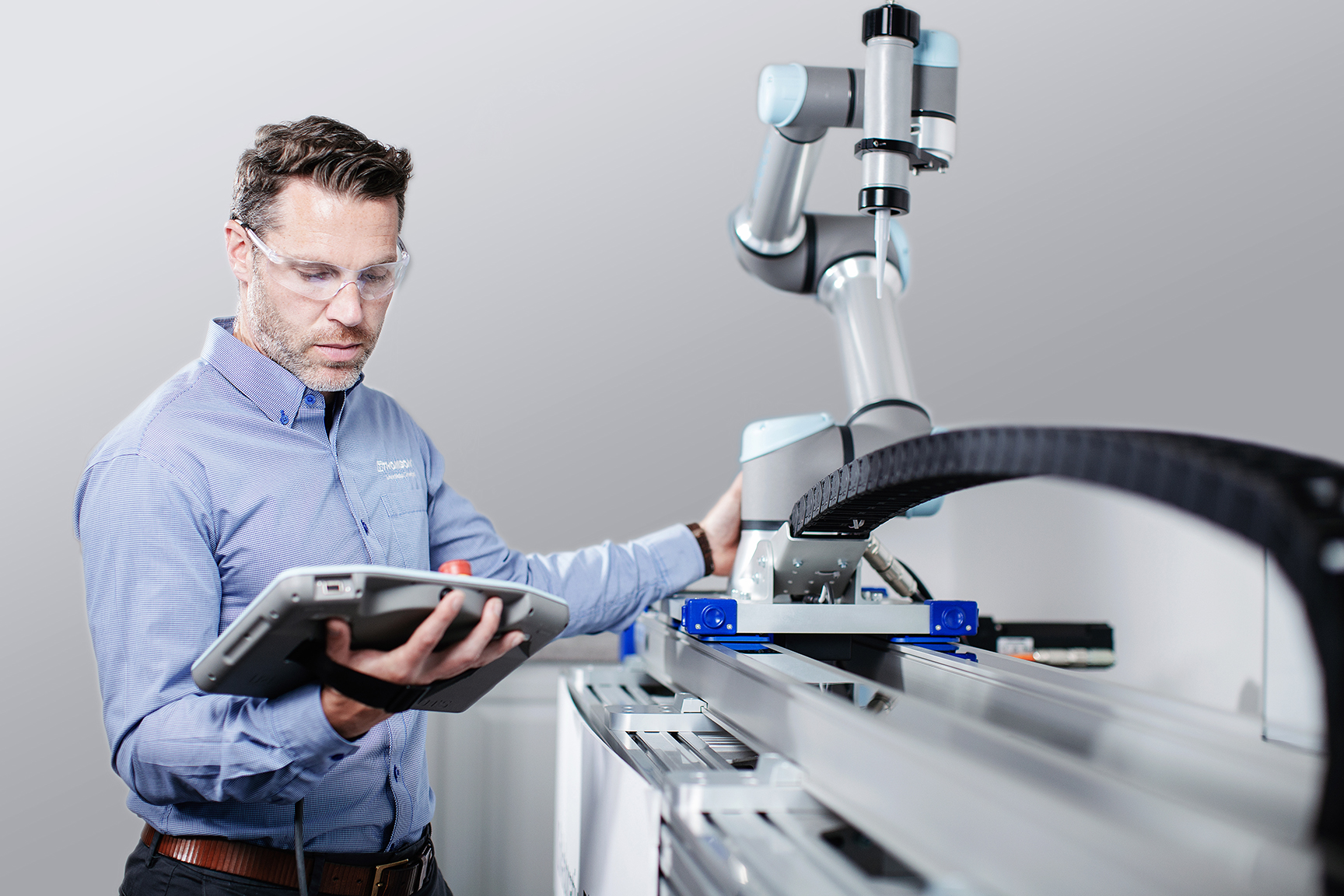
A key demonstration will be the Thomson Movotrak Cobot Transfer Unit, a collaborative seventh axis designed to add up to 10 metres of horizontal operating range to cobot applications. The system allows a single cobot to move between multiple workstations or cover a larger process area, reducing the need to duplicate robots where applications sit within the same production cell or line.
The Movotrak CTU uses a dual-linear-unit design for precise linear motion, high moment load, and stiffness. It also includes collision detection along the full seventh axis and Freedrive programming functionality, allowing users to set linear waypoints during cell setup. Those features are intended to reduce programming and integration complexity during collaborative robot deployment.
Kollmorgen Essentials Motion Systems will also feature at the stand, combining a servo motor, servo drive, and single-cable power and data technology. The latest expansion includes the PCMM2G Essentials controller and high voltage drive capability up to 4kW, extending the platform into packaging, warehouse automation, material handling, and forming applications.
Warner Electric’s Integrated Position Brake will also be on display. The spring-applied, electrically released brake combines parking and emergency braking with embedded absolute position sensing. By bringing braking and position feedback into one compact assembly, the product reduces separate components and supports shorter drivetrain designs in compact electric powertrains.
Automation investment is increasingly shaped by deployability. The most technically capable system is not always the one that reaches the factory floor, particularly when manufacturers are managing limited engineering time, floor space constraints, product variation, and pressure to shorten payback periods.
Robot handling and factory automation are moving toward systems that can cope with greater variation and easier redeployment, as seen in technologies such as AI-supported mixed product handling. Motion technology sits beneath that shift, defining how machines move, stop, carry load, hold position, and fit within constrained spaces.
Servo systems, gearboxes, brakes, linear axes, sensors, and controls define the performance envelope of a machine before software optimisation begins. Poorly matched motion components can create vibration, oversizing, heat, accuracy problems, safety limitations, or maintenance issues. A broader motion portfolio can reduce that risk when component selection is supported by application engineering.
Kevin Long, Executive Vice President and President of Automation and Motion Control at Regal Rexnord, said “the right motion architecture enables manufacturers to optimize space” and build more adaptable systems.
The value of the Automate display will depend on how the components fit together. A cobot transfer axis, servo package, integrated brake, and gearing system solve different problems, but the production case depends on whether they support a coherent cell design. As automation projects become more ambitious, suppliers able to combine product breadth with application knowledge are likely to carry more weight in factory investment decisions.