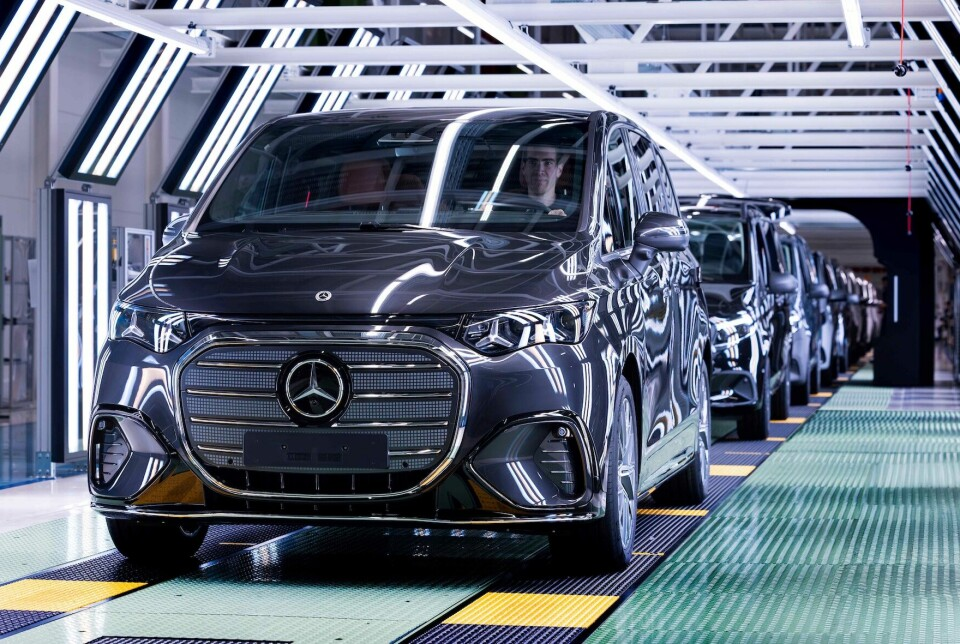
Mercedes-Benz Vans has started production of the new VLE at its Vitoria plant in Spain, marking the first production application of the company’s VAN.EA modular electric van architecture.
The launch follows a two-year transformation programme at the Vitoria operation, covering production processes, bodyshop capability, paintshop operations, and wider manufacturing systems. The plant will build the VLE as Mercedes-Benz Vans reshapes its mid-size van strategy around electrified and premium vehicle production.
Thomas Klein, Head of Mercedes-Benz Vans, described the start of production as the beginning of a new era for the business. The company is using the VLE programme to give Vitoria a defined role in its next manufacturing cycle while managing supplier stability and production ramp-up.
Electric vehicle platforms change factory requirements across body structures, battery integration, electrical architecture, thermal management, software validation, and end-of-line testing. Van production adds further complexity because commercial and passenger-focused variants often need flexible specifications, optional equipment, and different duty-cycle assumptions.
Vitoria has long been part of the Mercedes-Benz European van network. Transforming the site for VAN.EA allows the company to retain established manufacturing capability while adapting it to new vehicle architectures. That balance is becoming central to European automotive manufacturing, where companies must invest in electrification while still managing profitable existing platforms.
Electric van demand is shaped by fleet economics rather than consumer preference alone. Operators assess total cost of ownership, charging access, payload, residual values, route profiles, uptime, and maintenance before committing to new platforms. Production systems therefore need enough flexibility to manage growth without assuming that every market will adopt electric vans at the same pace.
Modular architectures help manage that uncertainty by sharing components, process assumptions, and engineering structures across variants. They can reduce complexity where possible while still allowing the product range to adapt to different markets, regulations, and customer requirements. In a sector where emission rules and city access policies vary widely, that flexibility is a manufacturing advantage.
The start of VLE production also sends a signal about the future role of European automotive plants. Sites across the continent are competing for investment while dealing with energy costs, labour availability, supplier disruption, and uneven EV demand. A plant transformation of this scale shows that Vitoria has secured a place in the next phase of Mercedes-Benz van production.
The supplier base will have to move with it. Battery systems, power electronics, thermal components, charging hardware, lightweight structures, sensors, harnessing, and software-linked vehicle systems place different demands on suppliers than conventional van production. Tier suppliers must maintain automotive quality while absorbing technology change and fluctuating volume forecasts.
Spain’s automotive sector has attracted significant electrification investment, and Vitoria’s role reinforces the country’s position as a major European production base. The wider challenge remains familiar: plants need competitive energy, resilient logistics, skilled labour, and local or regional component capacity if they are to sustain that role over multiple product cycles.
The VLE also sits in a market where vans are no longer only industrial workhorses. Mid-size platforms now serve shuttle, executive transport, leisure, conversion, and family-use applications alongside commercial fleets. That broad demand profile makes production planning more difficult, but it gives manufacturers more ways to defend volume if one segment weakens.
The early ramp will test quality loops, supplier readiness, software maturity, and process tuning. If Vitoria manages that transition cleanly, the plant will become a useful reference point for how established European vehicle factories can move into electrified production without sacrificing manufacturing continuity.