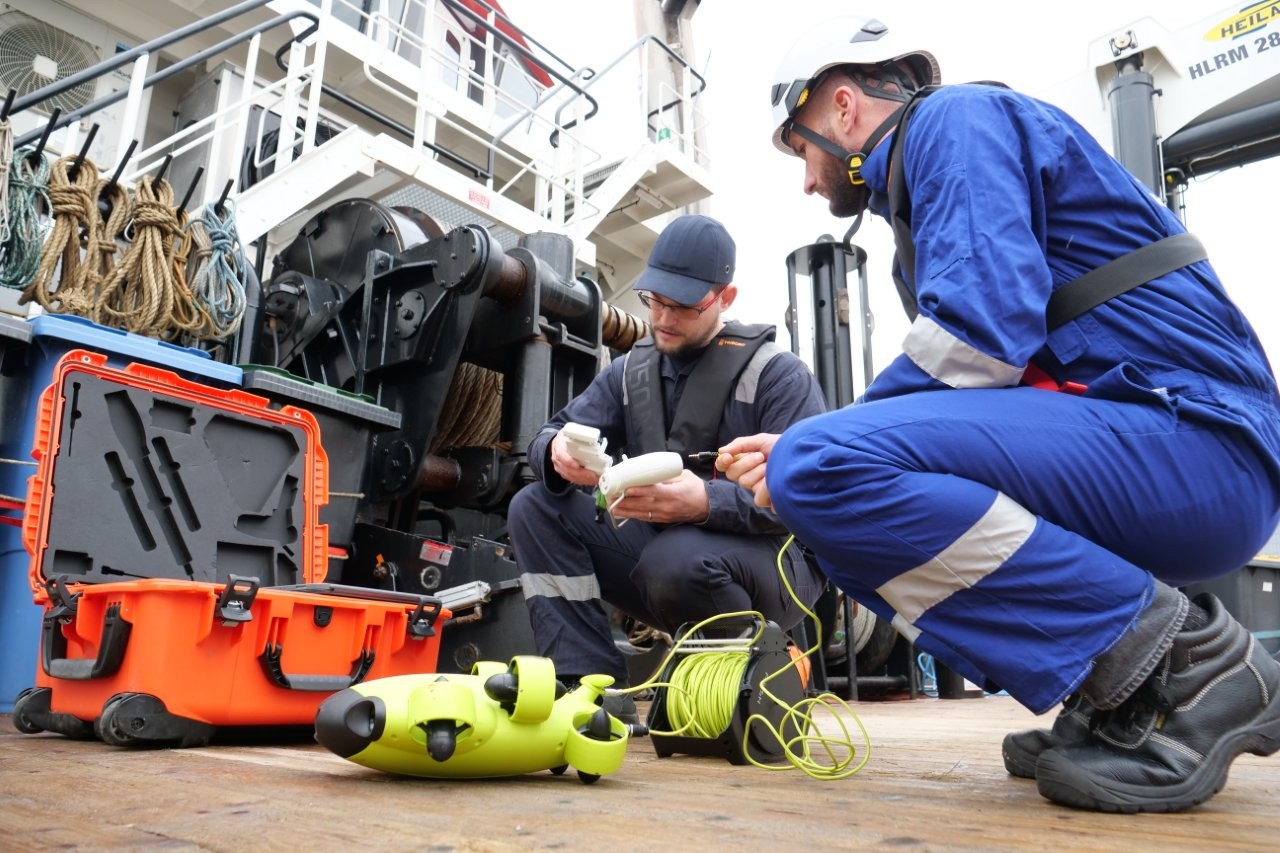
Ned Marine has expanded its non-destructive testing capability with aerial drone and subsea remotely operated vehicle inspection services for vessels, offshore installations, tank storage, and industrial assets.
The Dutch NDT specialist said the new service allows faster, safer, and more efficient inspections above and below water, including confined spaces where conventional access methods can involve scaffolding, rope access, or diving operations. The company already provides vessel inspections globally, while the new drone and ROV service is aimed at Dutch and wider European customers.
Drone-based inspections will be used for visual inspection and ultrasonic thickness measurement in locations that are difficult or expensive to access by traditional means. Typical applications include ballast tanks and cargo holds on board vessels, offshore and onshore wind turbines, tank storage facilities, and industrial structures.
Ned Marine said removing the need for extensive access equipment can reduce inspection windows from days to hours in some cases. Shorter inspection times support vessel availability, dry-dock planning, and maintenance scheduling for seagoing container vessels and tankers.
The company has also added subsea NDT inspections using ROVs capable of operating at depths of up to 300 metres. The systems provide high-definition live video and inspection data for hull inspections, cathodic protection assessments, structural condition monitoring, and pre-docking surveys, offering an alternative to traditional diving operations where conditions, cost, or safety exposure make remote inspection preferable.
“We are very proud to launch this new service!”, said Leo Zwagemaker, Commercial Manager at Ned Marine. “By integrating arial drone and ROV technology into our NDT services, we can allow our clients to further reduce downtime and make better-informed maintenance decisions. The fact that our inspectors can now also work remotely, with real-time data accessible worldwide, also adds value: this method improves decision-making and facilitates a more seamless collaboration between vessel operators, surveyors and technical teams.”
The new service is being integrated with Ned Marine’s existing NDT portfolio, which includes visual testing, ultrasonic thickness measurements, and detailed inspection reporting. By combining visual data, measurement results, and digital analysis, the company said clients can build a more complete view of asset condition and reduce the risk of unexpected failures.
Remote inspection technologies are increasingly being adopted across marine, offshore wind, oil and gas, and industrial infrastructure to reduce personnel exposure in confined, underwater, or elevated environments. Ned Marine has published further details of its drone and ROV inspection service.