1stinrail is rolling out hydrogen-based engine carbon cleaning across its 140-vehicle fleet after a four-month trial delivered average fuel and CO₂ savings of 15% across a cross-section of maintenance vehicles.
The rail engineering company trialled Engine Carbon Clean technology from Advanced Hydrogen Technology Group across 25 fleet vehicles used for repair, installation, and maintenance work on the Transport for London rail network, including London Underground operations. The vehicles operate from 1stinrail’s Silvertown depot in East London, where night-time access windows can be limited to two or three hours.
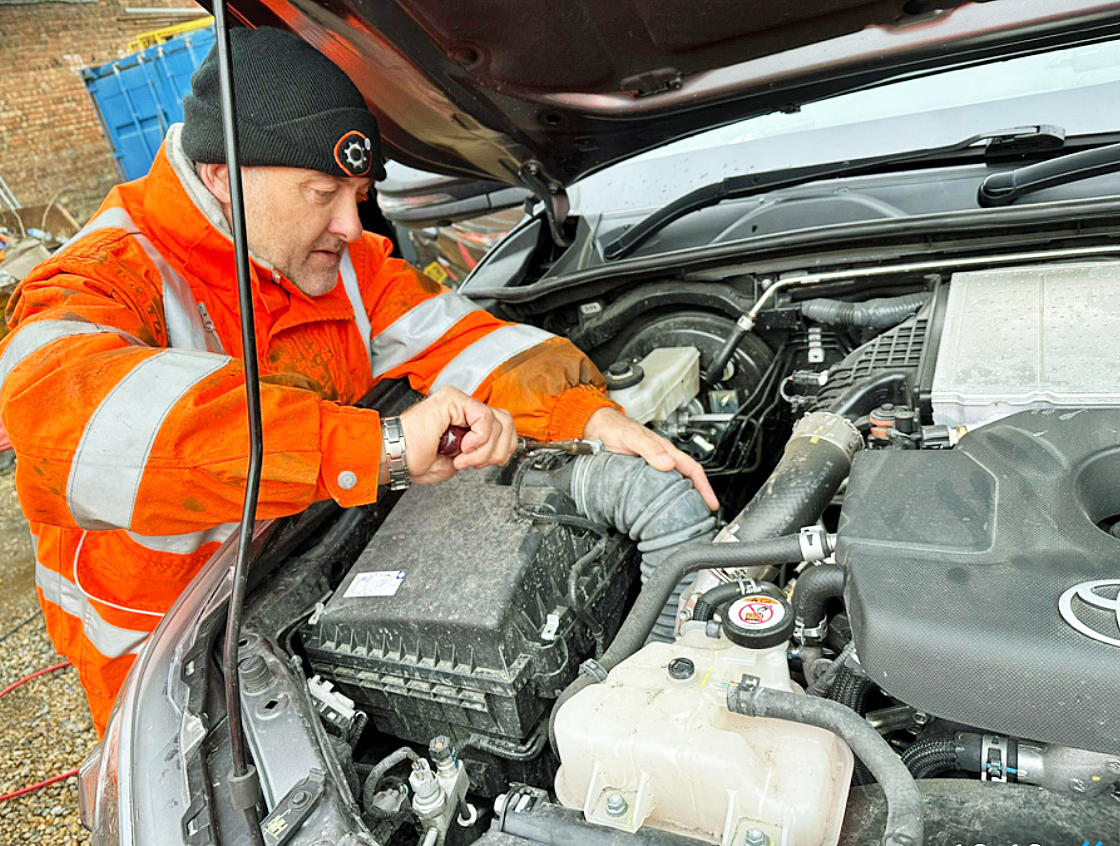
The technology uses an on-demand hydrogen generator to clean internal combustion engines by removing carbon build-up. Hydrogen is introduced through the air intake while the engine is running, with the process designed to improve combustion efficiency and reduce emissions including CO₂, carbon monoxide, NOx, and N₂O.
The trial forms part of a collaboration between Advanced Hydrogen Technology Group and rail consultancy K2C Rail, which is working to align the service with rail-specific operational, safety, and sustainability requirements. The approach is aimed at rail operators and contractors that still rely on diesel-powered road-rail vehicles and maintenance fleets where full replacement is not yet operationally practical.
“We had hoped for figures that showed a saving in fuel, and therefore CO2 emissions, ranging from 7 to 10%, so to receive confirmation that we had achieved an average reduction of 15% was a very pleasant surprise,” said Stephen Jackson, Managing Director at 1stinrail.
Jackson said the initiative supports 1stinrail’s environmental targets, RSK Group’s emissions reduction goals, and decarbonisation KPIs linked to TfL and the Mayor of London’s net zero ambitions. 1stinrail, part of RSK Group, provides planned and reactive rail engineering services for Network Rail, Transport for London, and Tier 1 contractors.
“What attracted us to the ECC process initially is it’s a quick win (available straight away ) that measurably takes us forwards in the Group’s aim to reduce absolute Scope 1 greenhouse gas emissions by 50% by 2030. It’s a simple and non-intrusive solution that’s easy to deploy and most importantly the saving in fuel more than offsets the cost of the engine cleaning and basically provides a cost-free carbon reduction process,” Jackson added.
The rollout gives 1stinrail a near-term route to reducing Scope 1 emissions from retained diesel assets while maintaining operational availability across critical maintenance contracts. For rail support fleets working around short access windows, the process offers a way to reduce fuel use without removing vehicles from service for major modification or replacement.