BioMed X has launched its first research team in France, turning last year’s Paris-Saclay expansion into an operating programme focused on one of biologics engineering’s more difficult problems: how to design bispecific antibodies that can bind two targets effectively without compromising stability, specificity, or manufacturability. The new group, Team ADB, is based within the XSeed Labs incubator at Servier’s Paris-Saclay R&D campus.
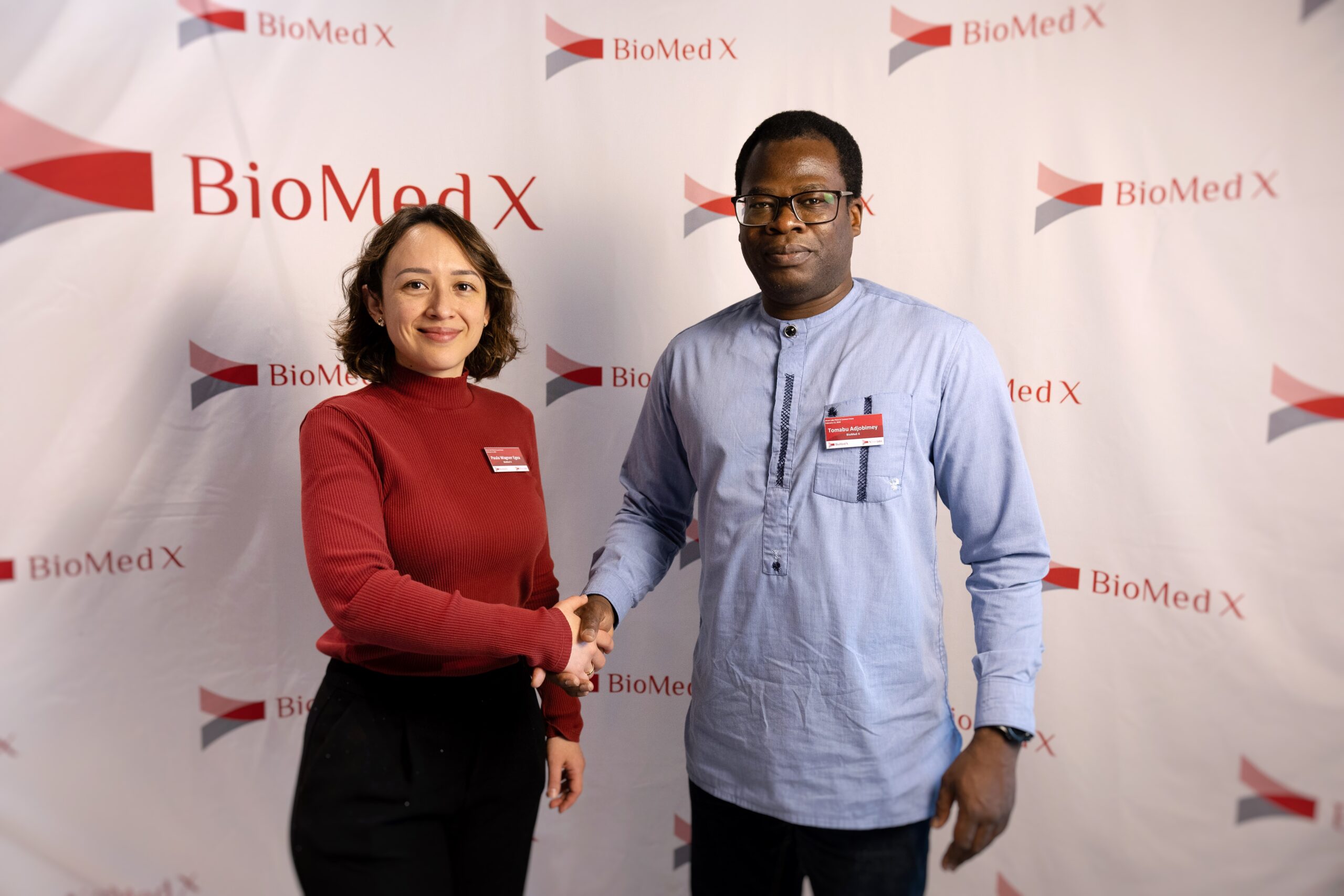
The launch gives BioMed X more than a geographic foothold. It places a dedicated interdisciplinary team inside a pharmaceutical R&D environment built around collaboration between large drug developers, startups, and translational research groups. Team ADB, led by immunologist Dr. Tomabu Adjobimey, is tasked with building an AI-enabled platform for bispecific antibody design that combines structural modelling, machine learning, and experimental validation.
That focus is well chosen. Bispecific antibodies have become one of the more active areas in oncology and immunology because they can engage two molecular targets at once, opening routes to immune redirection and multi-pathway intervention. The design challenge, however, remains stubborn. Steric hindrance, epitope accessibility, spatial dynamics, and the mechanics of pairing two binding domains still make candidate selection far less predictable than developers would like, especially once manufacturability enters the picture.
BioMed X and Servier had already signalled that ambition when they launched the Paris-Saclay XSeed Labs initiative in July 2025, describing it as the first of its kind in Europe. Team ADB is the first live research group to emerge from that framework, and its remit closely follows the original programme brief, which called for a more rational and structure-aware approach to bispecific design. BioMed X says the group’s platform will incorporate three-dimensional steric constraints directly into the design process, reducing reliance on broad experimental screening campaigns.
Dr. Tomabu Adjobimey, Group Leader of Team ADB at BioMed X, said: “Our goal is to develop an AI-driven platform that integrates structural modeling, machine learning, and experimental validation to guide the rational design of bispecific antibodies. By enabling more predictive and structure-aware antibody engineering, this approach could significantly accelerate the discovery of innovative biologic therapeutics addressing major unmet medical needs.”
The campus itself helps explain why Paris-Saclay matters here. Servier’s R&D institute opened in 2023 and includes a 45,000 sqm research building plus an incubator designed to host around 15 start-ups and more than 100 scientists. That makes the new team part of an ecosystem play as much as a single project, with BioMed X embedding its crowdsourced research model inside a site built for shared infrastructure and industrial proximity.
As more biologics programmes crowd into increasingly complex antibody formats, the pressure is moving from simple target novelty to engineering quality. Team ADB is entering that shift at the right point: not at the level of broad discovery claims, but at the far more expensive stage where geometry, developability, and translation decide whether a concept survives contact with manufacturing.