Kistler is widening deployment of its KiBox2 E-Powertrain Analysis platform as testing requirements for electric, hybrid, and fuel-cell drives become harder to split into neat lab silos, with developers increasingly wanting the same measurement architecture to work on the bench, in the vehicle, and across mixed propulsion systems.
The underlying E-Powertrain Analysis extension was introduced in late 2025, but the current push reflects a broader shift in test practice. Higher voltages, faster switching frequencies, and more dynamic duty cycles are exposing the limits of generic data-acquisition workflows, particularly when engineers need immediate visibility of losses, efficiency, and interactions between electrical and mechanical domains.
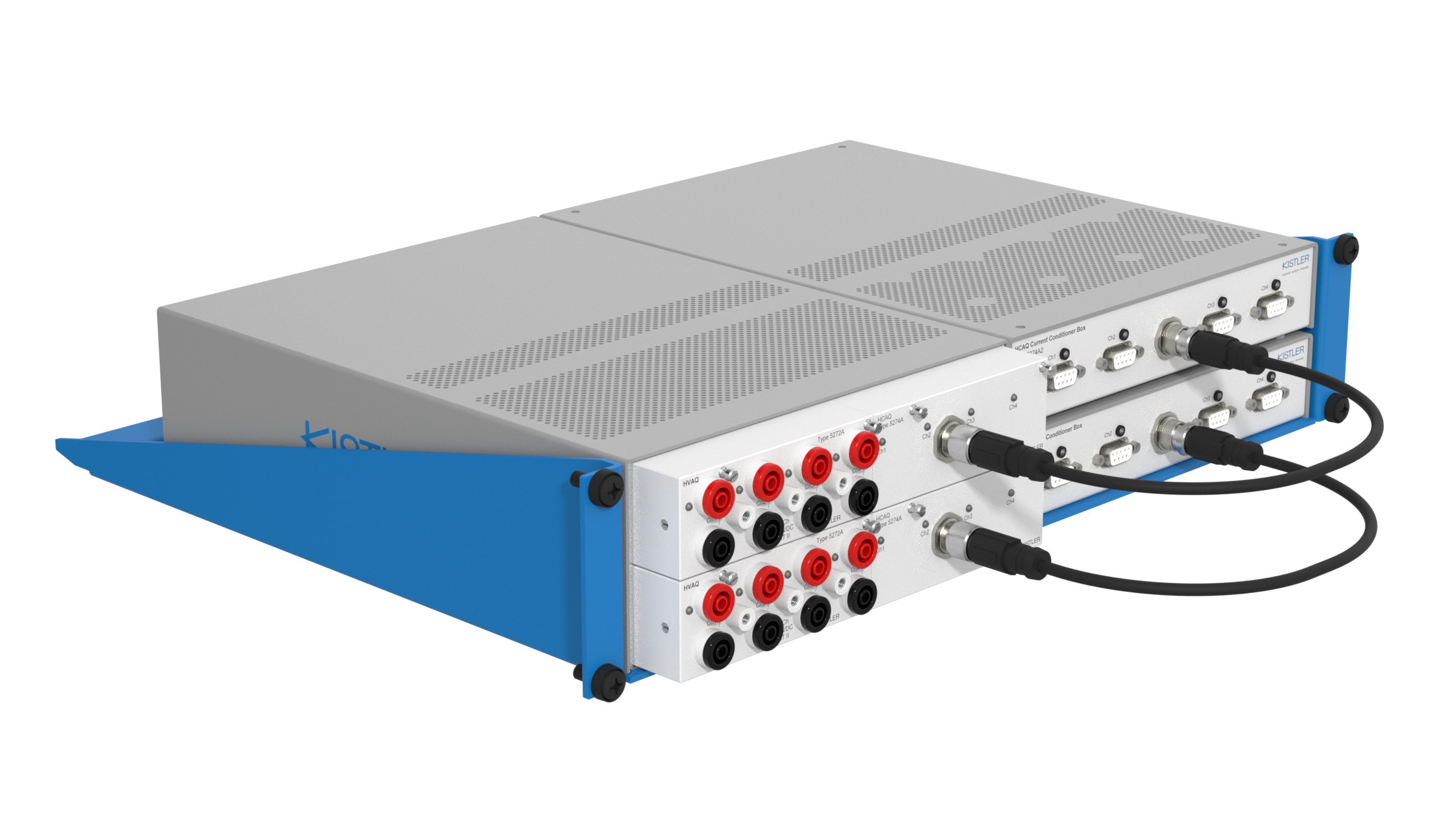
KiBox2 combines a 16-channel measuring unit with high-voltage and high-current modules, and can be scaled to as many as 64 channels. Kistler says the core unit processes data at 2.5 MS/s per channel, while the HVAQ module measures up to ±1000 Vrms and ±1500 Vpeak, and the HCAQ module supports currents up to 2000 A through the Current Conditioner Box.
In practical terms, the company is positioning the platform as a bridge between component-level analysis and full powertrain evaluation. Engineers can measure inverters, e-motors, power electronics, and resolvers individually, then extend the same setup into complete assemblies, range-extender hybrids, or on-track vehicle tests. Mechanical torque systems can also be connected, allowing electrical and mechanical power flows to be analysed together.
That breadth reflects where electrification testing is going. Teams working across automotive, marine, and aerospace projects are under pressure to reconcile efficiency, durability, controls performance, and energy management earlier in the programme, which increases the value of real-time loss analysis and synchronised multi-domain measurement.
Kistler is leaning on software as much as hardware. The new Cockpit E-Powertrain module handles immediate processing and visualisation, while jBEAM Powertrain supports deeper post-processing. Data is stored in ASAM-compatible MDF format, which should make it easier to fit the system into established engineering workflows rather than force another proprietary layer into already crowded test environments.
The appeal of platforms like KiBox2 is that they track the way propulsion development is actually evolving. Electric, hybrid, and range-extender architectures continue to overlap in real programmes, and suppliers able to combine high-voltage measurement, real-time calculation, and in-vehicle robustness in one package are likely to find demand well beyond the passenger-car market.