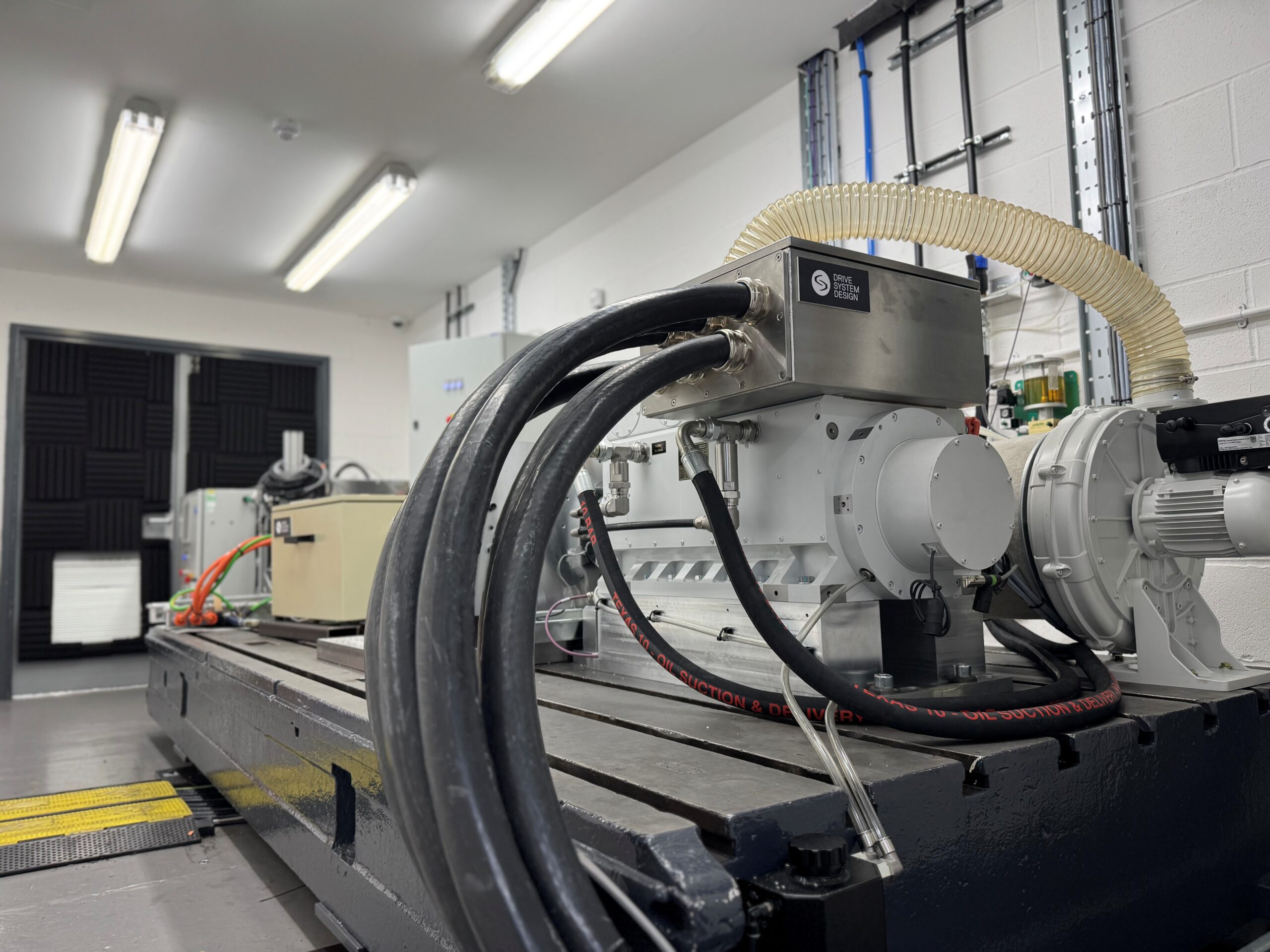
Drive System Design says it has cut electric motor optimisation testing time by more than 75 per cent with an automated eMotor and Inverter Optimisation Test Programme, as pressure builds across multiple sectors to shorten electric propulsion development without compromising traceability or repeatability.
The claim speaks to one of the slower parts of the electrification workflow. Motor optimisation mapping still tends to rely on lengthy dyno campaigns, repeated engineer supervision, and large amounts of manual intervention, even as programmes in aerospace, defence, marine, off-highway, and automotive markets demand tighter validation discipline.
DSD’s new routine, built in MATLAB/Simulink, automates four-quadrant Max Torque Per Amp loops and can run about 20,000 test points in under 48 hours. The system is designed for continuous unmanned operation, while automatically managing thermal conditions and generating repeatable data sets for model correlation and digital twin development.
The gain is not limited to test duration. Electrified propulsion teams need datasets that are clean enough to support control calibration, physics-based modelling, and later-stage verification, not simply faster dyno occupancy. As programme windows contract, the ability to extract more iterations from existing rig capacity becomes almost as important as adding new facilities.
DSD has been expanding that physical capacity as well. In 2025 the company brought a second UK high-speed eMachine test cell online at its Warwickshire base, built around a 600 kW dyno and speeds up to 24,000 rpm, alongside mirrored capability in the US. The optimisation programme appears designed to build on that footprint by reducing idle time and removing more of the supervision burden from repetitive mapping work.
The company is also tying automated mapping to earlier rig-based durability work. By recreating representative wheel or propeller loads in the test environment, it says engineers can expose mechanical behaviour and durability issues before full vehicle or aircraft integration, a step likely to matter most in aerospace and other cost-sensitive validation programmes where system-level test time is limited.
Rob Smith, head of Development & Test at Drive System Design, said multiple sectors are now entering the same electrification journey automotive has already gone through, but with higher expectations around traceability, safety, and validation discipline.