One of the UK’s most significant long-term forestry research projects has used Tubex tree shelters to protect thousands of young saplings while allowing scientists easy access to measure growth.
The Carbon Community’s Glandwr Forest Carbon Study examines how trees and soil store carbon. The project, now in its fifth year, aims to build a stronger evidence base for nature-based solutions that can increase carbon capture and improve woodland resilience.
Established in 2020, the 11.5-hectare study brings together scientists, forestry partners and volunteers to investigate how different tree species and soil treatments influence long-term carbon storage. More than 25,600 trees have been planted across 72 test cells, including oak, birch, cherry, alder and Sitka spruce, allowing researchers to compare growth and soil behaviours under controlled conditions.
The project focuses on approaches such as enhanced rock weathering, where crushed basalt releases nutrients and supports carbon capture, and soil microbiome inoculation, which introduces beneficial fungi from nearby healthy woodland to help young trees access nutrients more effectively. These methods together provide a growing dataset that will help clarify the role of soils and species selection in carbon sequestration.
Before the trial “we planted a few oaks grown from seed collected on site and they were eaten by rabbits within weeks,” said Heather Allen, Trustee at The Carbon Community. “When the trial was established, our forestry partner, Tilhill Forestry, strongly advised using shelters – and we agreed they were essential.”
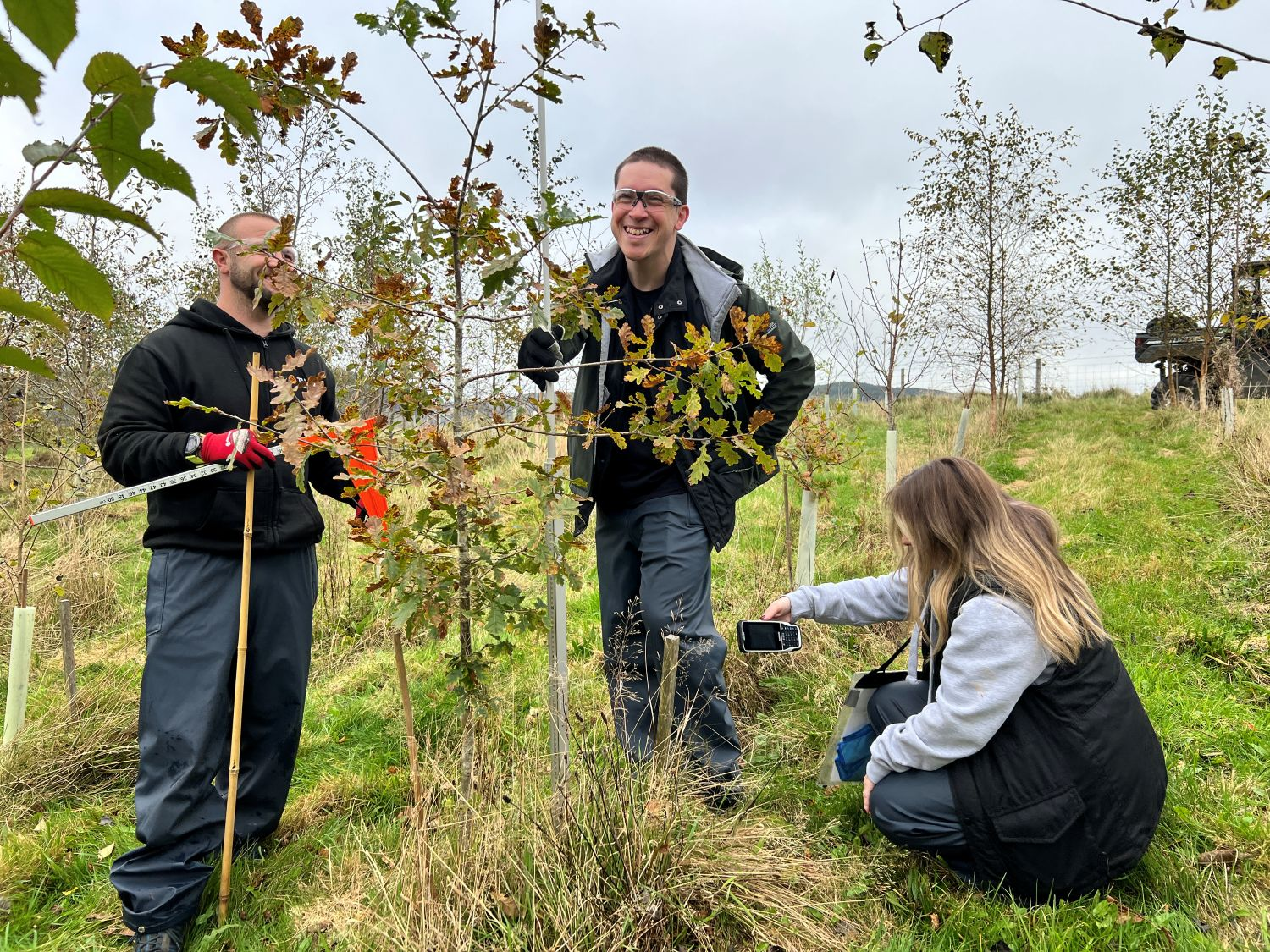
Tubex Easywrap shelters were selected as a practical way to protect vulnerable saplings while still allowing researchers and volunteers to access each tree for measurement and monitoring. All the broadleaf trees planted use the shelters, helping maintain consistent establishment across the test cells and supporting long-term data collection.
As an environmental charity, The Carbon Community also considered the long-term implications of introducing material onto the site. The ability to collect and return the shelters for recycling once they were no longer needed was an important factor, ensuring the project could minimise waste. Each spring, volunteers remove shelters from trees that have outgrown them and collect any that have loosened during winter weather. These are returned through the Tubex recycling network, supporting a circular approach to material use. “We made a commitment to collect every single shelter when the trees were big enough,” Heather said. “We’ve been running volunteer removal days for the past couple of years – and those shelters have already made their way back for recycling.”
Community involvement has remained central throughout the project, with volunteers supporting planting, maintenance and data gathering to help researchers monitor conditions consistently across the site. “This is a long-term project,” Heather said. “We’re looking at how ecosystems can help solve the climate crisis. Good early protection has supported the research and helped us manage the site sustainably.”
Now in its fifth year, the study is beginning to analyse above-ground and below-ground data on how the treatments affect carbon capture. Strong early establishment across the site has created a stable foundation for long-term scientific assessment, with findings expected to support future woodland creation.
For Tubex, involvement in the project has centred on supplying shelters that meet the specific needs of the study. The Easywrap design has supported repeated access for measurements, helped maintain consistent establishment conditions and ensured that all used shelters could be collected and returned for recycling once no longer required. This combination of protection, practicality and material recovery has allowed the research team to manage the site effectively while maintaining the project’s sustainability commitments.
For more information about The Carbon Community and the Glandwr Forest Carbon Study, visit https://thecarboncommunity.org
For information on Tubex tree protection, visit https://tubex.com