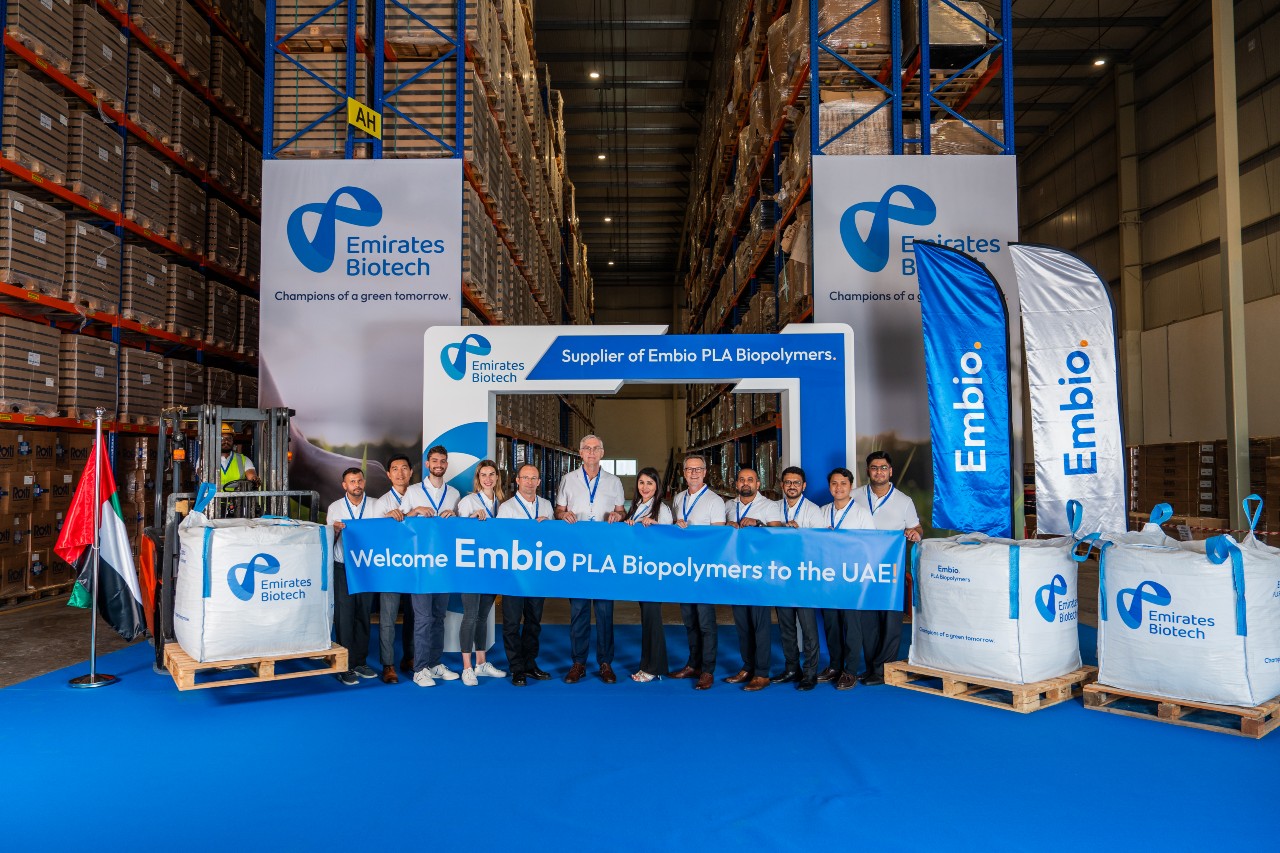
Emirates Biotech has launched its Embio product range, a new line of PolyLactic Acid (PLA) biopolymers produced in the UAE and aimed at regional converters, brand owners, and packaging manufacturers. The portfolio is being pre-marketed across the Middle East with locally held inventory to cut lead times and reduce minimum order quantities.
The Embio name is positioned to underscore both origin and intent — a biopolymer made in the Emirates, tied directly to the company’s biotechnology and sustainability agenda. With most PLA today still imported into the region, the move is designed to give Middle East customers easier access to plant-based materials without the usual logistical overheads or container-scale commitments.
“With Embio products, we are making renewable and compostable plastics accessible across the Middle East,” said Marc Verbruggen, Chief Executive Officer of Emirates Biotech. “The Embio name covers more than a product and stands as a symbol of our commitment to innovation, to reducing dependence on fossil resources, and to supporting the region in building a circular economy.”
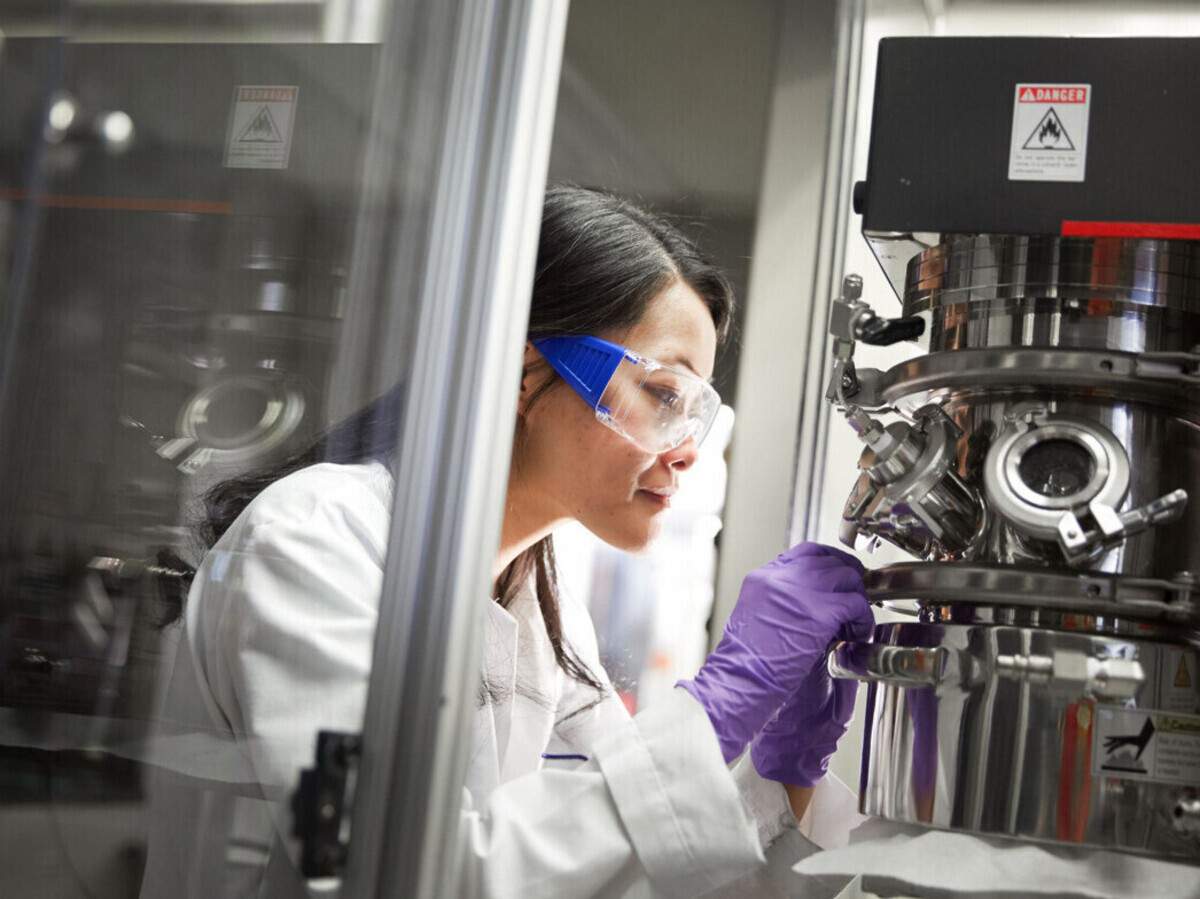
The Embio portfolio spans PLA grades for rigid and flexible packaging, coated paperboard, fibres, nonwovens, and 3D printing, targeting both conventional plastics applications and newer additive manufacturing use cases. Emirates Biotech says its technical team will support processing trials on customers’ existing lines, positioning Embio as a “drop-in” option rather than a complete process redesign.
“Our goal was to design a product that performs similarly to traditional plastics yet runs smoothly on existing equipment,” said Watid Watanyupaisan, Technical Solutions Manager at Emirates Biotech. “This makes the transition to sustainable materials simple and seamless for converters. Embio grades offer versatility, efficiency, and reliability across a wide range of processing technologies.”
Crucially for converters watching both margins and policy, Emirates Biotech is maintaining regional stock. “Our decision to maintain local inventory was driven by the need for greater flexibility and faster response times for our customers,” said Prashant Lohade, Sales Development Manager at Emirates Biotech. “With Embio grades now available in the UAE, customers can access PLA in smaller volumes and benefit from shorter lead times.” The message is clear: the company expects inventory, not marketing slogans, to shift demand.
According to Emirates Biotech, Embio PLA grades combine high clarity, strength, and processability with a substantially lower carbon footprint than traditional fossil-based plastics. The material can be mechanically recycled or industrially composted and does not leave persistent microplastics in the environment, aligning with tightening packaging and waste regulations across global export markets.
“Each Embio grade has been carefully developed and tested under strict conditions to ensure verified compliance with food-contact, bio-based, and compostability standards,” added Christophe Enkiri, Product Manager at Emirates Biotech. “This proves that performance and sustainability can coexist without sacrificing a material’s functionality.”
The launch is well-timed; the UAE has set a Net Zero 2050 target and is pushing circular economy initiatives, while global brand owners step up commitments on recycled and bio-based content in packaging. A home-grown PLA range with local stock will not, on its own, decarbonise the region’s plastics footprint — but it does give Middle East processors fewer excuses for delaying trials with biobased materials.