L3Harris Technologies has announced a $400 million plan to expand solid-rocket-motor production at its long-standing Camden, Arkansas site, marking one of the most significant propulsion manufacturing investments in the US defence-industrial base in more than a decade. The company will build a new 110-acre campus — the Arkansas Advanced Propulsion Facilities — including more than 20 production, assembly, and testing buildings dedicated to medium and large motors.
The investment is targeted squarely at boosting capacity for large solid rocket motors used in interceptors, missile-defence systems, long-range strike weapons and emerging hypersonic programmes. L3Harris expects the programme to multiply its output of large motors by a factor of six, shifting its capacity profile from predominantly small- and medium-format production to a broader, higher-throughput portfolio. The Camden site already manufactures more than 100,000 rocket motors annually across various sizes, reflecting its status as a core US propulsion hub.
Around $193 million of the investment is earmarked for Arkansas-based suppliers, a commitment that aligns with the state government’s push to expand its aerospace and defence footprint. The investment is expected to generate significant local supply-chain activity across construction, precision machining, materials handling and specialist manufacturing services. State officials have cast the project as a long-term anchor for regional industrial growth.
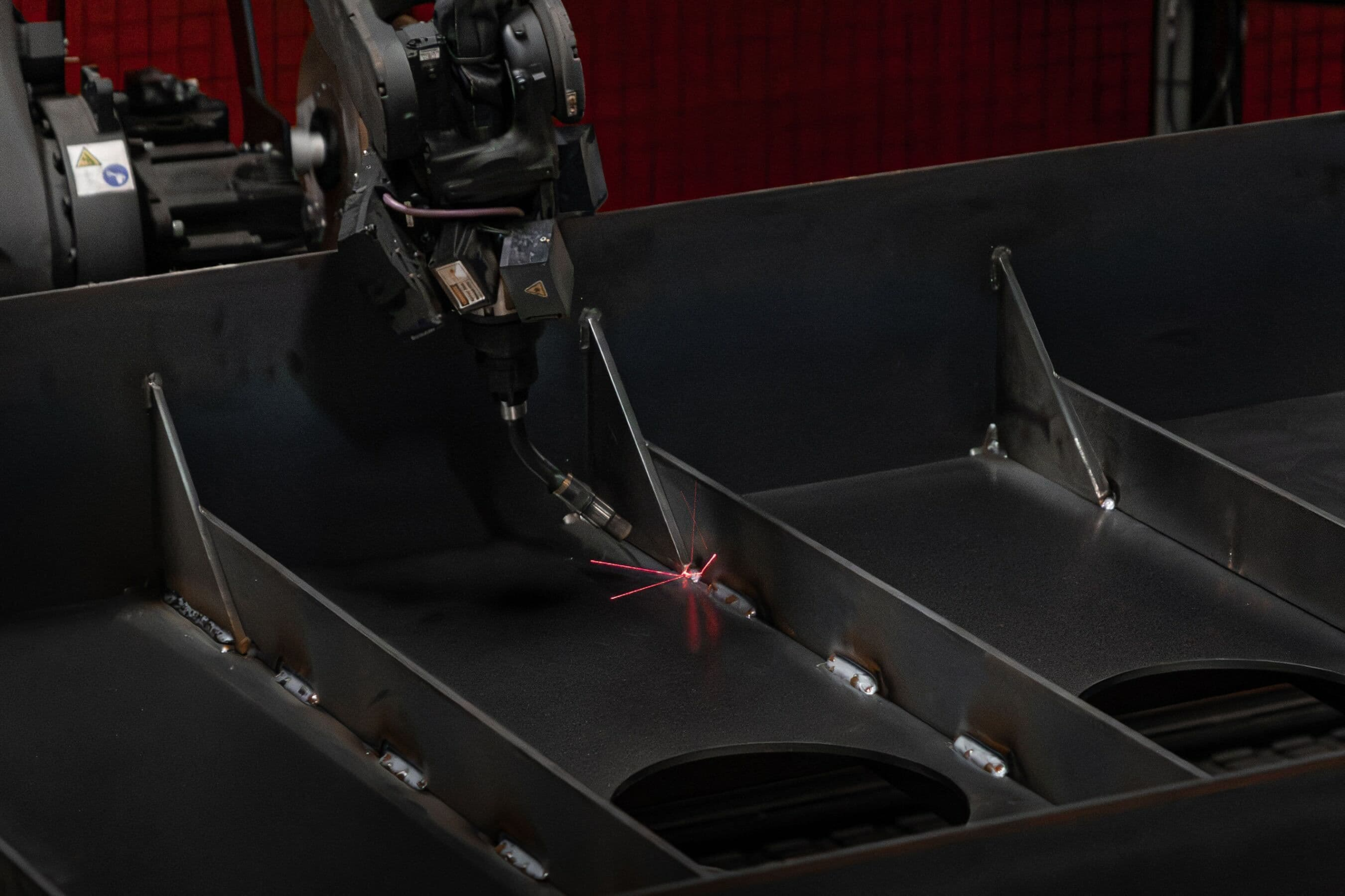
The new facilities will incorporate advanced manufacturing technologies, including automated composite processing, robotic material handling, digital quality-assurance systems and real-time production monitoring. L3Harris says the integration of these capabilities will enable tighter process control, shorter cycle times and faster scaling when contract demand increases. The company also plans to deploy autonomous ground vehicles for on-site motor transport, reflecting a broader industry trend toward automated handling in energetic-materials environments.
The strategic timing of the expansion is difficult to ignore. US and allied stockpiles of missile-defence and precision-strike weapons remain under pressure as global conflicts continue to draw down inventories. Washington has pushed prime contractors to accelerate throughput in propulsion, energetics and missile assembly — areas long constrained by ageing infrastructure and thin supply chains. A six-fold increase in large-motor capacity represents a step-change rather than an incremental uplift, and it will likely reshape competitive dynamics across the propulsion sector.
For L3Harris, the move also deepens its integration of Aerojet Rocketdyne, acquired in 2023, and signals a clear intention to cement its role as a primary supplier of strategic propulsion components. The company has been vocal about the need to rebuild domestic propulsion capacity to meet both near-term operational demand and the longer-term requirements of missile-defence modernisation.
Construction at Camden has begun, with initial production from the new facilities targeted for 2027. The ramp-up period will be watched closely, not least because qualification of large rocket motors remains one of the more technically demanding stages of defence manufacturing. Workforce availability, supply-chain resilience and contract alignment will determine how quickly the capacity increase converts into delivered systems.
As defence programmes shift from prototype cycles to serial production, propulsion bottlenecks have become increasingly visible. L3Harris’s expansion signals that industry is finally moving to close that gap — albeit under the familiar constraints of labour, materials and budget realities. Whether competitors respond with similar capacity bets will shape the trajectory of the US propulsion sector well into the next decade.