Particle detector upgrades at CERN’s Large Hadron Collider will rely on specially engineered LEWA diaphragm metering pumps to maintain a steady flow of liquid CO2 at temperatures down to -55 degrees Celsius. The equipment forms a core element of the detector cooling systems for the ATLAS and CMS experiments, both of which are being overhauled under the Phase 2 Upgrade to support a tenfold increase in luminosity.
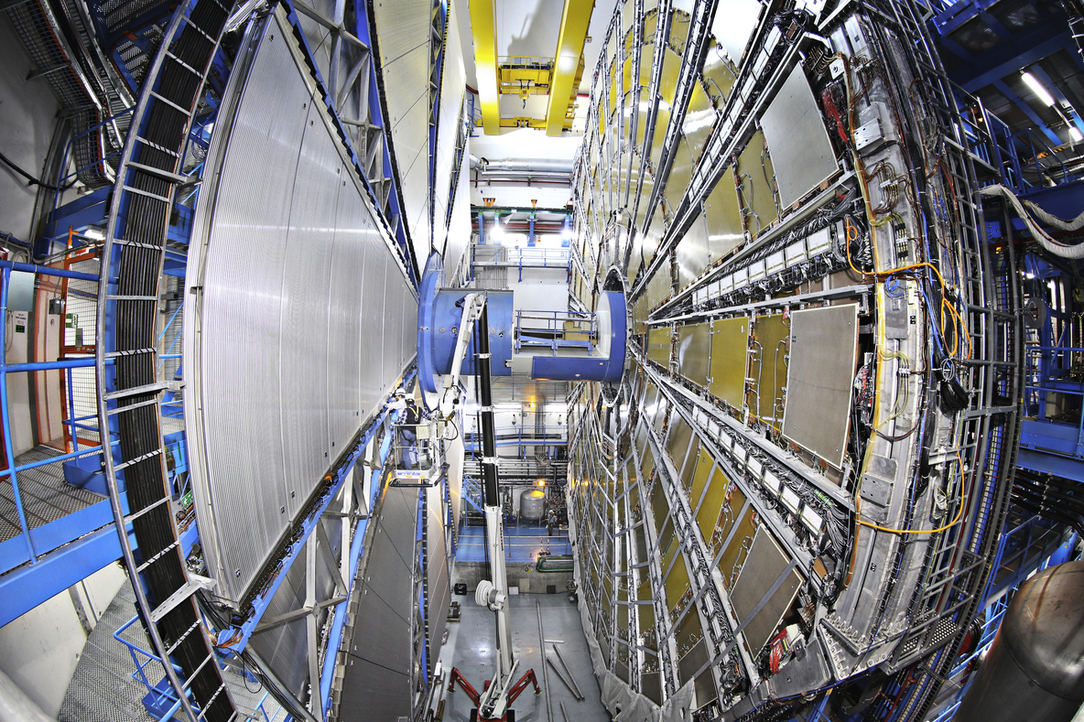
The LHC’s scale alone sets a demanding engineering brief — a 27-kilometre ring, four primary detector points, and individual detection systems the size of multistorey buildings. ATLAS stretches 46 metres in length, while CMS weighs 12,500 tonnes. Both depend on precise temperature control to safeguard new silicon trackers and endcap calorimeter detectors from radiation damage as higher collision rates push thermal loads upward.
Cooling engineers at CERN have opted for a two-phase CO2 system that offers high heat transfer and low viscosity at extreme temperatures. Jérôme Daguin, Cooling Engineer and CMS Cooling Coordinator at CERN, said: “ATLAS and CMS will use a two-phase CO2 cooling system for all their silicon trackers and endcap calorimeter detectors, which is an environmentally friendly option compared to other suitable cooling media. The system enables high heat transfer at a low viscosity and a temperature range that is well-suited for operating the detector.”
LEWA Switzerland AG, which has long supplied liquid CO2 pumping systems across the CERN site, was tasked with adapting its equipment for the new requirements. The brief proved technically restrictive. As Area Sales Manager Wieland Wolff explained, “The list of requirements was quite ambitious and required some very special adjustments which we made during prototype development.”
Those adjustments centred on preventing the -55 degrees Celsius CO2 from reaching the mechanical drive. LEWA’s engineers separated the valve head from the displacement system, incorporated a special silicone oil formulation, and specified a larger diaphragm head to reduce mechanical stress as materials stiffen in the cold. A dedicated reciprocating line was added to warm the hydraulic oil, ensuring the drive unit never drops below -20 degrees Celsius.
Controlling leakage risk was equally critical. The pump assemblies were coated with PTFE at flange interfaces and around lens gaskets to avoid false CO2 alarms — an event that would otherwise trigger automatic evacuation and an immediate stop to detector operations. Additional measuring points were integrated into the drive unit to meet CERN’s instrumentation requirements.
Eighteen LEWA ecoflow LDG pumps are now being deployed in service caverns outside the radiation and magnetic field zones, allowing remote stroke and speed control from CERN’s operations rooms. Once commissioning completes in 2028, the pumps will feed CO₂ through a network of transfer lines, distribution collectors, and fine cooling channels fitted directly against the silicon sensors.
Daguin noted that the pumps form “the core element of the cooling units for the Phase 2 Upgrade silicon detectors of the ATLAS and CMS experiments at CERN.” Further work is already planned, with LEWA and CERN preparing bending-cycle tests to map diaphragm life in extended service — a pragmatic step for equipment expected to run continuously at the threshold of its thermal envelope.