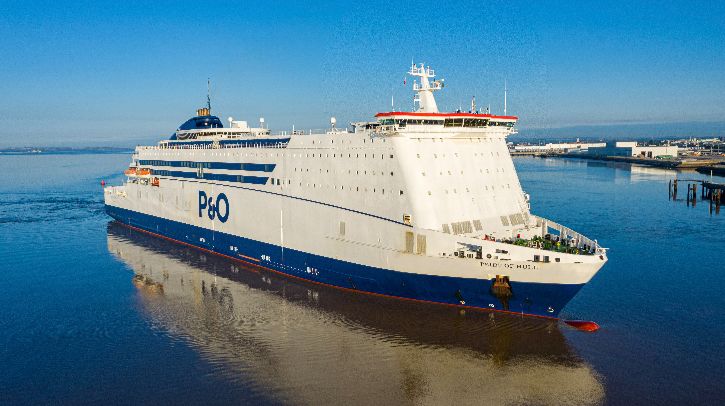

P&O has announced that its vessel, the Pride of Hull, will become the first ferry on the North Sea to run permanently on low-carbon biofuel.
Following a successful trial, the vessel will complete its Hull-Rotterdam route powered by biofuel B30, as P&O Ferries works to cut emissions across its fleet.
The 215m-long Pride of Hull carries up to 1,360 passengers and 400 freight vehicles on the route, which is a critical trade and travel link between the UK and Europe.
Now, with the transition to biofuels, the company says the ferry will cut greenhouse gas emissions by approximately 20% compared with traditional marine fuel, with no impact on the reliability of its services.
The transition ensures compliance with the EU’s FuelEU Maritime regulation, which came into force in January 2025 and requires ships with over 5,000 gross tonnage to progressively reduce their greenhouse gas intensity.
Stewart Hayes, fleet director for P&O Ferries, said, “This transition shows that meaningful emissions reductions are possible today, even on one of the largest ferries in Europe.
“By adopting biofuels, we’re helping our freight and passenger customers meet their climate goals while making journeys and supply chains cleaner. It’s another step toward our ambition for a more sustainable future for ferry travel and trade, part of DP World’s wider commitment to cut emissions by 42% by 2030. Our shared goal exceeds European standards to limit global temperature rise.”
Following consultation with engine manufacturer Wärtsilä and leading fuel suppliers, biofuel B30 was selected as the most practical transitional fuel because it reduces emissions without the need for costly vessel conversions. Alternative fuels such as methanol and ammonia would require significant engine modifications or replacements.
In related news, DHL and Henkel are utilizing sustainable marine fuel (SMF) as part of their collaboration