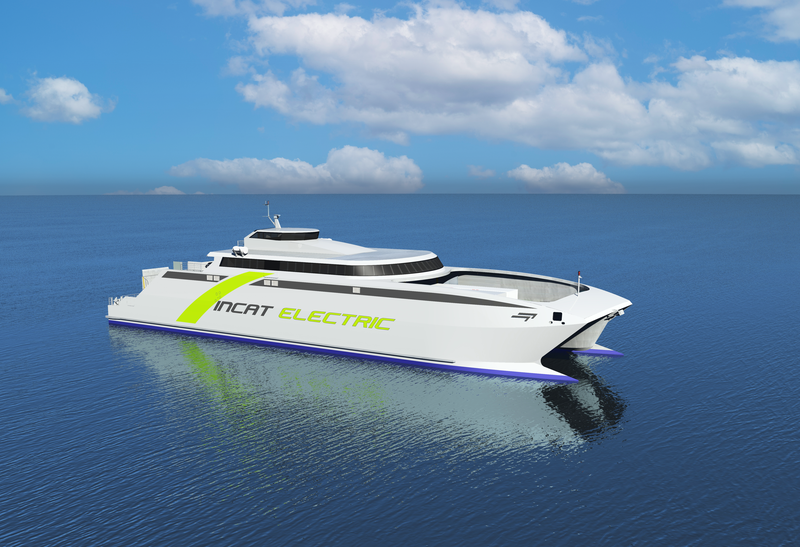

Incat Tasmania has unveiled what it states is the world’s largest lightweight battery electric ferry.
The design combines battery electric propulsion with lightweight aluminum-constructed vessels. This InCat ferry has a capacity to carry more than 2,000 passengers and 225 vehicles. The company’s series-produced 70m ship is intended to ensure costs for these new battery-electric vessels are minimized. There will also be an option to have bespoke ships designed, through the variety of internal fixtures, fittings and designs the company offers. This design is intended to help Incat make zero-emission battery electric vessels more readily available for the world.
Robert Clifford, founder of Incat, said, “Boeing was able to make vessels more readily available for the world with aircraft over the last 100 years, and we are working on an expansion plan to enable the Incat Shipyard to produce multiple battery electric vessels each year. We are offering the global ferry market options for series-produced vessels both small and large just like Boeing did with the mass-produced 737 and Airbus did with the larger Airbus 380. Our shipyard is ideally placed to produce multiple smaller 70m vessels as well as a larger vessel over 140m every year.”
“Our plan to double the workforce is underway and I anticipate that over the next couple of years, we will have more than 1,000 workers on-site. To reduce emissions in line with ambitions around the world, and to meet customer expectations over the next decade, hundreds if not thousands of zero-emission ships need to be built.
“Battery electric propulsion coupled with lightweight aluminum-constructed ships on shorter sea routes will be the ideal choice to cut emissions. Our plan is to revolutionize the world shipping industry once again by delivering more zero-emission ships more efficiently than anyone else. This will benefit ferry owners, their customers and, importantly, our environment.”
Read more of the latest ferries and cruises updates from the electric and hybrid marine technology, here.