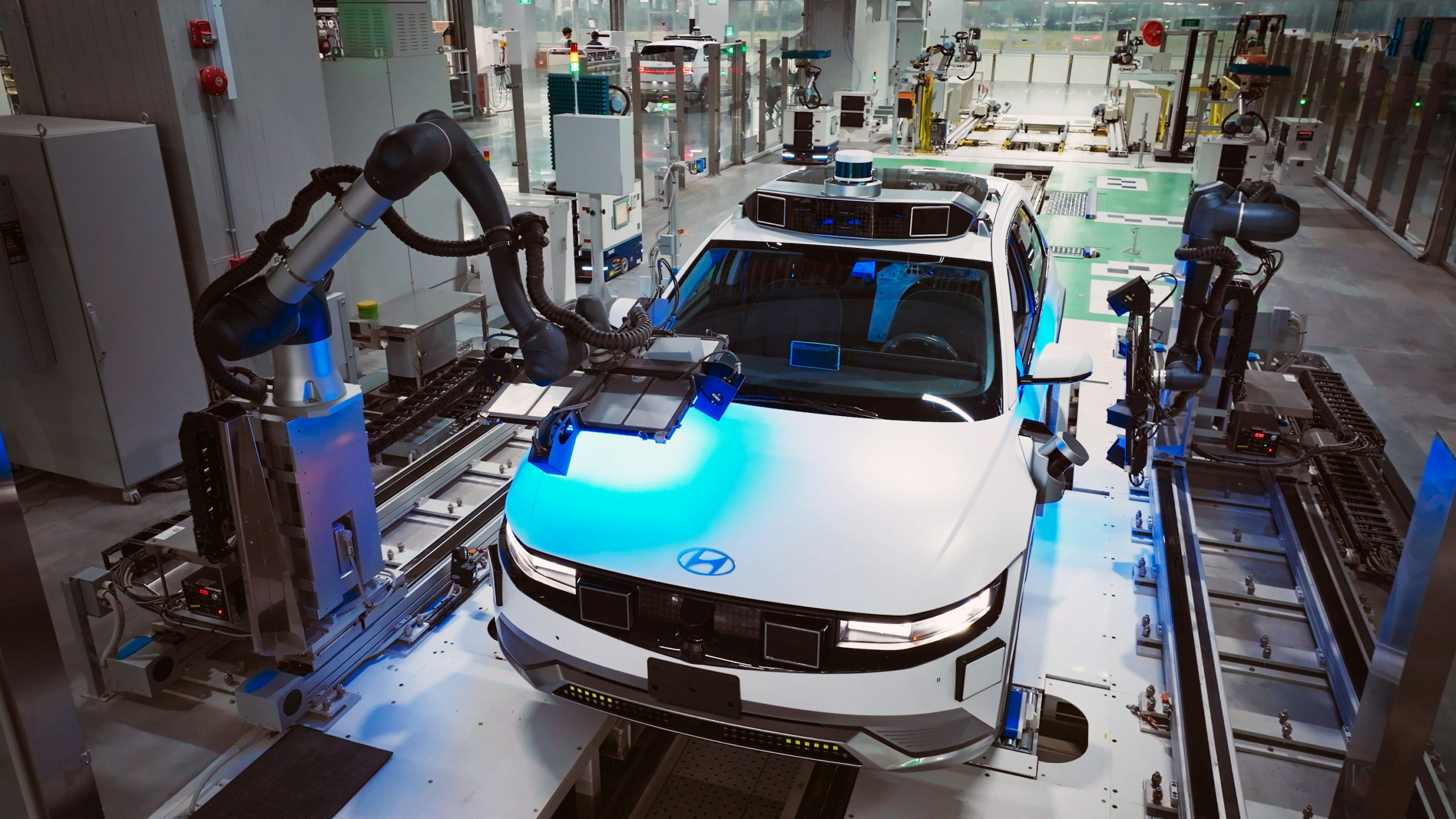
WATT Electric Vehicle Company will lead the British engineering of a passenger car and medium-sized electric delivery van planned for manufacture in Qatar under a long-term partnership with JTA International Investment Holding.
The project is centred on a new dedicated EV manufacturing facility in Qatar, with initial production expected to begin in early 2028. Industry reporting puts planned starting output at around 5,000 vehicles a year, with additional capacity intended as the programme develops.
Vehicle design and engineering will be led from the UK, including new Midlands premises WATT plans to open alongside its existing operations in Cornwall and Worcestershire. Manufacturing will take place in Qatar, separating vehicle and platform engineering from final production while keeping the programme tied to British intellectual property.
Both initial models will use WATT’s PACES aluminium skateboard architecture. The platform employs patented extrusion and joining methods intended to simplify tooling and jigging, addressing one of the largest capital barriers faced by lower-volume vehicle manufacturers.
That approach is particularly relevant to a plant beginning at approximately 5,000 vehicles annually. Conventional automotive manufacturing economics rely heavily on spreading large tooling and body-shop investments across high production volumes, which can make a new factory difficult to justify when its market is initially measured in thousands rather than hundreds of thousands of units.
WATT’s architecture is designed around lower- and medium-volume programmes. Its modular structure allows several vehicle types to share core engineering while avoiding some of the dedicated tooling normally required for a conventional pressed-steel body platform.
The Qatar programme will also require more than a straightforward transfer of a British specification. The partnership says vehicles will be engineered specifically for Gulf operating conditions, including thermal management, battery performance in extreme temperatures, and regional usage patterns.
High ambient temperature affects several systems simultaneously. Battery cells need controlled temperatures for performance and durability, cooling systems have to handle both propulsion and cabin loads, and charging behaviour can be constrained when the vehicle or battery is already carrying substantial thermal load.
Designing for those conditions from the beginning gives the engineering team more scope to size cooling equipment, airflow, insulation, battery controls, and ancillary systems around the actual operating environment rather than modifying a finished vehicle late in development.
The collaboration covers proprietary platform technology, complete vehicle engineering, product development, production planning, and establishment of manufacturing capability in Qatar. JTA is expected to provide investment capacity, regional market knowledge, and industrial relationships, while WATT supplies the vehicle architecture and engineering system.
Initial production is intended for Qatar before later expansion into other Gulf Co-operation Council markets and selected international destinations. That creates a manufacturing model in which the technology platform can be developed centrally while finished vehicles are produced closer to regional customers.
Local production can reduce some transport and tariff exposure, but it replaces those costs with a different set of industrial requirements. The factory still needs trained staff, quality systems, production equipment, incoming logistics, parts availability, homologation processes, and an aftersales structure capable of supporting road vehicles throughout their working lives.
A plant at the planned initial scale also has to avoid becoming dependent on excessively specialised manual processes. WATT’s low-capital manufacturing proposition will be tested on whether it can maintain repeatable quality and production economics without the huge volumes that normally justify automotive automation and tooling.
The project has not yet reached factory operation. Detailed implementation planning remains to be completed, and the partnership has not publicly specified total capital expenditure, the final production footprint, local-content targets, or the capacity envisaged beyond the initial output level.
Those figures will determine how extensive the Qatari manufacturing base becomes. A 5,000-unit plant can establish vehicle assembly and selected local processes, but deeper localisation of structures, battery systems, electronics, and other components requires sufficient volume and supplier demand to justify additional capital.
WATT is also using the partnership as part of a wider distributed manufacturing strategy. The company has indicated that similar satellite production models could eventually be developed in other regions, allowing its engineering and platform architecture to support locally manufactured vehicles without requiring one large export-oriented factory.
Early 2028 remains the first production marker. Before then, WATT and JTA have to complete the vehicle programmes, finish implementation planning, establish the factory, qualify the manufacturing process, and turn a British-developed aluminium architecture into road-ready vehicles engineered for Gulf conditions.