Syensqo has signed a partnership agreement with Bucci Composites to accelerate high-volume automotive composite manufacturing, including a licence for Syensqo’s Double Diaphragm Forming technology.
The collaboration will combine Bucci Composites’ structural composite manufacturing expertise with Syensqo’s DDF process and advanced resin systems. The companies will also work together to qualify material solutions with automotive OEMs, targeting applications including structural components, bodywork parts, and battery enclosures.
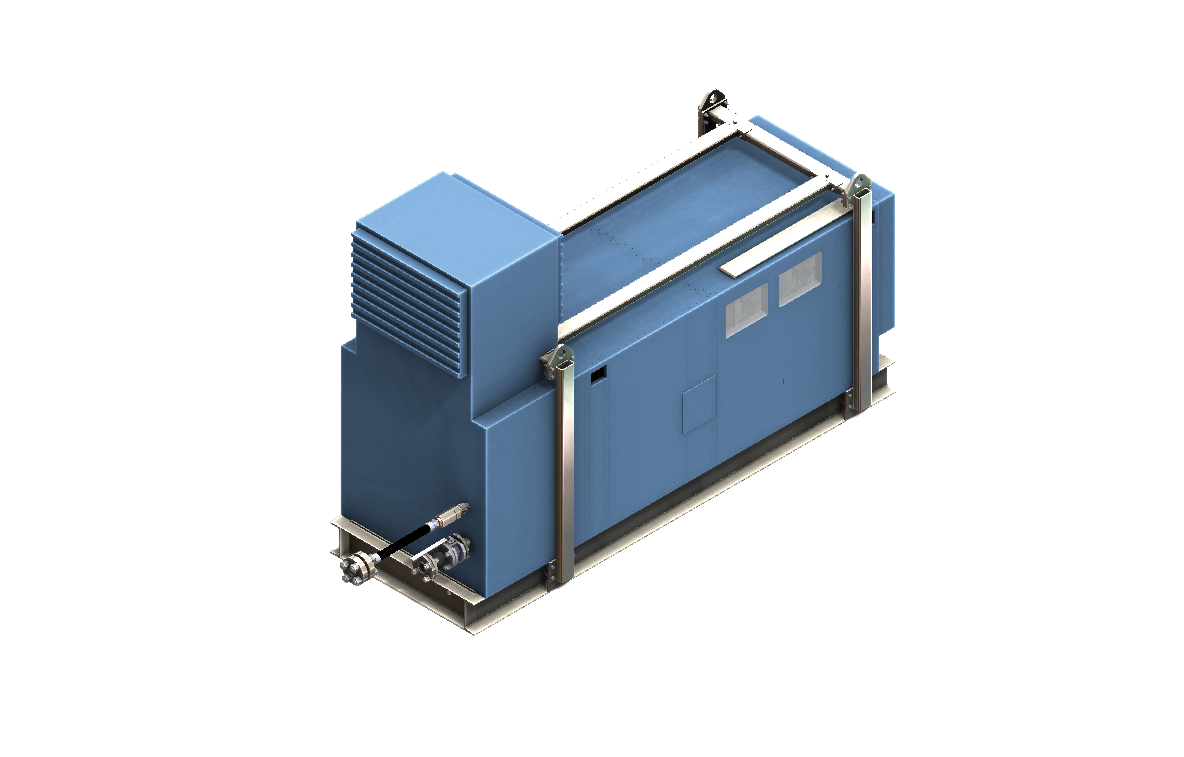
Double Diaphragm Forming is an advanced composite forming process designed to automate and simplify production while improving repeatability and reducing cycle times. It uses a highly automated single-step forming approach and is intended to integrate with existing manufacturing infrastructure, reducing the need for completely new production systems.
The agreement builds on a long relationship between the two companies and reflects a wider shift in automotive composites. Lightweight materials have been used in performance and specialist vehicles for decades, but higher-volume adoption has often been limited by cycle time, cost, joining, repairability, qualification, and production repeatability. Moving composite parts into mainstream vehicle platforms requires manufacturing systems that can satisfy automotive economics rather than only technical performance targets.
Battery electric vehicles have strengthened the case for structural lightweighting while introducing new design constraints. Battery enclosures, crash structures, underbody protection, closures, and lightweight body systems create opportunities for advanced composites, yet each part must meet mechanical, thermal, electrical, and service requirements while fitting into assembly environments built around repeatability and takt time.
The Syensqo-Bucci partnership is therefore centred on reducing the manufacturing friction that has held back wider composite adoption. A forming process that can improve cycle time, part accuracy, and infrastructure compatibility has a clearer route into OEM qualification than a process requiring a separate factory concept. Automotive manufacturers tend to adopt materials when production risk is controlled as tightly as performance.
Qualification remains one of the hardest parts of the transition. OEMs need validated material behaviour, predictable process windows, traceability, and evidence that parts can be produced consistently across production life. Composite variability can arise from fibre architecture, resin behaviour, temperature control, forming pressure, handling, trimming, cure conditions, and inspection methods. A production system has to manage those variables repeatedly rather than demonstrate a successful prototype.
Lightweighting economics are also changing. During the first wave of electric vehicle development, battery capacity often absorbed weight penalties while manufacturers prioritised launch speed. As platforms mature, engineers are looking more closely at mass reduction, structural integration, and total system efficiency. A lighter component can improve range, payload, handling, crash performance, or battery sizing, but only when its manufacturing cost and complexity are justified.
Composite battery enclosures illustrate the trade-off. They may offer corrosion resistance, impact performance, thermal insulation, and mass reduction, while also interacting with cooling systems, wiring, sealing, fasteners, underbody protection, service procedures, and end-of-life planning. The component cannot be judged in isolation from the vehicle architecture around it.
Manufacturing repeatability will determine whether composite technologies can scale beyond selected models. OEMs need processes that operators, automation systems, and quality teams can control within normal production environments. DDF’s emphasis on simplified logistics and compatibility with existing infrastructure is notable because automotive factories rarely introduce highly bespoke processes without a strong cost, throughput, and quality case.
There is also a European industrial dimension. Automotive manufacturers and suppliers are under pressure to retain advanced materials capability while managing electrification investment, platform consolidation, and global cost competition. Partnerships that link materials science, process technology, and component manufacturing help keep more value within the regional supplier base, especially where OEMs need qualified routes to lighter and more complex structures.
The next stage will be determined by qualification progress and production evidence. Composite technologies often promise performance in development, but automotive adoption depends on manufacturing confidence at scale. If DDF can help close the gap between prototype capability and repeatable production, the partnership could move advanced composites further into mainstream vehicle manufacturing rather than leaving them concentrated in low-volume applications.