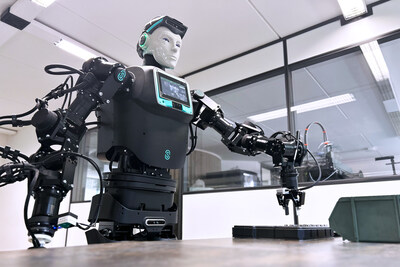
STMicroelectronics has taken a stake in Italian humanoid-robot developer Oversonic Robotics as the company prepares to expand production and applications for its RoBee cognitive platform.
Fondazione ENEA Tech Biomedical and investment vehicle SpotInvest have also joined Oversonic’s shareholder base. Financial terms and individual ownership percentages have not been disclosed.
The funding will support technical recruitment, manufacturing capacity, industrial development, and international growth. Oversonic is targeting factories, healthcare, services, process automation, and food production, while increasing its commercial presence in the United States.
RoBee is designed to work alongside people, machinery, and other robotic systems in complex environments. Oversonic says the platform is certified for factory use and is already operating in Italy and overseas, while healthcare versions are being tested for clinical and care settings.
Founded in 2020, the company operates a technology and production centre in Brianza and employs around 70 engineers and specialists across software, mechanics, electronics, and artificial intelligence. Its US operations include bases in Cincinnati and Los Angeles.
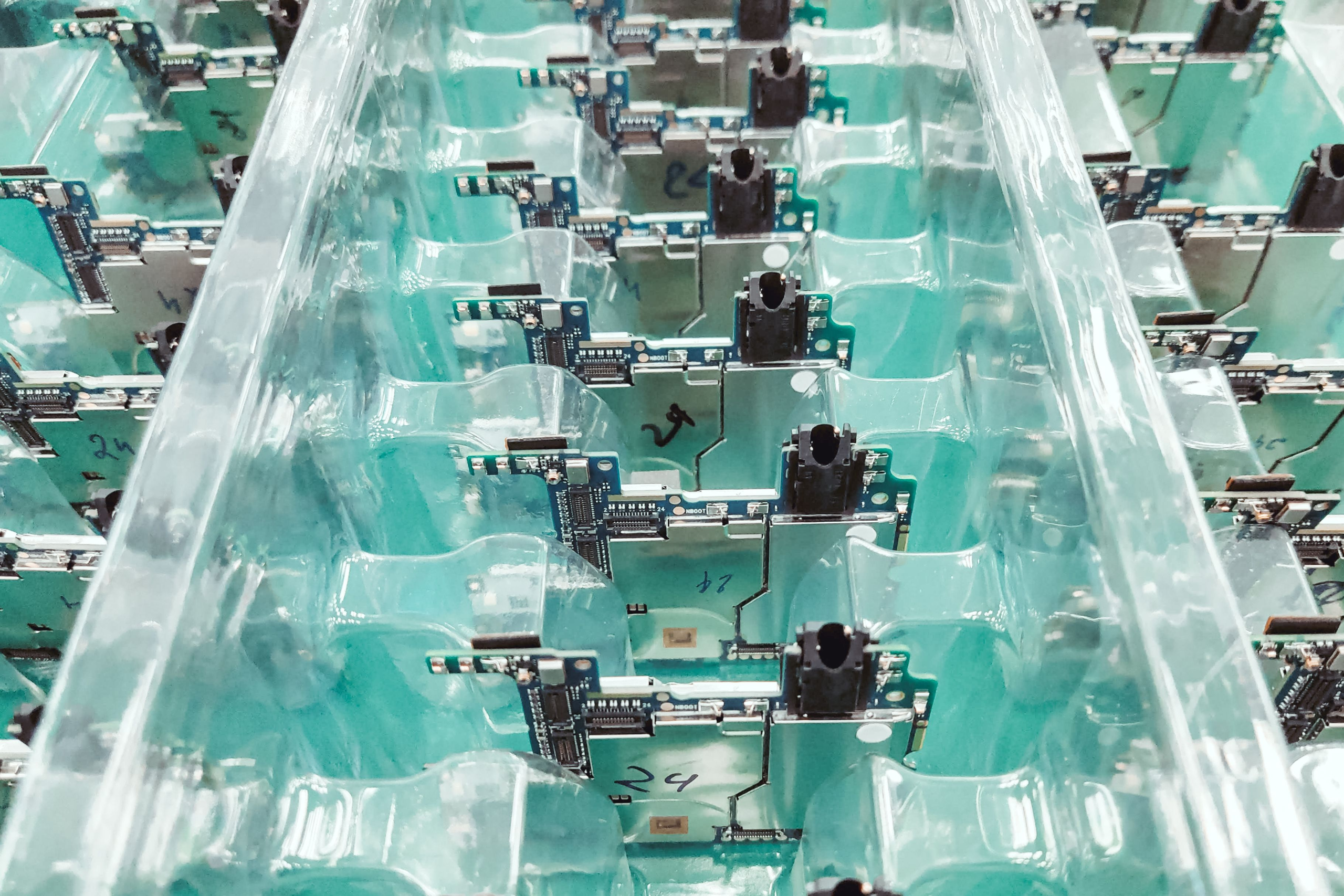
STMicroelectronics brings semiconductor and industrial expertise to a platform that depends on a dense combination of processors, sensors, power electronics, motor control, communications, memory, safety systems, and edge computing. Component selection will shape both performance and the ability to manufacture at greater volume.
Humanoid robotics is moving beyond exhibition demonstrations into controlled factory trials and early deployments. Automotive groups, logistics operators, electronics manufacturers, and technology companies are testing whether machines built around a human form can perform useful work in spaces designed for people.
BMW’s expansion of physical AI across its production systems places humanoids beside machine vision, autonomous logistics, simulation, and conventional industrial robots. The emerging factory model combines several forms of automation rather than expecting one platform to replace them all.
A humanoid body offers potential compatibility with stairs, doors, shelving, tools, workstations, and containers already dimensioned around human workers. Avoiding extensive fixed infrastructure could make the machines attractive for changing tasks or facilities where conventional automation would require costly redesign.
That flexibility carries difficult engineering compromises. Bipedal movement consumes energy and introduces balance risk, while arms and hands must deliver useful payload, reach, dexterity, and repeatability without making the robot too heavy or reducing battery life.
Operation around people requires dependable perception, obstacle detection, safe motion, and predictable behaviour when conditions differ from training data. Certification provides a framework for deployment, but every application still needs a task-specific risk assessment covering payload, tooling, environment, workers, and surrounding machinery.
Factories will judge RoBee through cycle time, uptime, maintainability, programming effort, spare-part availability, energy use, integration cost, and return on investment. A successful demonstration remains far removed from a machine completing repetitive shifts within a production schedule.
ST’s involvement can help Oversonic align electronic design with lifecycle requirements. Robotics prototypes often rely on specialist or low-volume hardware that becomes expensive, obsolete, or difficult to source when production grows, so industrialisation requires component qualification, test coverage, supplier planning, and design for assembly.
Semiconductor lifecycles are uneven across a humanoid platform. High-performance processors used for perception and artificial intelligence may change rapidly, while motor-control and safety components are expected to remain supported for many years, forcing designers to manage upgrades without repeatedly rebuilding the whole machine.
Power management remains another limiting factor. Additional computing, sensing, joint torque, and payload capability all consume energy, while a larger battery increases mass and can drive further demand from the actuators. Thermal management must also remove heat without compromising mobility or safety.
Scaling mechanical production presents parallel problems. Actuators, gears, bearings, structures, wiring, sensors, batteries, and covers have to be assembled and calibrated consistently, because small variations across many joints can influence accuracy, balance, noise, and reliability across the complete system.
Healthcare introduces separate requirements around cleaning, infection control, privacy, accessible interfaces, and clearly bounded autonomous behaviour. A platform that can operate on a factory floor cannot enter patient-facing work without additional engineering, evidence, and operational safeguards.
Serving several markets may broaden demand, but it can also fragment development across different end effectors, software, documentation, and service models. Repeatable applications involving difficult handling, inspection, hazardous environments, or labour shortages are more likely to support early commercial deployment than attempts to reproduce an entire human role.
The new shareholders give Oversonic more industrial support as it works through those constraints and expand semiconductor-industry involvement in physical AI. RoBee’s progress will ultimately be measured through reliable operating hours, maintainable systems, and production tasks completed without continuous specialist supervision.