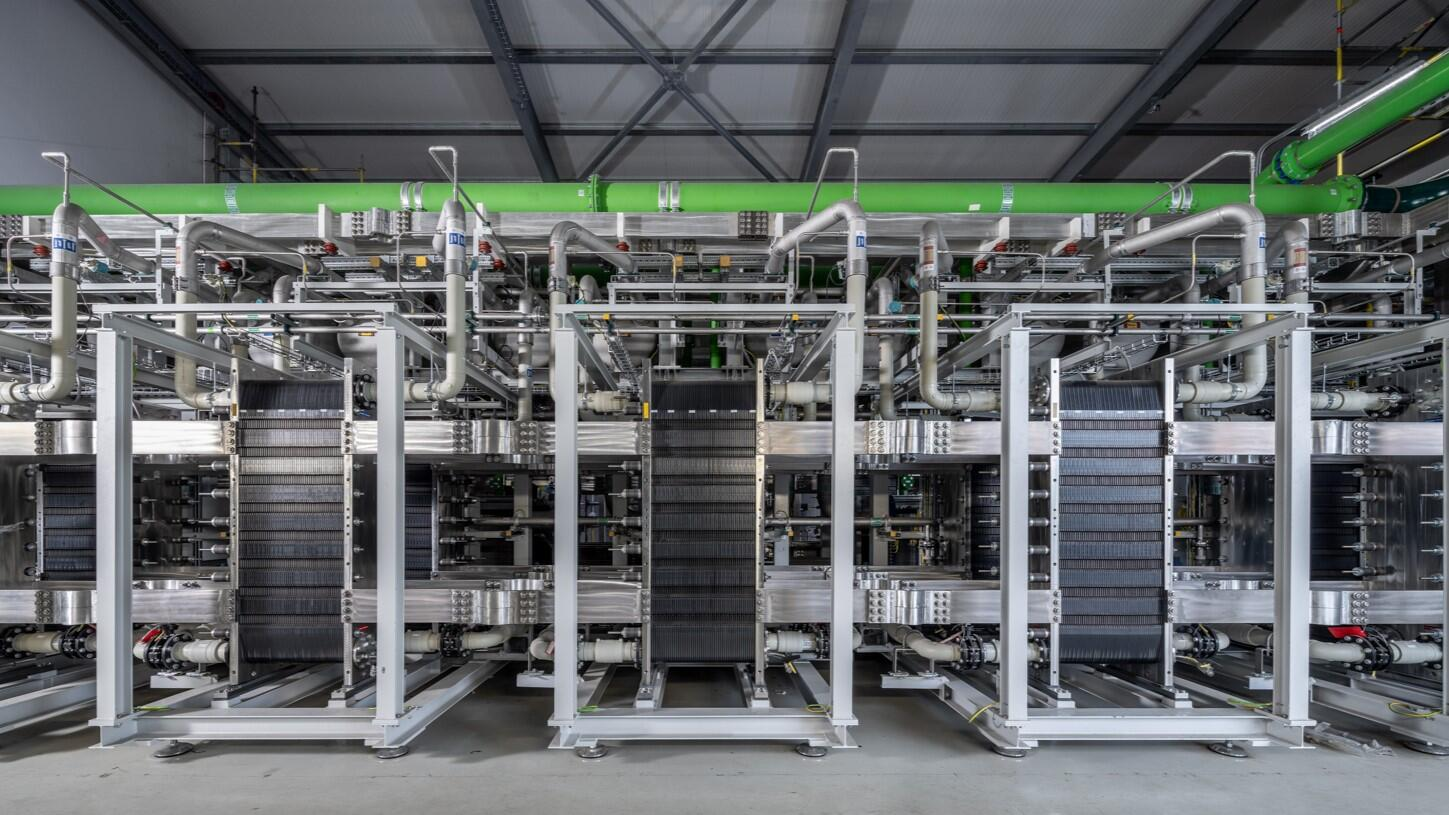
The UK hydrogen developer Protium has advanced its proposed 70MW South Tees Net Zero production hub to the Invitation to Offer stage of the government’s second Hydrogen Allocation Round, following completion of project due diligence. The development allows commercial discussions on potential revenue support to continue but does not mean that a subsidy agreement, construction contract or final investment decision has been secured.
Protium disclosed the due diligence outcome on 19 November, after the Department for Energy Security and Net Zero advanced South Tees within Hydrogen Allocation Round 2 (HAR2). An Invitation to Offer permits negotiations over a Low Carbon Hydrogen Agreement, the revenue support mechanism for qualifying production. Its conditions, applicable volumes and eventual award remain subject to discussion with government.
South Tees Net Zero is designed as a 70MW electrolysis facility supplying industrial customers on Teesside. Protium projects annual production of up to 11,000 tonnes of renewable hydrogen, around 433GWh on the energy basis used in its announcement. Neither figure is measured output: the hub has not been built, and the eventual production profile depends on operating hours, electricity supply and customer demand.
Electrolysis uses electricity to split water into hydrogen and oxygen, with additional equipment needed to prepare feedwater, condition the gas and manage heat. The hydrogen’s lifecycle emissions depend primarily on the electricity and other inputs used. To qualify for low-carbon revenue support, a project must meet the applicable hydrogen standard rather than relying on the description ‘green’ or assuming that all electricity-driven hydrogen production has the same carbon intensity.
Teesside has substantial industrial energy demand, including applications in which electrification is difficult because a process requires particular heat characteristics or a reducing gas. Hydrogen may also be used as a feedstock in chemical processes rather than simply as a replacement fuel. The practical case for a shared production hub will depend on customers’ pressure, purity, volume and delivery requirements, as well as the cost of hydrogen relative to established alternatives.
A 70MW electrolyser installation also needs rectifiers, water treatment, gas purification, cooling, compression and suitable storage or distribution systems. Variable electricity prices and operating hours can create tension between economical production and customers’ requirement for reliable deliveries. Matching the plant’s output to pressure, purity and daily volume specifications is consequently a design and contracting issue alongside the headline electrolysis capacity.
Protium estimates that the project could avoid at least 45,000 tonnes of carbon dioxide emissions each year once operational. This is a forecast based on assumed production and displacement of other fuels or feedstocks, not an audited emissions saving from a functioning plant. Actual performance would depend on the electricity supply, utilisation, customer applications and carbon-accounting rules used to assess the delivered hydrogen.
The hydrogen allocation process is intended to bridge part of the gap between the cost of producing qualifying low-carbon hydrogen and the price industrial customers can pay. Its prospective Low Carbon Hydrogen Agreement would support revenues under defined conditions. An Invitation to Offer signifies progress through due diligence and the beginning of further commercial discussions; it does not itself fund a completed plant or guarantee that financial close will follow.
Moving into the Invitation to Offer stage reduces one procedural uncertainty but leaves substantial commercial and engineering decisions. A final investment case will require a credible customer demand profile, an acceptable electricity supply arrangement and agreement on the equipment and infrastructure needed to deliver hydrogen safely. Timing and pricing for grid access can be material to a high-power electrolysis project, particularly in a constrained industrial region.
Protium also announced that a separate 20MW South Wales project had passed due diligence in HAR2. The two developments are at the same procedural stage but have different locations and proposed capacities. South Tees remains subject to its own contract negotiations, equipment and construction decisions, and customer supply arrangements; an advance by the other project is not evidence of an award in Teesside.
The developer has separate hydrogen activities in South Wales, including its Pioneer 2 facility. Such experience may inform operations and hydrogen distribution, but output from those activities cannot be counted as South Tees production. The proposed Teesside plant would operate at a different scale and require its own electricity, water, safety and delivery infrastructure before commercial commissioning.
The next defined milestone is agreement on revenue support terms, followed by a final investment decision and the construction and commissioning work needed to deliver hydrogen. Up to 11,000 tonnes of annual supply could serve local industry if the project proceeds as designed. As of 21 November, the verified change is that the 70MW proposal has cleared due diligence and entered the HAR2 Invitation to Offer stage.