Pfannenberg will present industrial fire alarm signaling systems at the 2026 NFPA Conference & Expo, with products aimed at facilities where alarm audibility, visibility, and environmental durability have to be engineered rather than assumed.
The company will exhibit at booth 1731 during the event, which runs from June 22 to 24 at the Mandalay Bay Convention Center in Las Vegas. Its display will centre on audible, visual, and combined signaling devices used in industrial plants, utilities, warehouses, process sites, and other facilities where machinery noise, dirt, bright lighting, and hazardous areas can affect fire alarm coverage.
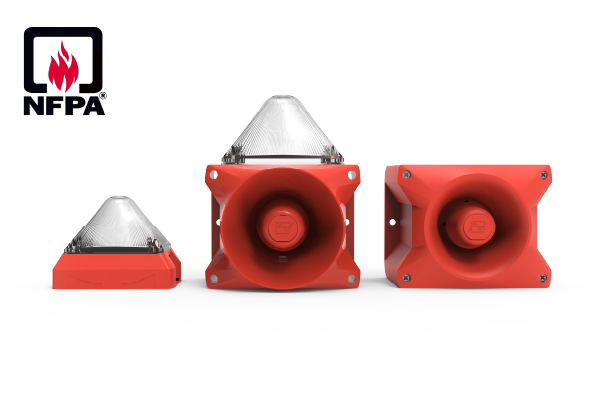
Pfannenberg’s PATROL, PYRA, and PROTECT product families will form the main technical showcase. PATROL audible and combination devices are designed for adverse environments, including locations with high ambient noise and bright surroundings, with adjustable sound output typically ranging from 85 to 122 dB(A). PYRA visual signaling products provide industrial notification through high-visibility beacons and flexible installation options.
“As industrial environments become louder and more complex, the need for clear, code-compliant alarm coverage continues to grow,” said Jacob Vernon, Product Manager for Audible and Visual Signaling at Pfannenberg. “Through our PATROL, PYRA, and PROTECT product families, along with tools that make selection easier and more precise, we enable engineers to design reliable, standards-aligned fire alarm systems for harsh industrial settings.”
Alarm design in industrial settings depends on more than device selection. Sound pressure, background noise, visual field coverage, mounting position, surface reflectivity, and environmental exposure all influence whether a system performs as intended once installed. Pfannenberg says its fire alarm signaling products comply with NFPA 72 requirements for public and private mode applications, with T3 tone sounders meeting offset requirements of 10 dB for private mode and 15 dB for public mode.
The company is also tying its hardware offer to planning software. Its products integrate with BIM software and Pfannenberg’s sizing and 3D coverage tools, giving engineers a route to model audible and visual performance before installation. That planning stage can reduce the risk of blind spots in facilities where equipment layouts, building geometry, and operating noise levels make alarm coverage more difficult to judge from drawings alone.
PROTECT Series devices extend the range into harsher and hazardous environments, using die-cast aluminium housings with Xenon or LED visual signaling options. The devices include 80 selectable tones, four externally selectable additional tones, pre- and main-alarm functionality, and adjustable sound output from 86 dB to 116 dB. Selected models are certified for Class 1 Division 2 hazardous locations, while certain devices also carry SIL 2 certification.
Pfannenberg is presenting the range for applications from standard industrial areas to battery energy storage systems and hazardous process environments. Further product information is available through Pfannenberg’s signaling technologies page.