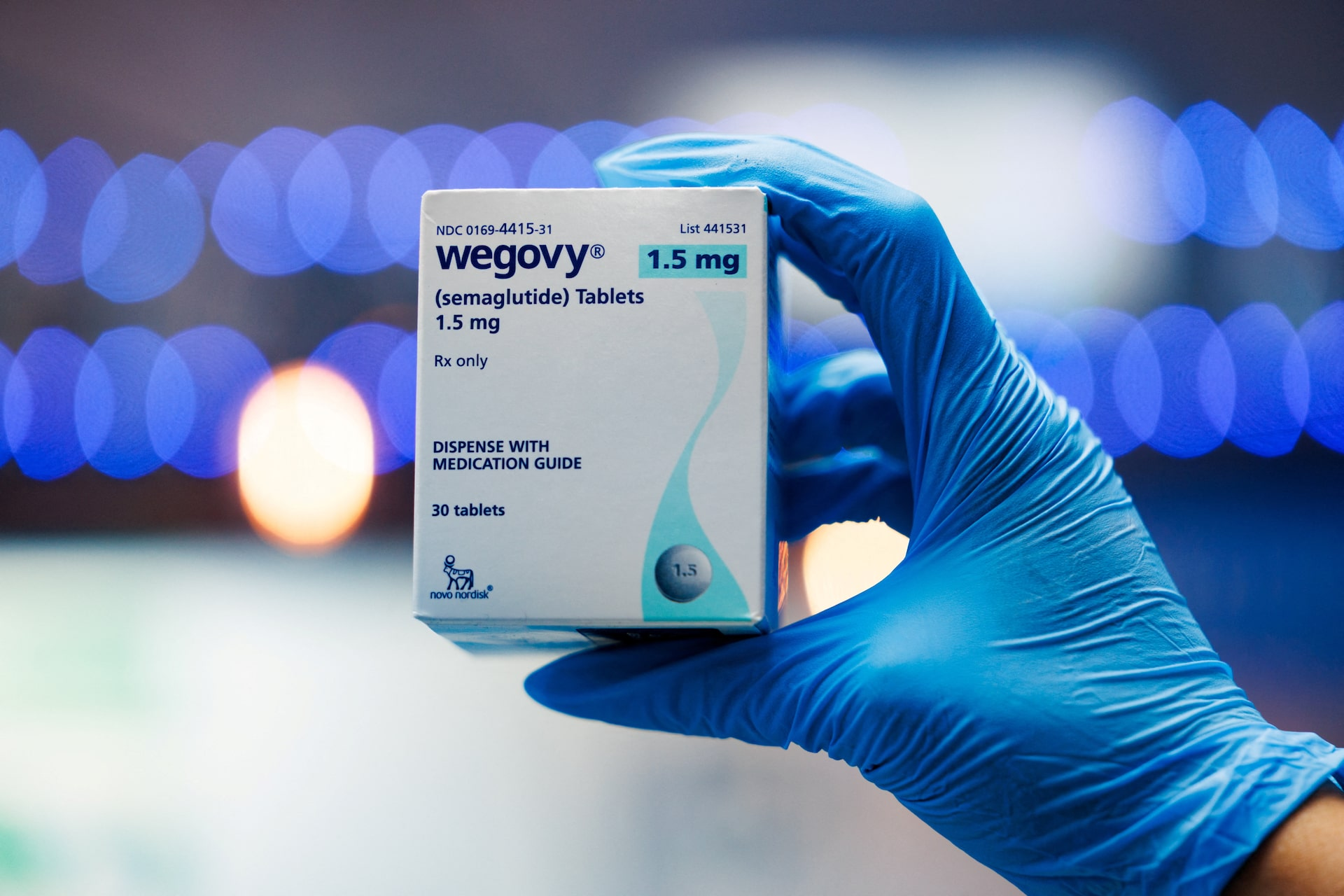
Novo Nordisk has secured European Commission approval for an oral formulation of Wegovy, creating the first tablet-based GLP-1 weight management treatment authorised across the European Union.
The once-daily medicine contains 25 mg of semaglutide and extends the Wegovy franchise beyond its established injectable presentation. Novo Nordisk reported a mean weight reduction of approximately 17% among adults who followed the treatment regimen in the supporting clinical programme.
Approval creates an additional commercial and manufacturing route as competition intensifies across obesity treatment. Pharmaceutical companies are investing heavily in active pharmaceutical ingredient production, sterile filling, injection devices, solid-dose manufacturing, packaging, and distribution.
Moving semaglutide into a tablet removes the injection pen, needle, cartridge, and sterile fill-finish stages associated with the existing product. It replaces them with a different process chain involving formulation, blending, granulation, compression, coating, moisture control, dissolution testing, and blister or bottle packaging.
Oral delivery of a peptide medicine remains technically demanding because the gastrointestinal system breaks down proteins and restricts absorption. The formulation must protect the active ingredient, release it under controlled conditions, and achieve sufficiently consistent exposure across patients.
Those constraints help explain the 25 mg tablet strength, which is substantially higher than the quantity administered through weekly injection. A greater active ingredient requirement per patient can transfer pressure upstream even when final-dose production becomes simpler.
Semaglutide manufacture involves several controlled synthesis and purification stages, followed by analytical testing capable of detecting impurities, degradation, and variation in potency. Increasing tablet volume may therefore require additional active ingredient capacity rather than merely redirecting material from fill-finish lines.
Novo Nordisk will have to plan output across both presentations while demand remains uncertain. Patient preference, prescribing practice, reimbursement, availability, pricing, adherence, and clinical response will determine how rapidly oral treatment gains share from injectable products.
The tablet may attract patients who are unwilling or unable to use an injection, expanding the market rather than simply dividing existing Wegovy demand. Conversely, dosing instructions and daily adherence could lead some patients to prefer a weekly pen.
Manufacturing flexibility will influence how effectively the company responds. Sterile filling and device assembly require specialist plants with long construction, validation, and regulatory lead times, while solid-dose facilities use more established equipment but still need product-specific processes, containment, cleaning validation, and analytical control.
Packaging economics also change. Tablets can reduce the volume and component count associated with disposable pens, removing precision plastics, glass, springs, needles, and mechanical assembly. Blisters and bottles nevertheless require barrier performance sufficient to protect a moisture-sensitive peptide formulation throughout distribution and storage.
Device supply has been a significant constraint across injectable medicines. Pen manufacturing involves moulded components, needles, cartridges, inspection, assembly, labelling, and final testing, with each stage requiring qualified suppliers and tightly controlled tolerances.
An oral product diversifies exposure to that chain, although it introduces dependence on tableting capacity and pharmaceutical packaging materials. Production economics will depend on active ingredient consumption, yield, batch size, line speed, quality-control workload, and market allocation rather than the final presentation alone.
European commercial volumes will vary by country because approval does not guarantee reimbursement. National health systems apply different assessments, eligibility criteria, budgets, and pricing negotiations, leaving factories to serve markets that may adopt the treatment at very different rates.
Novo Nordisk must therefore avoid building one fixed production assumption around a fragmented launch. Capacity can be increased in stages, but the long lead time for pharmaceutical facilities requires decisions before complete demand data is available.
Competition adds further uncertainty. Rival companies are developing oral and injectable medicines using different molecules and combinations, each seeking improved weight reduction, tolerability, dosing convenience, or manufacturing economics.
Once commercial tablet processes, analytical methods, packaging systems, and regulatory controls have been established, Novo Nordisk can apply that experience to further indications and future oral peptide products. The capability may prove as valuable as the first medicine produced through it.
The new dosage form also changes distribution. A tablet may occupy less space and eliminate some handling associated with injection devices, although storage requirements will depend on the final approved packaging and stability profile.
Oral Wegovy broadens Novo Nordisk’s production options at a point when relying on one delivery system would increase operational exposure. The tablet can relieve some pressure on device and fill-finish capacity, but any expansion will still be bounded by the supply of semaglutide and the efficiency with which it is converted into finished doses.
The product brings obesity treatment closer to conventional high-volume pharmaceutical operations without making the manufacturing problem conventional. Peptide synthesis, absorption technology, process validation, and demand forecasting remain unusually complex even when the medicine leaves the factory as a tablet rather than an injection pen.