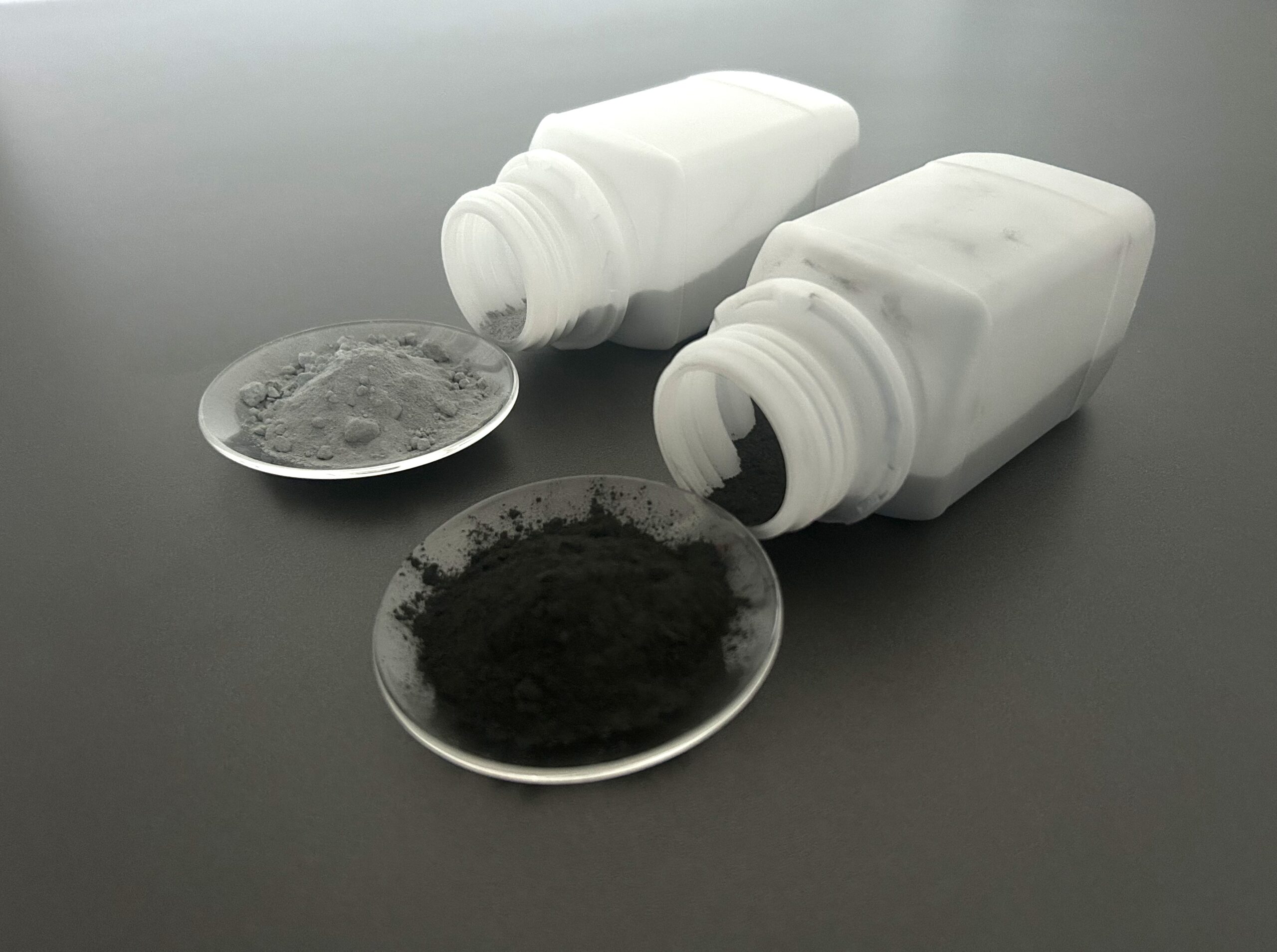
UK-based Metalysis has been selected by British rocket manufacturer Skyrora to develop and supply a new refractory alloy powder, Tanbium, for rocket nozzles and combustion chambers. The partnership sits under the European Space Agency’s General Support Technology Programme (GSTP), which funds early-stage research to advance European industrial capability in space technology.
The nine-month initial phase will focus on producing and characterising the alloy powder before testing its suitability for additive manufacturing using Skyrora’s in-house laser powder bed system, Skyprint 2. The objective is to raise the technology readiness level through printed demonstrator components, with later stages targeting full-scale prototype testing.
Tanbium is a tantalum–niobium refractory complex concentrated alloy developed by Thermo-Calc Solutions AB using Integrated Computational Materials Engineering. The alloy is designed to combine high-temperature strength, improved ductility, and oxidation resistance with enhanced laser processability — properties intended to extend engine component lifetimes and burn durations while supporting additive production.
Metalysis will manufacture the alloy using its patented FFC Cambridge electrolysis process, a solid-state method that allows metals with contrasting properties to be combined without the melting constraints of traditional alloying. The company says the process enables the creation of bespoke high-entropy and refractory alloys directly in powder form, well suited to downstream additive manufacturing.
Nitesh Shah, chief executive of Metalysis, said the programme allows the company to demonstrate its alloy expertise within a strategically important application area. “Metalysis is very excited to be participating in this ESA funded project – utilising our alloy and high entropy alloy experience to produce the new alloy Tanbium, which is predicted to significantly enhance space component lifetimes,” he said.
Skyrora business development director Derek Harris said the project supports both materials innovation and domestic capability. “The UK and Europe are currently heavily dependent on the US for C103 alloy, which is used across aerospace propulsion. Tanbium will enable full domestic sourcing with the powder produced by Metalysis and components printed and tested by Skyrora,” he said.
ESA technical officer Simon Hyde described ultra-high-temperature-capable materials for rocket motor applications as a key item within the Agency’s work plans, noting that the Tanbium collaboration combines bespoke alloy design with a unique production approach suited to additive manufacturing.
Further analysis of the programme’s industrial and technical implications appears in the latest IN Defence feature, ESA-funded Tanbium project tests new direction for propulsion alloys.