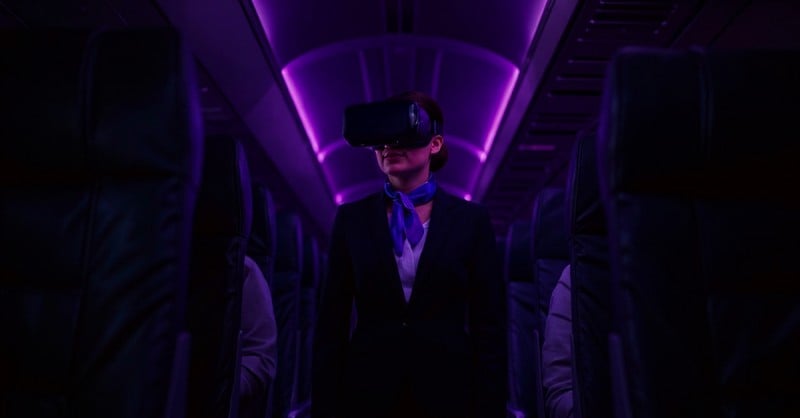
Lufthansa Aviation Training GmbH (LAT) has appointed Berlin-based PACE Aerospace and Information Technology GmbH to lead the development of next-generation virtual reality training for flight and cabin crews. The collaboration forms part of the D-CEET project — short for Digital Twin & Virtual Reality Cabin Emergency Evacuation Training — a major initiative designed to digitise and modernise airline safety preparation.
Under the programme, PACE will create fully immersive training modules using its proprietary Pacelab WEAVR platform, integrating a detailed digital twin of the Airbus A320neo cabin. The modules will replicate critical emergency and evacuation procedures, supported by integrated eye-tracking and physiological monitoring to measure crew performance in real time.
The system is intended to handle training for up to 20,000 Lufthansa Group crew members annually, across both passenger and cargo operations, and will also be made available to external airline customers through Lufthansa’s Cabin Emergency Evacuation Trainers (CEETs) worldwide.
Sarah Engelmann, Project Lead D-CEET at Lufthansa Aviation Training, said: “PACE brings an exceptional track record in VR training solutions and seamless process integration — qualities that make them the ideal partner for this groundbreaking project.”
Frank Ehlermann, CEO of PACE, added that the partnership “redefines how safety and emergency training is delivered” and further strengthens PACE’s long-standing relationship with the Lufthansa Group.
The D-CEET project aligns closely with recommendations from the International Civil Aviation Organization (ICAO) to increase the use of digital training environments for safety-critical roles. By embedding realistic, repeatable emergency simulations within a data-driven virtual platform, the system aims to complement — rather than replace — physical simulator training, reducing cost and increasing scalability.
PACE’s Pacelab WEAVR platform, already proven across aerospace and automotive training programmes, enables rapid development of high-fidelity interactive content that can be adapted across devices and locations. According to the company, this flexibility allows airline operators to update procedures and scenarios quickly as regulations, aircraft models, or safety standards evolve.
Virtual reality training is gaining traction across commercial aviation as airlines seek to improve training efficiency and knowledge retention. Unlike static mock-ups or 2D video tutorials, VR environments allow trainees to practise emergency responses in a safe yet realistic setting, reinforcing muscle memory and decision-making under pressure. For airlines, the approach also provides consistent data on trainee performance and engagement, which can be used to refine both content and delivery.
Lufthansa Aviation Training, headquartered at Munich Airport, operates close to 200 training devices across ten global locations, including simulators for all major aircraft types and full-scale cabin mock-ups. The new VR capability will be integrated within this existing infrastructure, forming part of a broader digitalisation strategy for crew training.
The partnership marks a further step in the aviation sector’s gradual shift toward mixed-reality and digital-twin technologies — a move driven as much by regulatory alignment and cost control as by innovation. If successful, Lufthansa’s D-CEET model may set a new operational benchmark for scalable, data-rich emergency training across the industry.