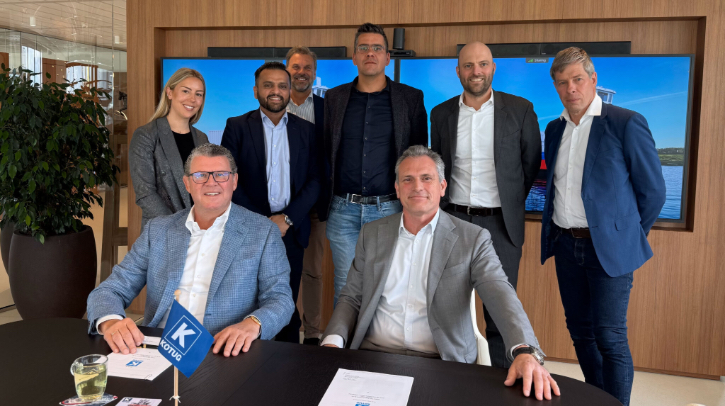

The Lithuanian Inland Waterways Authority (VVKD) has awarded a contract to Kotug Push-it for what it says will be the first fully electric pusher tug to operate in the Baltic States. The project is co-funded by the European Union under the ‘Next Generation Lithuania’ Economic Recovery and Resilience Plan, which allocates €11m (US$12m) for low-emission inland waterway solutions.
Electric operations
The vessel, designed and engineered in the Netherlands, will be built at the Padmos Shipyard in Stellendam and is expected to be operational by the end of 2026 following a testing phase. The EPusher-L will operate on the Nemunas River and is designed for cargo transportation using barges supplied by VVKD. The vessel can operate for up to 50 hours – or 300km – on a single charge.
The contract follows an international public tender and has received the green light from Lithuania’s National Security Coordination Commission. In addition to the electric pusher tug, VVKD will also invest in an electric crane and new barge infrastructure.
Decarbonizing shipping
The switch from diesel to electric is expected to eliminate up to 91,500kg of CO₂ emissions annually.
“This project represents a leap in sustainable inland shipping,” said Ard-Jan Kooren, president and CEO of Kotug International. “We are proud to support Lithuania in realizing its ambition to decarbonize its transport sector through innovative electric propulsion. The EPusher-L is built to deliver zero-emission performance without compromising on power or endurance.”
Vladimiras Vinokurovas, director general of VVKD, said, “This investment marks a strategic shift in our operations. We are beginning the transition to an electric fleet. The first vessel will be used to maintain inland waterway infrastructure, and in the near future, we will increase the number of electric vessels.”
In related news, Klaipėda Port recently launched what it says is the first green hydrogen- and electricity-powered ship in Lithuania. Commissioned by the Klaipėda State Seaport Authority for €12m (US$12.5m), the vessel is being built by West Baltic Shipyard and Baltic Workboats to accept waste from other ships entering the port. Click here to read the full story