Karman Space & Defense has agreed to acquire Walker Precision Engineering, giving the US aerospace and defence manufacturer an established production base in the UK and mainland Europe.
The transaction follows a binding agreement by growth investor BGF to sell its interest in Glasgow-headquartered Walker, which manufactures mission-critical components for aerospace, defence, and space customers. Financial terms have not been disclosed.
Founded in 1979, Walker has developed long-standing relationships with prime contractors and major equipment manufacturers, supported by a vertically integrated operating model that retains critical manufacturing processes in-house. Greater control over machining, inspection, treatment, and production scheduling can be particularly valuable where programme requirements are sensitive, volumes fluctuate, or tolerances leave little room for rework.
Since BGF invested in 2017, Walker’s annual revenue has more than doubled, while capital expenditure has added specialist machinery, a purpose-built manufacturing operation in Basildon, and additional capacity in Poland. Those investments have broadened the company’s manufacturing footprint while reducing its dependence on a single site.
Karman currently operates 17 facilities in the United States and supplies highly engineered components and assemblies for space, missile, hypersonic, and defence programmes. Walker provides the group with a European platform and an established route into regional aerospace supply chains.
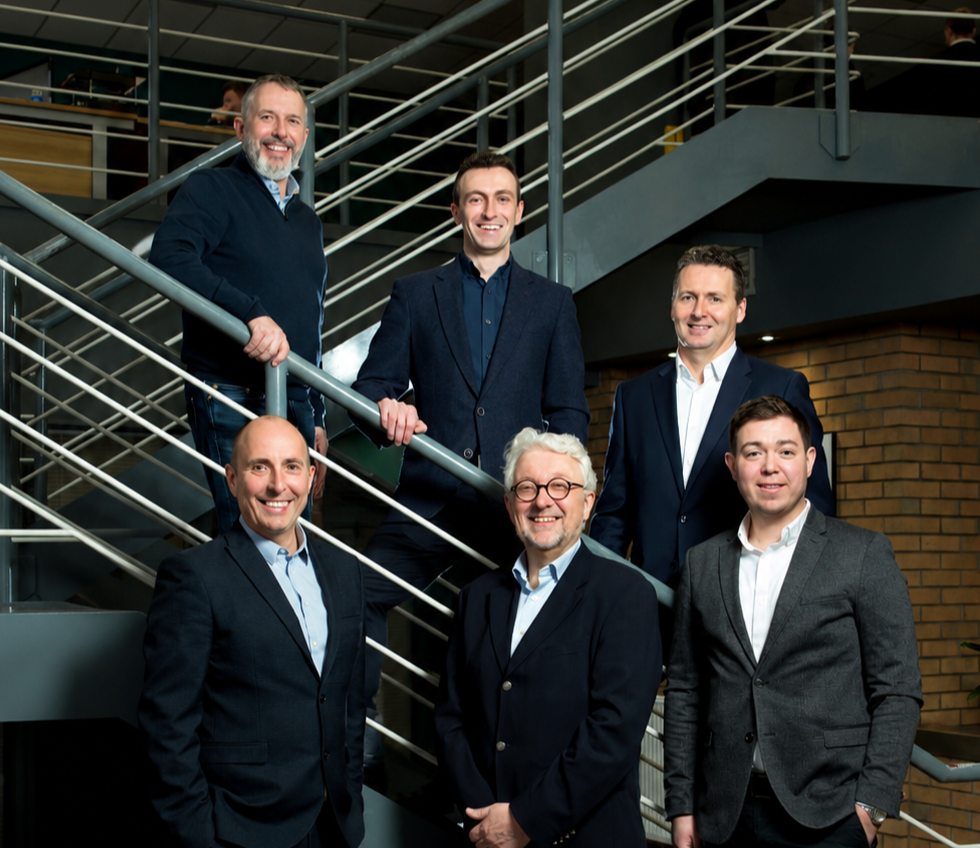
Chief executive George Adams is expected to continue leading Walker, preserving continuity across its customer relationships, workforce, and technical operations. Maintaining that stability will be important because aerospace approvals, process knowledge, and programme history are often tied closely to individual facilities and experienced teams.
Qualified capacity attracts strategic buyers
Aerospace and defence buyers are increasingly seeking companies that combine equipment, approved processes, customer qualifications, and active programme positions. Building a new factory may be relatively straightforward compared with securing the certifications, production records, and commercial trust needed to supply safety-critical or controlled components.
Approval histories and process qualifications can take years to establish, especially where manufacturing involves complex materials, special processes, or tightly controlled inspection requirements. Acquiring an embedded supplier therefore provides a faster route to production than constructing capacity and qualifying it from the beginning.
Walker’s integrated model also addresses weaknesses exposed by recent disruption across castings, forgings, machining, heat treatment, surface treatment, and specialist materials. Every external process can introduce another capacity constraint, transport movement, commercial dependency, or quality handover.
Bringing more operations under direct control shortens feedback loops when parts fall outside specification or customer schedules change. It also enables capital investment to be planned across linked production stages, rather than increasing output in one area while leaving another process as the limiting factor.
The Basildon facility and Polish operation provide Karman with a broader European manufacturing footprint, creating options for regional production, additional resilience, and access to customers seeking capacity within Europe. Moving aerospace work between sites, however, can require fresh approvals, process validation, and customer consent, so capacity cannot always be transferred as quickly as conventional manufacturing equipment.
Defence demand remains strong across missiles, surveillance systems, propulsion, space hardware, and uncrewed platforms, while commercial aircraft manufacturers are attempting to increase output against persistent shortages of skilled labour and approved components. Precision parts may represent only a small proportion of total programme value, yet one missing certified component can delay testing or stop final assembly.
Investment in the sector has accelerated accordingly, with defence acquisition volumes rising as investors pursue qualified capacity and scarce technical capability. Businesses with established programme positions command particular interest because future workloads can extend across several production and support cycles.
Karman will need to combine Walker’s European relationships with its broader programme base without disrupting delivery or diluting the company’s operational strengths. Customers will expect continuity in quality systems, technical contacts, data control, and manufacturing performance throughout the ownership change.
Employees will also look for evidence that the acquisition brings further investment rather than an extended integration process. Additional machinery, recruitment, and qualified capacity would provide a clearer measure of progress than organisational consolidation alone.
The transaction gives Walker access to a larger group’s capital, customer base, and programme reach at a point when aerospace manufacturers are being asked to increase output without weakening quality. Karman, meanwhile, gains an established European operation with proven production capability across Glasgow, Basildon, and Poland.
New programme awards, improved delivery performance, and sustained capital expenditure will determine whether the acquisition strengthens Europe’s aerospace component base or simply changes the ownership of capacity that already exists.