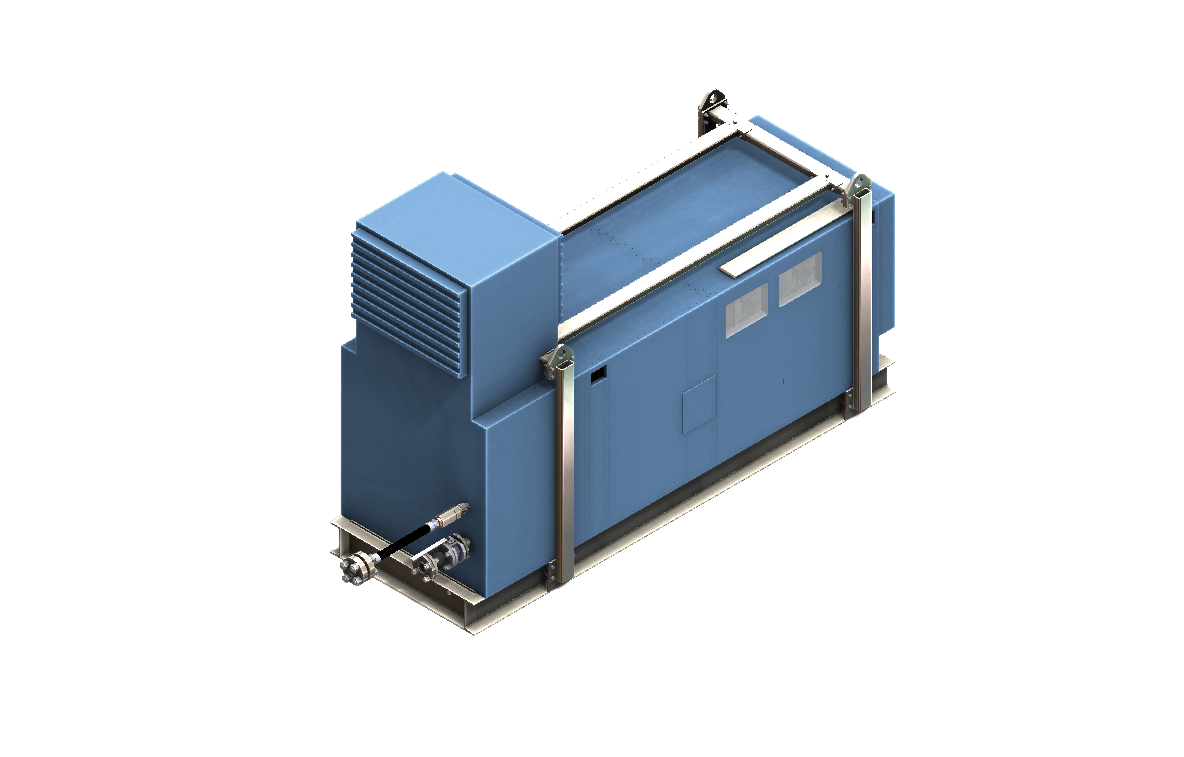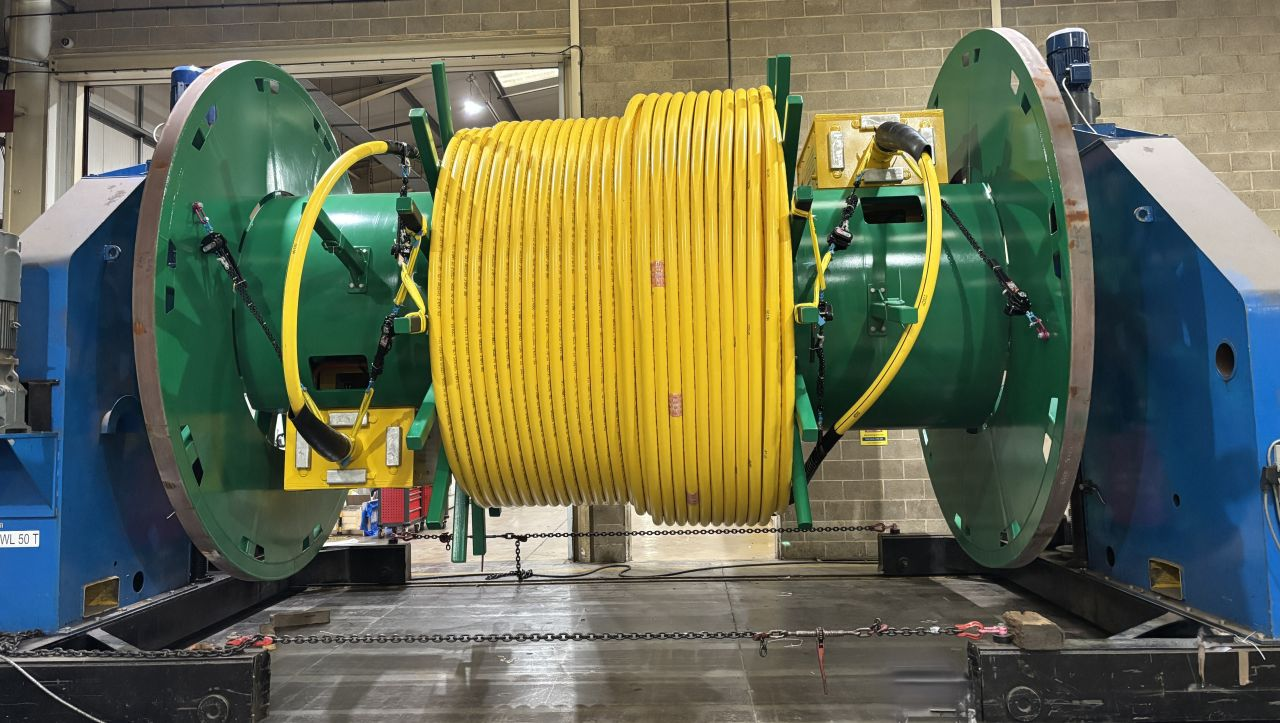
JDR Cable Systems has delivered an electrical umbilical for the Corrib gas field, completing the engineering and manufacture of a subsea connection intended to support offshore infrastructure west of Ireland.
Produced at JDR’s Littleport operation in Cambridgeshire, the umbilical is designed for service in water depths of approximately 350 metres. Corrib lies about 83 kilometres from the County Mayo coastline and remains Ireland’s only producing natural gas field.
The system incorporates six paired 10 mm² electrical cables and subsea umbilical termination assemblies at both ends. These terminations provide the structural, electrical, sealing, and interface arrangements required to connect the flexible umbilical with fixed subsea equipment.
Electrical umbilicals carry power and control functions between offshore assets, enabling operators to actuate equipment, monitor conditions, and communicate with systems that cannot be accessed routinely. Their design must withstand manufacturing, transport, load-out, installation, and decades of submerged operation.
Hydrostatic pressure, fatigue, movement, corrosion, seabed contact, electrical losses, and temperature variation influence the finished construction. Conductors, insulation, fillers, strength members, sheathing, and armouring must be selected as a complete system rather than a collection of independent components.
Manufacturing accuracy determines how those elements share loads and retain their geometry. Excessive conductor movement, local compression, uneven strain, or damage introduced during assembly may remain hidden until the cable is installed and subjected to operating conditions.
Termination assemblies present a concentrated engineering challenge because they transfer load between the flexible umbilical and rigid subsea structures. Sealing, conductor connection, strain management, corrosion protection, and materials compatibility must remain effective in an area containing several interfaces and changes in stiffness.
Testing before delivery commonly includes electrical continuity, insulation resistance, high-voltage checks, dimensional inspection, pressure testing, and verification of the termination assembly. Project requirements may also include fatigue, tensile, bend, crush, and environmental qualification depending on the installation route and service conditions.
The Corrib delivery demonstrates the continuing workload generated by producing offshore fields. New developments attract the largest capital announcements, yet established assets require replacement cables, control systems, valves, pumps, sensors, well equipment, and integrity work throughout their operating lives.
Brownfield projects can prove more complicated than new installations because replacement equipment must interface with systems designed years earlier. Original data may be incomplete, standards may have changed, and modifications offshore can be restricted by available space, production requirements, and short vessel campaigns.
Engineering teams therefore have to reproduce the required function while respecting existing connectors, structures, control voltages, software, routing, and installation procedures. A technically superior replacement can still be unsuitable when it requires extensive changes to the surrounding asset.
Installation creates another chain of dependencies. Vessel availability, weather, route preparation, deck handling, tension control, bend radius, subsea positioning, and final connection must all align, while delays at the manufacturing stage can affect an entire offshore campaign.
European cable and umbilical manufacturers are simultaneously serving oil and gas, offshore wind, interconnectors, subsea power distribution, and marine electrification. Although product designs differ, many projects compete for specialist materials, engineering staff, testing equipment, manufacturing lines, and installation vessels.
Demand from renewable energy has encouraged major investment in high-voltage cable capacity, but smaller project-specific umbilicals retain a different production profile. Their volumes are lower, engineering content is higher, and customer specifications can vary significantly from one field to another.
Offshore operators are also increasing the use of electrical control, monitoring, and condition data. Better sensing can reduce unnecessary intervention and allow emerging faults to be recognised earlier, while greater electrification may simplify some hydraulic arrangements and improve control response.
Those gains depend on the reliability of the subsea connection. A sensor, valve, or controller offers little operational benefit when power or communication is unavailable, which places the umbilical among the enabling assets on which the wider system depends.
Manufacturing in Cambridgeshire keeps project engineering, production, testing, and technical support within the UK subsea sector. That proximity can shorten communication between the manufacturer, operator, installation contractor, and equipment suppliers when interfaces change during the project.
The Corrib system will now move through installation, termination, testing, and commissioning before becoming part of the operating field. Successful service will reflect the performance of the complete delivery chain, from conductor manufacture and factory assembly to vessel handling and final subsea connection.
As offshore infrastructure ages, replacement and life-extension work will continue alongside new energy projects. Suppliers able to reproduce established interfaces while applying modern materials, testing, and manufacturing control will retain a substantial role in keeping those assets available.