Itera has emerged from stealth with a prototype fluid circuit board that allows engineers to modify and test electronic designs using real components in real time.
The San Francisco deep tech startup has also raised $12 million in seed funding from Upfront Ventures, Costanoa Ventures, and Colle Capital. The investment will support the launch of its first product and the commercialisation of a prototyping platform designed to shorten printed circuit board development cycles.
PCB prototyping remains a slow point in hardware engineering because changes normally require a new board spin, component assembly, testing, and validation before performance can be measured in the physical circuit. Depending on board complexity and supply chain conditions, each iteration can take weeks, adding cost and delay before a design is ready for manufacture.
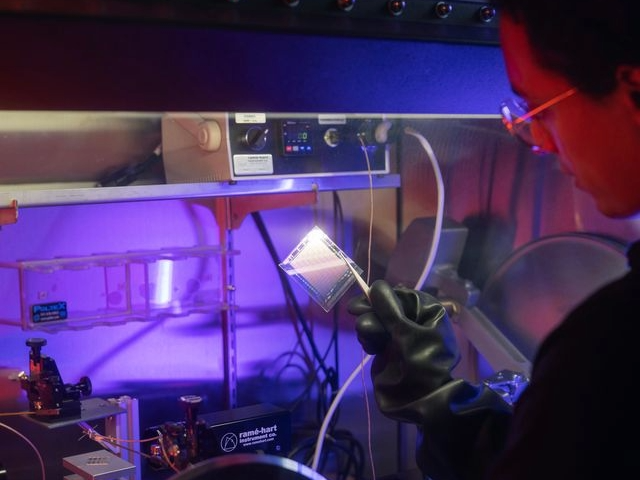
Itera’s technology uses a patented architecture of glass and liquid metal to replace fixed prototype routing with a circuit that can be rewired in less than a minute. Engineers can test real electrical behaviour after each change, rather than relying solely on simulation or waiting for a redesigned PCB to be fabricated and assembled.
The company says the system uses actual components and provides access to real performance data, while allowing engineers to probe internal circuit nodes beyond the exposed test points available on many conventional prototypes. That gives teams greater visibility into signal behaviour, component interaction, and design faults that may not appear until hardware and firmware are tested together.
“Software developers have been able to write code, test, and iterate in real time for decades. Itera makes real-time design and iteration possible for hardware too,” said AJ Cooper, CEO and Co-founder of Itera. “Hardware has always been hard because it is permanent. Changing it requires time and money. Itera is making hardware easy. For the first time ever, an engineer can change a circuit and test it again before their coffee gets cold.”
Itera plans to operate through an Electronics-as-a-Service model. Customer designs will be assembled using their own components on Itera’s multilayer substrates at secure, U.S.-based testing centres, after which engineers can change, test, and validate hardware and software remotely until the design is ready for manufacturing.
The model is also aligned with growing demand for domestic electronics development capacity, particularly where data sovereignty, defence requirements, and supply chain resilience limit the use of conventional overseas prototyping routes. Itera says its initial production capacity has already been reserved by a top-five global automotive OEM and defence neoprimes, with a leading hyperscaler and several chipset manufacturers evaluating the technology through hands-on demonstrations.
“I’ve worked with hardware companies for 15 years and there have been almost no innovations in how to massively reduce the time to test and iterate physical PCB designs,” said Mark Suster, Managing Partner at Upfront Ventures. “Itera brings an AWS-like solution to testing hardware and this can dramatically lower costs for startups and incumbents alike.”
Registration and further information are available at Itera.