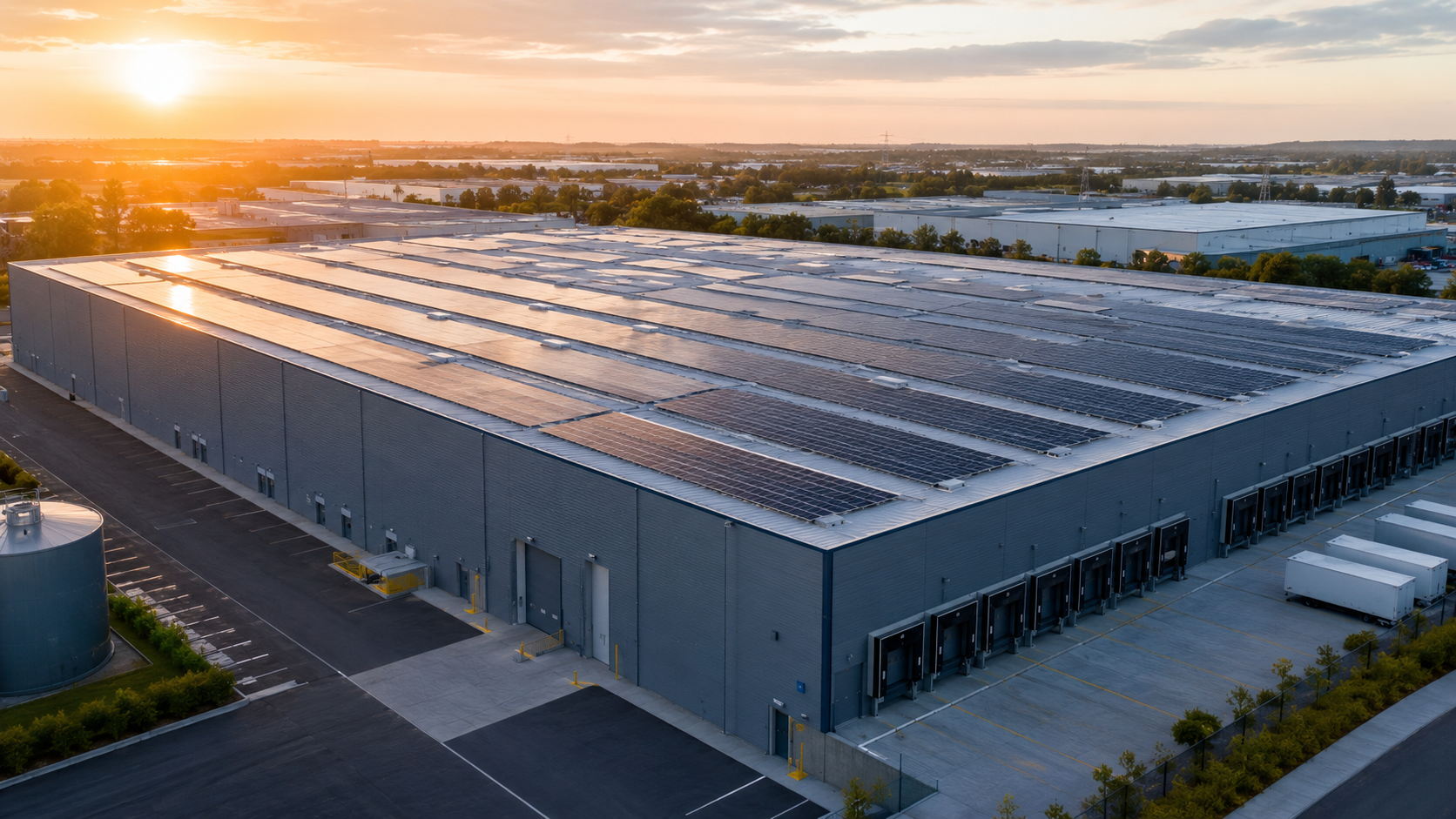
Solar panels for warehouses are becoming more popular — and for good reason. Not only does solar power help to reduce a warehouse’s environmental impact and ensure ESG (environmental, social, and governance) targets are met, but it can also cut energy costs, reduce reliance on the national grid, and make a business appeal more to its stakeholders.
Implementing solar power is often straightforward, however, there are a few things to think about before making an investment. So, here are some key considerations for warehouses looking to install solar panels:
Initial costs
Harnessing solar power is a great way to bring energy costs down in the long run. However, installing panels can be pricey, with a typical 100kW system installation costing around £70,000. The payback period would only be around three to four years, but this is something to keep in mind.
Suitability
Not every building is suitable for solar panels. The roof needs to be unobstructed, structurally sound, and able to withstand the extra weight of the panels and mounting systems.
The orientation of the roof can also pose an issue. Most warehouses feature flat roofs, which are ideal for solar panels. However, if the roof is slanted but not south-facing, you may not get enough sun exposure to generate an adequate amount of power.
Maintenance
Solar panels don’t require much maintenance and they do come with warranties that range from 20 to 30 years. However, to ensure the panels maintain their efficiency, they do need to be looked after properly.
Solar panels need to be thoroughly and professionally cleaned every 12–18 months and should be inspected annually to ensure there is no damage or obstructions that might be limiting their sun exposure. It’s recommended that building owners and leaseholders look for accredited service teams with CHAS Elite, NICEIC, and MCS.
Planning permission
Most solar panel systems don’t require planning permission, but it’s always important to verify this, especially if you’re close to a conservation area or it’s a listed building. If the building has a landlord or management company, permission to install solar panels may also be required.
Are solar panels worth the investment?
For most warehouses, solar panels are more than worth the investment. With low maintenance costs, exceptional saving opportunities, reduced reliance on the national grid, and a lower environmental impact, switching to solar power is a no-brainer.
So long as you have planning permission where applicable, a suitable roof, and enough cash up front for installation, solar panels are an incredibly worthwhile investment and it’s likely that more and more manufacturing companies will switch to this renewable energy source in the future.