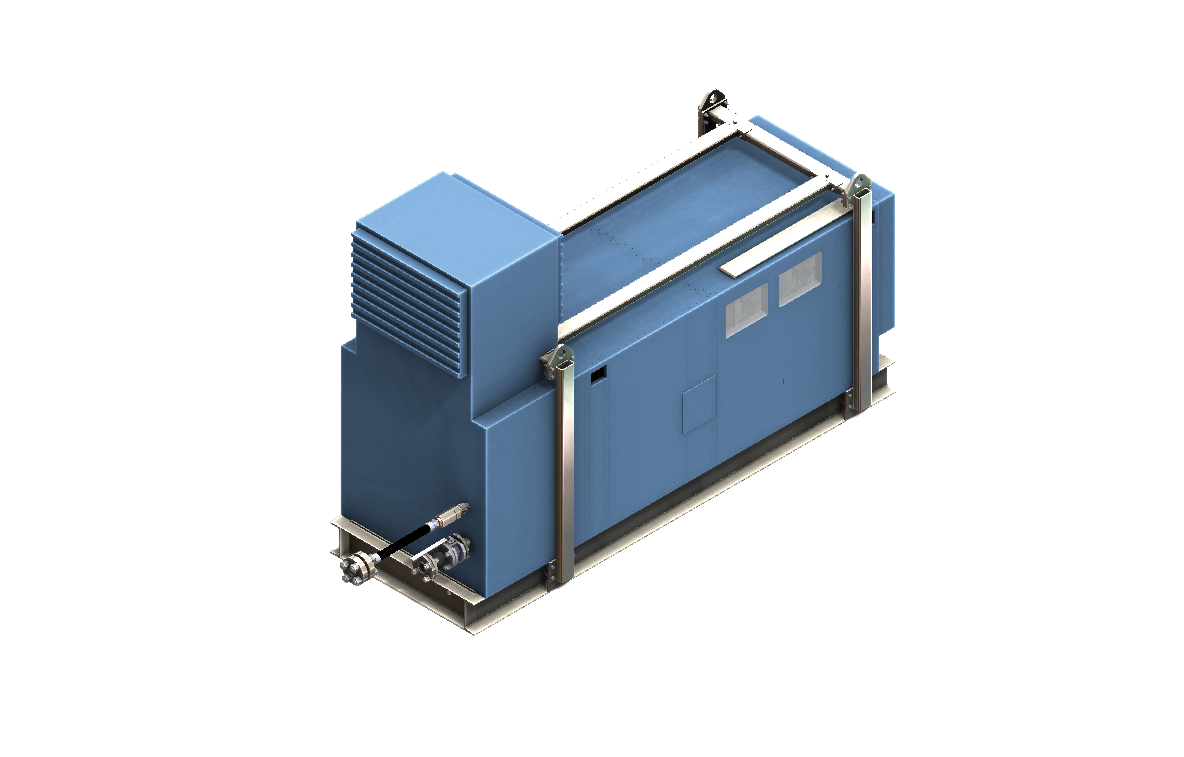
IMI’s Industrial Automation sector has developed a customised PET blowing block solution for Tech-Long, delivering a reported 10% increase in production capacity while reducing compressed air consumption in PET bottle manufacturing.
The collaboration focused on high-speed bottling environments where output, energy use, hygiene, and reliability are tightly connected. IMI’s application engineering team developed a configurable four-valve blowing block system incorporating a Px/AR single valve, designed for efficient PET bottle production in both aseptic and non-aseptic conditions.
Tech-Long had been working with a legacy system that created limitations around energy use and production output. IMI’s engineering team in China worked with the machinery supplier to redesign the blowing block architecture, addressing flow performance, sterile operation requirements, and air consumption.
PET bottle blowing relies on compressed air to form heated preforms into bottles inside moulds. The process can be energy intensive because high-pressure air has to be generated, managed, recovered where possible, and delivered accurately at production speed. Small improvements in valve architecture and dead-space reduction can therefore affect both output and energy use.
IMI’s Norgren PET bottling technology is aimed at improving flow performance and bottle output while optimising efficiency. The company points to valve positioning, air supply units, air recovery, and patented piston technology as part of its approach to reducing waste and improving production performance.
Compressed air comes under scrutiny
Compressed air is often one of the most expensive utilities inside a factory, although it can be treated as a background service until production problems appear. In bottling, that approach is increasingly difficult to justify. Air demand is directly tied to throughput, energy cost, compressor load, maintenance, and sustainability targets.
The Tech-Long application shows how compressed air efficiency is becoming a machine design issue rather than only a facilities management issue. If the pneumatic architecture of a blowing system creates unnecessary dead space, pressure loss, or inefficient valve timing, the plant pays for that inefficiency every hour the line runs.
Factory utility systems are already being reassessed through work such as compressed air energy checks, where leakage, compressor sizing, air quality, pressure settings, demand patterns, and equipment behaviour are examined as part of cost and carbon reduction programmes.
Packaging and beverage lines face a demanding operating context. Production systems are expected to run faster, handle varied bottle formats, meet hygiene standards, and reduce material and energy use. Downtime is expensive, but so is an inefficient process that quietly consumes excess compressed air across millions of units.
Aseptic and non-aseptic capability adds another layer. Equipment used in sterile or hygiene-sensitive environments has to support cleanability and reliable operation while preserving production performance. Pneumatic components are part of that equation because they sit inside the machinery architecture that governs cycle time, contamination risk, and maintenance access.
The OEM collaboration is also notable. Rather than selling a standard component into an existing design, IMI worked with Tech-Long around the application architecture. That type of engagement is becoming more common as machinery suppliers try to differentiate through performance, efficiency, and lifecycle cost rather than mechanical speed alone.
The reported 10% production capacity increase will attract attention, but the air consumption reduction carries equal commercial value. Energy prices and carbon reporting are forcing manufacturers to look again at utilities that were once accepted as fixed overheads. Compressed air is rarely the most visible part of the line, but it is often one of the fastest places to find savings when the system is understood properly.
PET bottling productivity gains will increasingly come from tighter integration of valves, controls, airflow, recovery systems, hygiene design, and digital monitoring. IMI’s work with Tech-Long shows that mature manufacturing processes still contain meaningful gains inside the pneumatic architecture.