
Forth UK has been appointed industry partner on FARMAR, a four-year international research project developing AI-guided robotic systems for use in working agricultural environments.
FARMAR, short for Farmer-in-the-loop heritage-aware AI and Robotic Mechanisation for Agricultural Resilience, is funded through Horizon Europe and coordinated by Durham University’s Department of Computer Science. The project is scheduled to begin in October 2026 and run until September 2030.
The programme will combine artificial intelligence, robotics, crop science, and farmer expertise to support more resilient and sustainable agricultural systems. Its approach is based on capturing practical farming knowledge and converting demonstrations and spoken narrative notes into instructions that robotic systems can follow under human oversight.
Forth will manufacture prototypes for the project, drawing on its experience in robotic and remote-handling technologies for safety-critical environments. The Cumbrian engineering company has previously worked across nuclear decommissioning, oil and gas, renewables, and water infrastructure, where remote inspection and maintenance systems are used to reduce human exposure to hazardous conditions.
“Our focus is on unlocking new opportunities for West Cumbrian SMEs, drawing on the pedigree forged at Sellafield. It’s this experience that makes Cumbria’s businesses some of the strongest contenders to meet global challenges head on,” said Forth CEO Mark Telford.
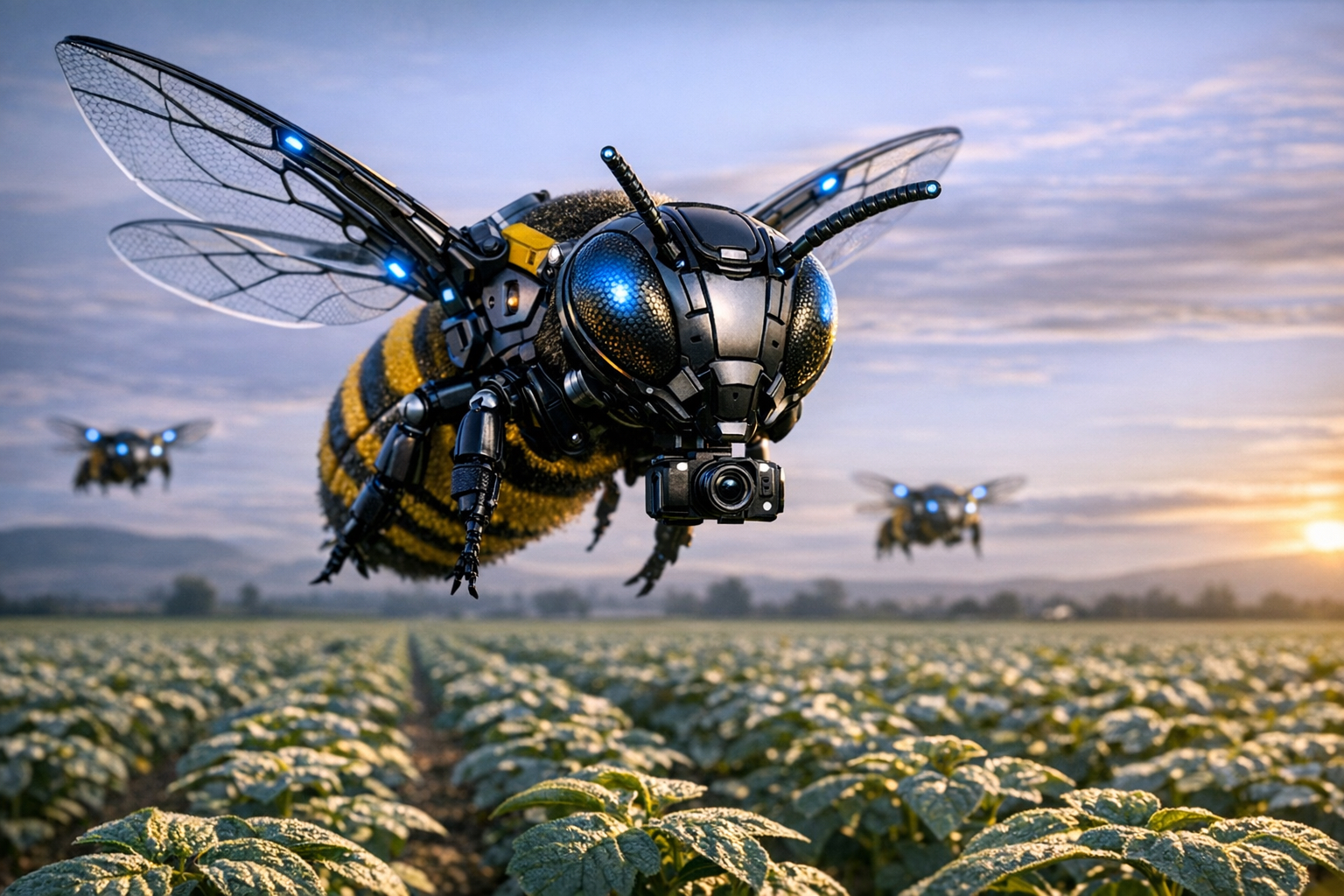
The FARMAR architecture will use a small on-site computer to coordinate lightweight ground vehicles and aerial drones. The systems will scout fields, flag issues, and carry out defined tasks within safety limits, while a simple app will allow farmers to review and adjust robotic work.
“Forth is perfectly placed to be involved with FARMAR. It’s a tribute to the skills of our team that we’ve been chosen as an industry partner for such a cutting-edge project. And it’s great to be involved in something of such global significance,” Telford said.
The project has been awarded €1.79 million through the international Horizon Europe programme, including UK Government funding. Trials will compare FARMAR-assisted work with current practice, testing whether heritage-aware automation can help farms respond to labour shortages, climate shocks, rising costs, and the practical variability of field work.
