Bodycote is investing more than €20m at Magny-Cours in France as part of a wider programme to expand European hot isostatic pressing capacity for aerospace, defence, and industrial gas turbine production.
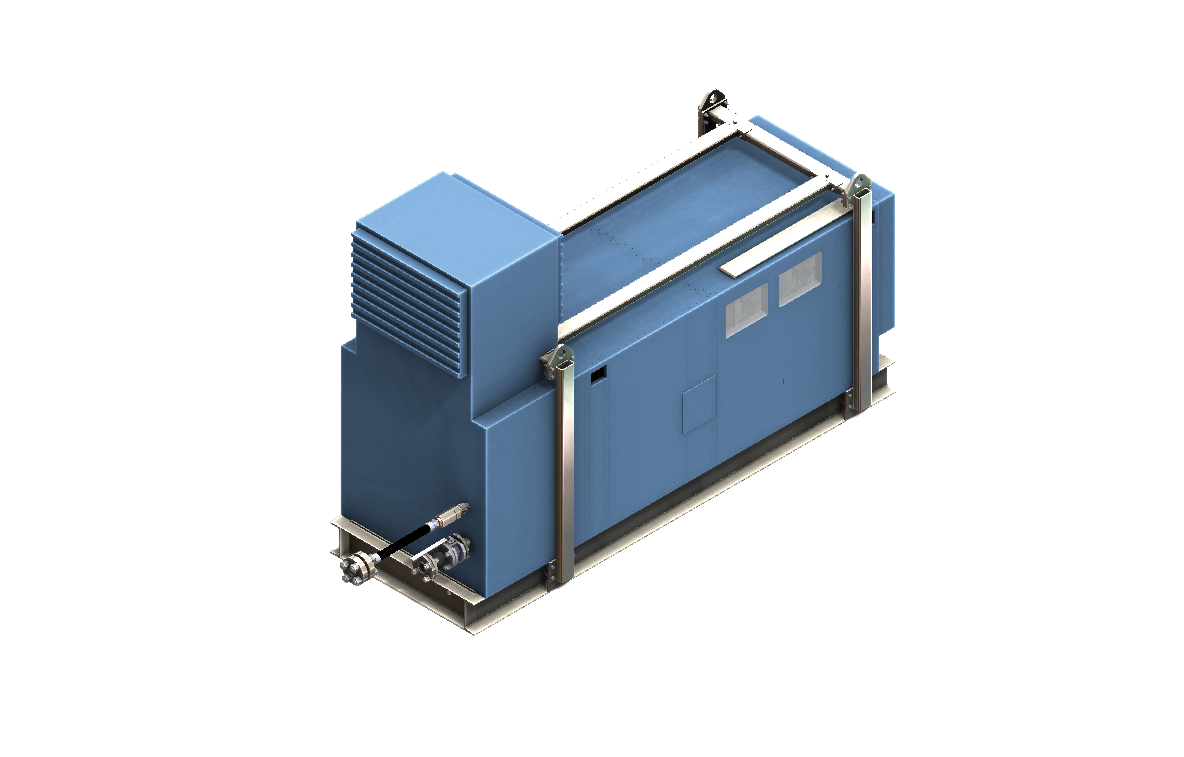
Multiple large-format HIP vessels are being installed at the French site, increasing both processing volume and the size of components that can be accommodated. The expanded installation is expected to be fully operational by the end of 2026.
Further capacity is being added at Haag-Winden in Germany, where two additional HIP vessels are under installation. Bodycote is also developing its Powdermet capability, combining near-net-shape powder metallurgy with hot isostatic pressing at the same operation.
Hot isostatic pressing exposes components to high temperature and uniform gas pressure inside a sealed vessel. The process closes internal porosity, improves material integrity, and produces more consistent mechanical properties across cast, additively manufactured, and powder-based parts.
As aerospace manufacturers adopt increasingly complex geometries and high-performance alloys, internal defects that are invisible at the surface can limit fatigue life or create unacceptable variation. HIP provides a means of densifying the material before further machining, heat treatment, coating, inspection, and assembly.
Magny-Cours already handles aluminium densification, additive-manufacturing densification, casting work, and multi-material diffusion bonding. Larger vessels will allow heavier or more substantial components to be processed while increasing batch capacity and improving the economics of suitable production runs.
Bodycote is responding to sustained growth across aerospace and defence, where aircraft backlogs and higher procurement are placing pressure on specialist processes throughout the supply chain. A component may have completed machining but still remain unavailable to the customer because HIP, heat treatment, coating, or non-destructive testing capacity has not kept pace.
Special processes readily become bottlenecks because the equipment is expensive, technically demanding, and subject to extensive qualification. Capacity cannot be moved between providers without considering customer approval, material specifications, process parameters, test evidence, and the production history attached to each part.
Large HIP vessels also require lengthy installation and commissioning programmes. Pressure containment, heating systems, gas handling, controls, utilities, and safety infrastructure must operate reliably under extreme conditions before qualification work can begin.
Expanding established European sites gives customers access to additional capacity within existing quality environments. Shorter transport routes can also reduce handling risk and lead time where components are unusually large, heavy, or valuable.
The Powdermet investment in Germany broadens the production options available for complex components. Near-net-shape powder metallurgy can reduce the machining required from costly material and enable geometries that are difficult to achieve through conventional forging or casting.
After consolidation through HIP, the component proceeds into finishing and inspection with less excess material than a traditional billet route might require. The economics depend on volume, tooling, powder cost, geometry, and qualification, although the process can become attractive where conventional manufacturing generates high scrap or prolonged machining cycles.
Additive manufacturing is creating additional demand for controlled post-processing. As printed aerospace components move from development into repeat production, manufacturers need stable routes covering stress relief, HIP, heat treatment, surface finishing, machining, and inspection.
European aerospace suppliers are simultaneously consolidating operations to reduce handovers between individual manufacturing stages. The development of integrated machining, fabrication, and qualified finishing capacity reflects customer preference for clearer production responsibility across complex work packages.
Bodycote operates at a different point in the chain, sharing specialist process capability across multiple customers rather than manufacturing complete assemblies. That network model allows programmes to access equipment and expertise that would be difficult to justify within each supplier’s own factory.
Resilience improves where more than one approved site can process comparable work, reducing dependence on a single vessel, location, or technical team. Customer approvals must nevertheless permit production to move between facilities before network capacity can be used flexibly.
Energy consumption remains significant because HIP cycles require sustained heat and pressure. Batch planning, insulation, equipment utilisation, and cycle optimisation will influence operating cost and carbon intensity, particularly as European industrial energy prices remain volatile.
Bodycote’s investment combines immediate capacity expansion with a longer-term commitment to advanced materials and near-net-shape production. The industrial return will depend on qualification speed, equipment utilisation, and whether additional process capacity can relieve one of the less visible constraints within rising aerospace output.