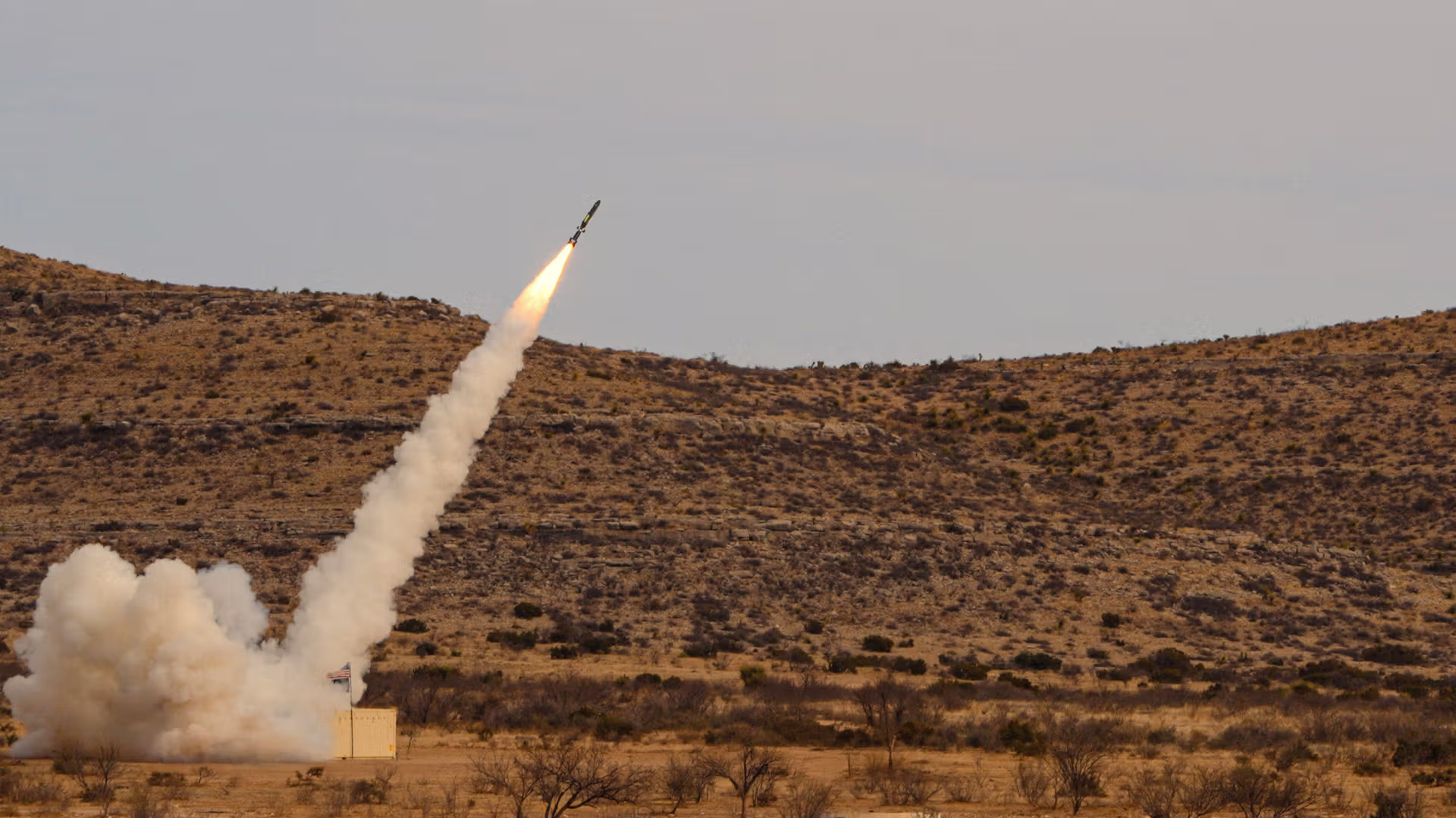
Anduril Industries and Polska Grupa Zbrojeniowa have signed an agreement to produce the Surface-Launched Barracuda-500M cruise missile in Bydgoszcz, Poland, strengthening the country’s role in European defence manufacturing.
The planned production activity will involve PGZ and Wojskowe Zakłady Lotnicze Nr 2, with the Bydgoszcz site positioned as the local industrial base for the missile programme. The agreement places Anduril’s autonomous weapons system inside a Polish manufacturing framework as European governments reassess stockpiles, production capacity, and control over critical defence technologies.
The Barracuda family is designed around autonomous, jet-powered cruise missile capability, with the 500M variant intended for surface launch. Poland’s move toward local production follows a wider expansion in defence spending, force modernisation, and domestic industrial activity linked to the security environment on NATO’s eastern flank.
The production model carries as much industrial interest as the system itself. European defence programmes have often faced long timelines, highly specific national requirements, fragmented procurement, and limited surge capacity. Lower-cost systems designed for faster production are gaining attention because stockpile depth has become a central strategic requirement.
Local production can shorten supply lines and strengthen domestic technical capability, although it also places demanding requirements on the manufacturing base. Missile production involves airframe work, propulsion integration, electronics, guidance, warhead handling, quality assurance, software control, secure facilities, test infrastructure, and configuration management. Bringing more of that capability into Poland gives the country greater influence over scheduling, industrial learning, and sustainment.
The agreement also reflects the entry of software-led defence companies into areas historically dominated by large primes. Anduril has built its position around autonomy, distributed systems, and faster product iteration. Integrating that approach with a state-owned defence group will test how newer defence technology models operate inside established European industrial structures.
European defence capacity is under scrutiny because procurement ambitions now run directly into the physical limits of factories, supply chains, test facilities, and skilled labour. The challenge is not restricted to budget approvals. Missile production depends on specialist materials, propulsion components, electronics, precision machining, safe handling, certified suppliers, and multi-year demand signals strong enough to justify investment.
Poland has linked procurement more closely with domestic production, giving local manufacturers a larger role in long-term capability development. That approach strengthens sovereign control, but it demands high process discipline. Missile manufacturing requires repeatability, traceability, secure logistics, and rigorous acceptance testing. Scaling output without weakening quality will determine how credible the programme becomes.
The agreement sits alongside a wider European push to rebuild advanced defence and aerospace manufacturing. UK export finance backing for defence activity and Airbus Belfast’s A220 wingset milestone both point to the same industrial reality: strategic capability depends on factories, engineers, tooling, and qualified suppliers as much as procurement decisions.
Electronics and autonomy will shape the supply chain challenge. Modern missiles rely on sensors, processors, navigation systems, communications, actuators, power management, and software integrity. Defence manufacturers face many of the same pressures as wider electronics manufacturing, including component availability, lifecycle management, cyber assurance, and export control. Local assembly can improve visibility, but it cannot remove all dependencies.
The Bydgoszcz programme will be watched as a test of whether Europe can expand missile production at a speed and scale aligned with current security demands. Poland sits at the point where NATO interoperability, national industrial strategy, and defence urgency converge, and the success of the programme will rest on the quality of the manufacturing system built around the missile.