Alfa Laval has joined the ESOMOOR project, a European initiative developing shared mooring technologies for large-scale floating offshore wind farms.
The company’s Sonihull business will contribute ultrasonic biofouling management expertise to the project, which is focused on floating wind deployment in deeper waters. The work will support the development and validation of anti-fouling approaches for offshore infrastructure exposed to sustained marine growth.
Marine growth on mooring chains, underwater structures, and floating platforms can alter hydrodynamic performance, increase loads, and add inspection or cleaning requirements over an asset’s lifetime. Those effects become more significant as floating offshore wind moves from pilot-scale systems towards larger commercial arrays with multiple turbines sharing subsea infrastructure.
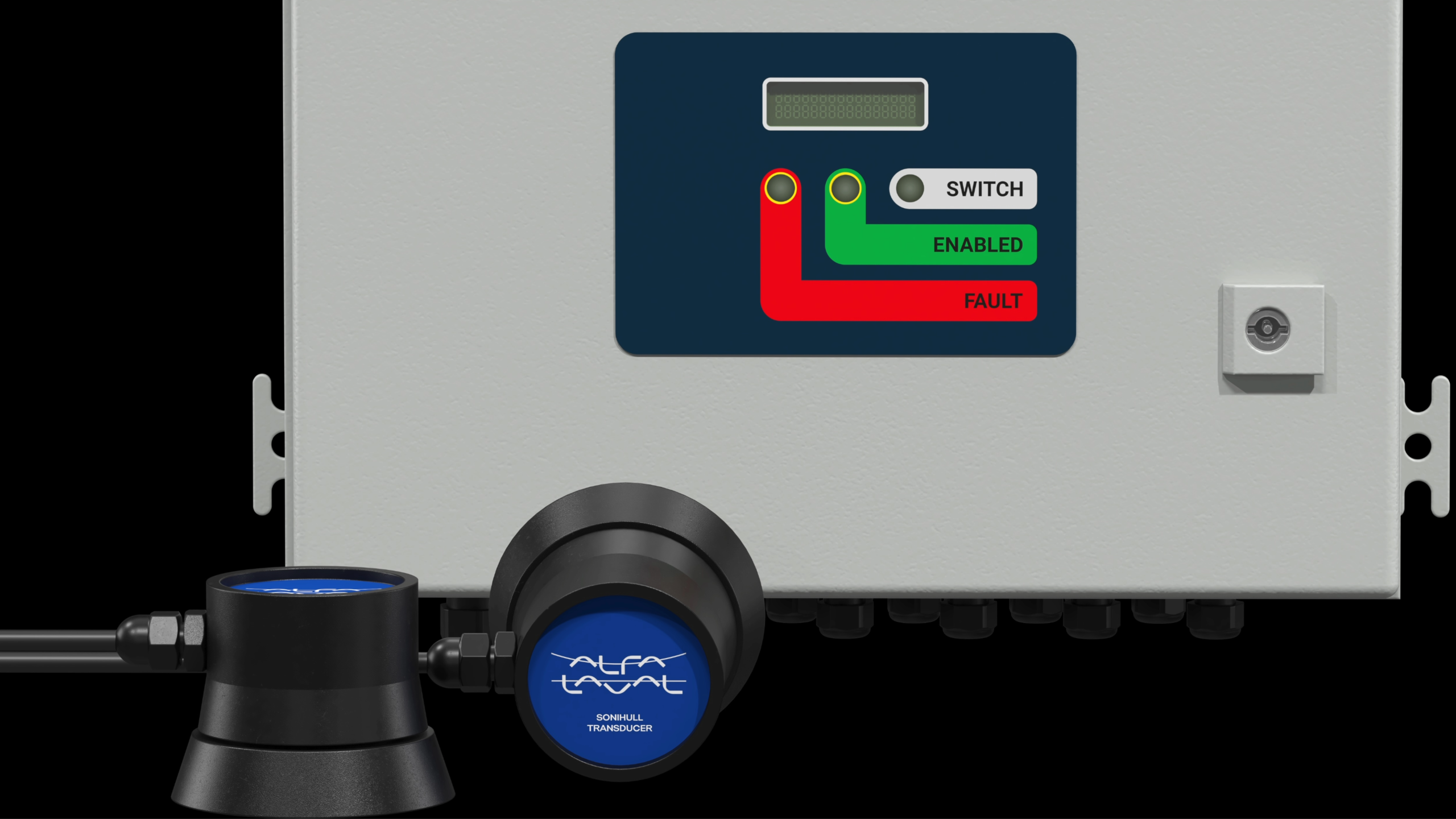
Sonihull will evaluate marine growth prevention systems under offshore conditions and assess installation concepts for ultrasonic transducers on floating platforms and mooring chains. The project scope also includes investigation of underwater radiated noise levels and a third-party environmental impact assessment.
Floating wind farms rely on mooring systems to maintain turbine position in waters where fixed-bottom foundations are not practical. Shared mooring concepts are being developed to reduce infrastructure duplication, improve array economics, and support more efficient use of seabed space, but their commercial adoption depends on reliable long-term performance.
Peter Nordström, Chief Technology Officer, Alfa Laval Sonihull, said: “Floating offshore wind represents a critical step in scaling renewable energy in deeper waters, but its long-term performance depends on solving complex operational challenges such as biofouling. Through ESOMOOR, we are contributing our ultrasonic technology expertise to help improve system reliability, efficiency, and sustainability across the full lifecycle of offshore assets.”
The ESOMOOR project brings together industry and research partners to address technical barriers around floating offshore wind farms. Its objectives include improving levelised cost of energy, enhancing energy conversion efficiency, and increasing technology readiness levels for offshore wind solutions.
Biofouling control sits within a wider engineering challenge that includes fatigue behaviour, mooring optimisation, inspection planning, environmental performance, and maintenance access. Any technology used on floating wind infrastructure must therefore demonstrate not only fouling prevention, but compatibility with harsh offshore conditions and long asset lifecycles.
Alfa Laval’s work will help the consortium assess how ultrasonic systems perform on the structures most exposed to marine growth and how those systems could be integrated into future floating wind designs. Further information is available through Alfa Laval’s biofouling management resources.