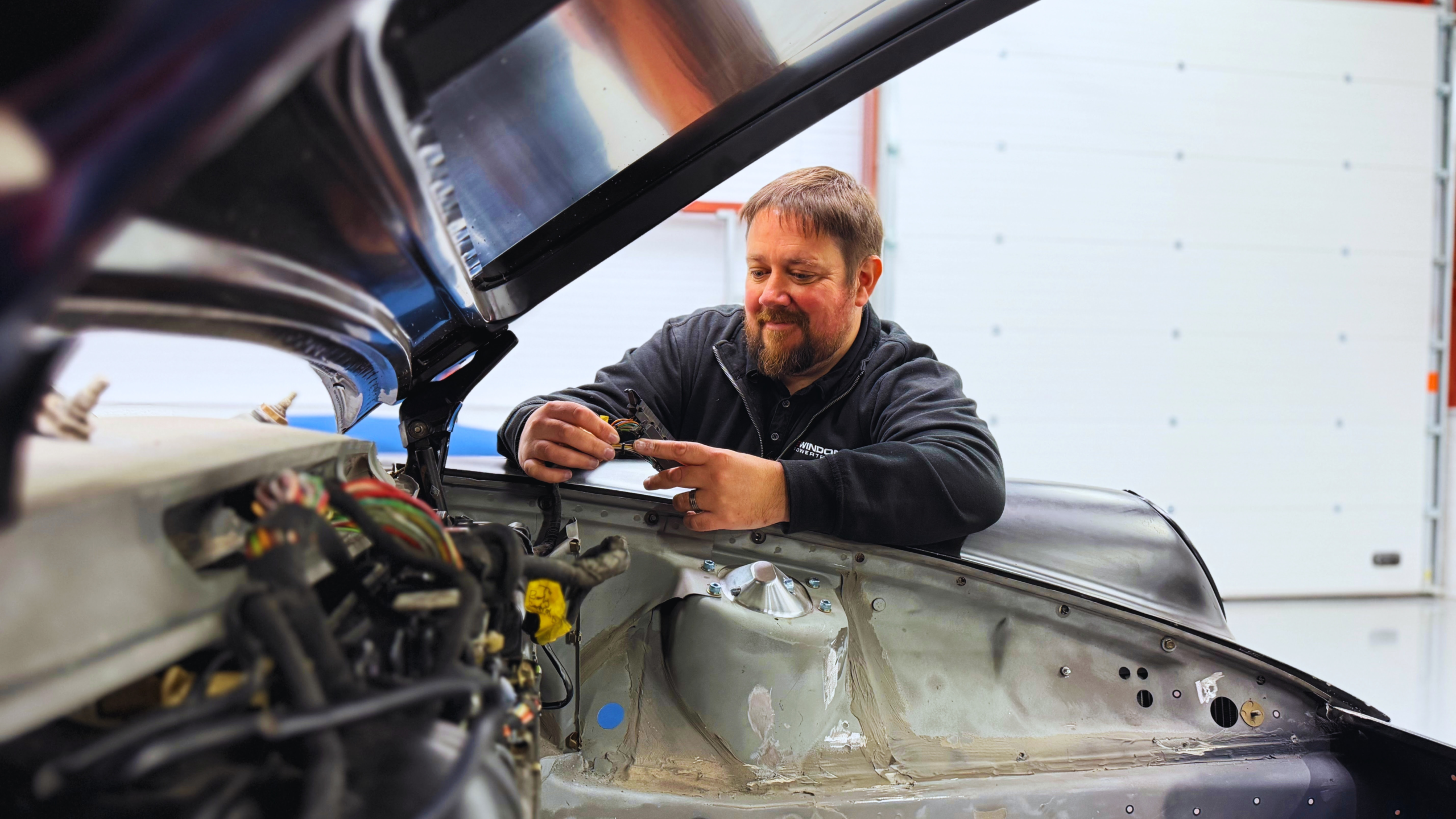
Swindon Powertrain has expanded its electrical engineering and assembly operations with a turnkey vehicle system integration service, enabling niche manufacturers and specialist vehicle builders to incorporate modern electronic control systems into bespoke and low-volume automotive programmes.
The service covers the development of an electrical architecture, wiring design, harness manufacture, component integration, and vehicle validation. It is available for applications including specialist passenger vehicles, light commercial vehicles, and classic vehicle restoration projects where the volume of production may make a fully independent electrical development programme commercially difficult.
Swindon Powertrain’s first completed customer application is a modified classic Porsche 911 incorporating an integrated electrical and electronic architecture for air conditioning, anti-lock braking, and electronically controlled suspension. The system also accommodates the possibility of adding further features during the vehicle’s service life.
Introducing modern control functions into older vehicle platforms can create problems where the original wiring harness and electrical distribution components were designed for considerably different electrical loads. Adding independent systems individually may require additional cables, relays, sensors, and control units, with limited coordination between their operating requirements.
Swindon Powertrain begins its development process by establishing the functions required of the complete vehicle. The wiring and control architecture can then be engineered around those functions, rather than attempting to extend an existing electrical installation through a succession of separate modifications.
“At an OEM level, considerable engineering resource is dedicated to making sure every electrical and electronic system works together as one vehicle,” said Gareth Williams, senior calibration and development engineer at Swindon Powertrain. “That level of integration has traditionally been difficult to justify for niche and low-volume programmes but our approach makes it accessible at much lower volumes.”
The company’s service allows functions such as engine management, climate control, braking, suspension, and electronically controlled exhaust systems to be incorporated into a common architecture. Controller Area Network (CAN) communications allow compatible electronic control units to exchange information across a shared network.
An individual signal, such as vehicle speed, can be used by several electronic systems where the relevant devices support the same information and communications arrangements. That can reduce the requirement for dedicated signal wiring between individual components, while ensuring that control units receive the information required to perform their functions.
Establishing a dependable network requires coordination of the devices connected to it, the messages they transmit, and the behaviour expected from individual systems during interruptions or faults. The physical harness must also accommodate electrical loading, environmental exposure, and the movement or vibration associated with its installation location.
Swindon Powertrain uses an electronic power distribution module (PDM) in place of a conventional fuse box. The module allows individual circuits to be monitored and controlled, while the company says its approach can reduce the peak loads experienced by the vehicle’s battery and alternator.
Electrical load management can help accommodate equipment with different operating requirements. The maximum simultaneous demand must still be considered when selecting power generation and storage components, wiring, and protection arrangements. Introducing electronic distribution does not remove the need to establish that those components are suitably rated for the intended application.
The integrated architecture also makes information from connected electronic systems available for real-time monitoring and subsequent retrieval. Engineers investigating an intermittent problem can use those records to examine conditions around the fault, including whether changes in electrical supply or the behaviour of another connected system contributed to it.
Swindon Powertrain builds its wiring harnesses in the UK using sealed, aerospace-grade parts and connectors. The company says that target harness weight reductions of up to 25% are possible, depending on the vehicle and its electrical requirements.
Serviceability is addressed through features derived from the company’s motorsport engineering work. Service loops provide additional cable length at selected points, while connections positioned at bulkheads and within wheel arches allow individual sections of the electrical system to be replaced without removing the entire loom.
Dividing a harness into serviceable assemblies can also influence vehicle production, particularly where electrical systems are installed at different stages of the build. The architecture must account for the physical locations of connection points and the requirements for inspecting and accessing them once the vehicle has been assembled.
The new service complements Swindon Powertrain’s existing electrical manufacturing and calibration activities, including its recent MoTeC equipment sales and engineering support partnership. The company is now offering a complete vehicle-level development and validation package around those capabilities, with the Porsche 911 project establishing its first completed customer application.