ABB Robotics is supplying more than 1,700 industrial robots for BMW's Neue Klasse vehicle production, supporting automated body construction at the manufacturer's main plant in Munich, Germany, and its Tiexi facility in China.
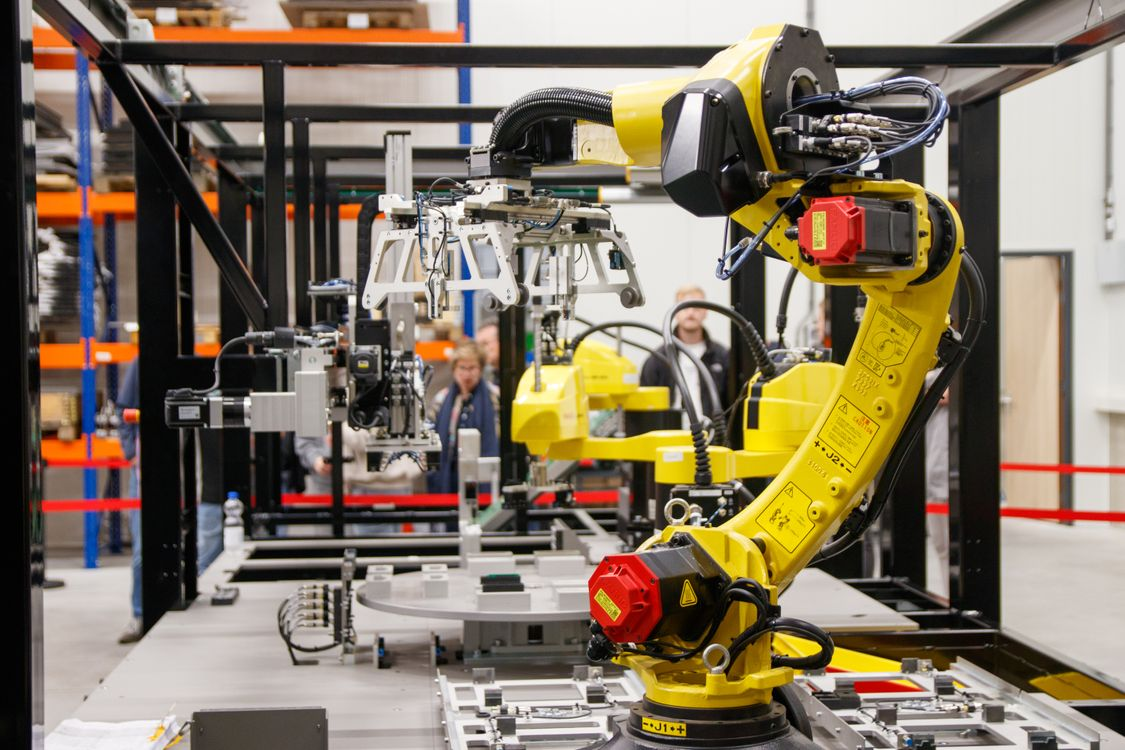
The equipment covers welding, adhesive application, riveting and assembly operations, with industrial robots from ABB's IRB 6720 to IRB 6740 families and the larger IRB 7720 range included in the programme.
All the supplied robots use ABB's OmniCore control platform, which provides motion control and supports the integration of sensors and other industrial automation technologies. The controllers also incorporate energy recovery functions intended to reduce electricity consumption during suitable operating cycles.
BMW is introducing the equipment as part of its manufacturing arrangements for the Neue Klasse generation of vehicles, including new fully electric models produced at Munich. ABB has not disclosed the number of robots allocated to each factory or the overall contract value.
Automotive body construction brings together pressed and fabricated components that must be positioned accurately before joining. Industrial robots perform repetitive handling and process operations, allowing production engineers to organise sequences around defined component positions and manufacturing requirements.
Welding systems require the joining tool to reach the correct location and apply the conditions specified for the joint. Where robots carry spot welding guns, the equipment must be positioned so that the electrodes can operate on the intended area of the workpiece.
Adhesive application creates different requirements. A controlled quantity of material must be deposited along a defined path, with the robot's movement coordinated with the adhesive delivery equipment.
The resulting bead depends on factors including the applicator, material characteristics, dispensing conditions and tool movement. Changes in any of these can affect the material deposited during the operation.
Riveting and other mechanical joining processes require controlled positioning of the tool relative to the components being assembled. The tool must approach the joint correctly, while the surrounding workpiece and fixtures provide the access required to complete the operation.
These applications place different demands on a robot's reach, load capacity and movement characteristics. An installation carrying a substantial welding gun may require a different configuration from one handling a comparatively light adhesive applicator.
The announced robot families cover payloads reaching 620kg, with the IRB 7720 range providing some of the highest capacities in ABB's large-robot portfolio.
ABB offers the IRB 7720 in several configurations. One variant provides a 620kg payload with a 2.9m reach, while another offers a 3.5m reach at a lower payload rating. These figures describe different configurations and cannot be combined into a single maximum specification.
Robot selection must account for the weight and centre of gravity of tooling, the required working envelope and the forces generated as equipment accelerates and decelerates.
Available reach is also influenced by the required tool orientation. A component may fall within the nominal working envelope while still presenting access restrictions because surrounding equipment prevents the robot from approaching it at the necessary angle.
OmniCore provides the movement control architecture for the supplied robots. It processes programmed positions and trajectories while coordinating the individual drives responsible for positioning the robot's mechanical axes.
Motion accuracy is important where the process requires a tool to follow a prescribed path or return repeatedly to an established position. The achieved performance depends on the robot, its configuration, the tooling and the operating conditions.
ABB identifies improved precision and movement efficiency among the benefits of its controller technology. The platform supports integration with sensing systems and software used in the wider automation installation.
Sensor information can assist with selected operations, including identifying workpiece position or checking process conditions. The functions available in an individual production cell depend on the sensors, software and equipment installed.
The controllers also support recovery of energy generated during certain robot movements. When an axis decelerates, the drive system may be able to recover some of the energy that would otherwise be dissipated through braking.
The potential saving depends on the movement profile and equipment configuration. ABB advertises energy reductions of up to 30% for selected large-robot products under specified comparisons with earlier equipment.
Those product figures do not establish a 30% reduction in energy consumption across BMW's complete production lines. ABB has not published a measured aggregate saving for the Munich and Tiexi installations.
The new robot families use modular mechanical designs with common elements across selected models. Standardisation can simplify aspects of equipment maintenance and installation, although replacement parts and their compatibility must still be checked against the individual robot variant.
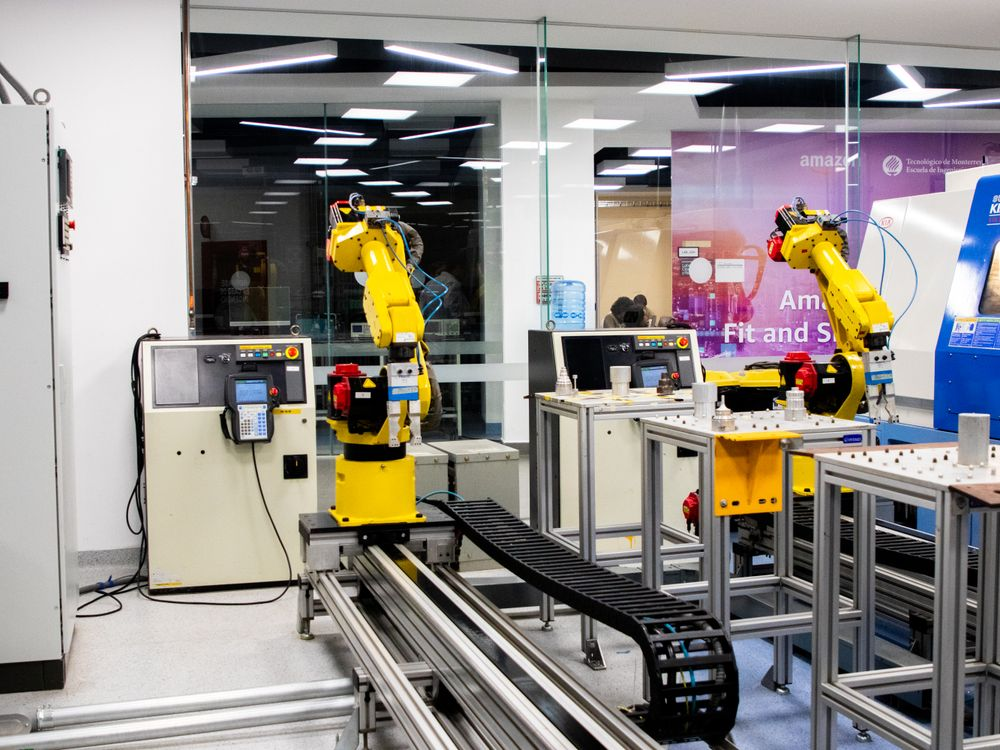
Installing large numbers of robots requires coordination with equipment beyond the robots themselves. Body-shop systems incorporate fixtures, material handling equipment, safety devices and machinery that must operate within the intended production sequence.
Fixtures position components during joining, while transfer equipment moves assemblies between operations. The robot's programmed movements must account for those surrounding systems and the positions they occupy during different stages of production.
Production engineering teams can assess cell layouts and robot movements through simulation before equipment is installed. This helps identify potential interference and allows different movement sequences to be examined without interrupting an operating production line.
Commissioning must still establish that the completed installation behaves as intended. Actual tooling, component tolerances, safety arrangements and communications interfaces can introduce conditions that were not fully represented during planning.
ABB says OmniCore and its commissioning systems can shorten the production start-up phase. The company has not disclosed a quantified reduction in commissioning time for the BMW programme.
The technology can also support future adjustments to production operations, although changes to components, tooling or joining requirements may still require additional programming and validation.
The installations extend the use of industrial robotics within BMW's electric vehicle manufacturing programmes, with ABB providing equipment for several body-shop processes at two major production sites.
The confirmed supply quantity exceeds 1,700 robots. Their eventual contribution to manufacturing throughput and electricity consumption will depend on the complete production systems in which they operate, rather than the performance of individual robot models alone.