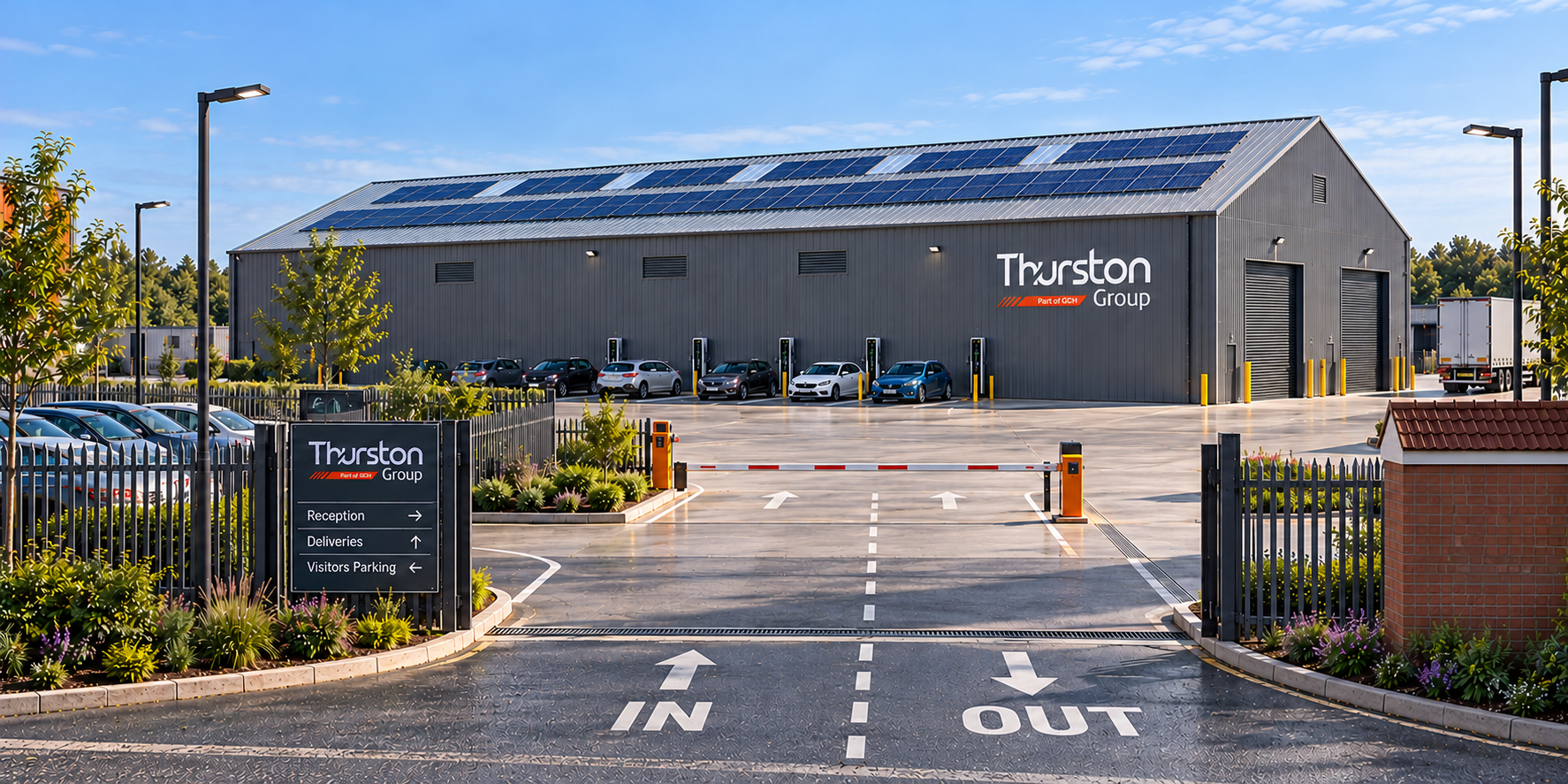
Thurston Group is investing several million pounds in a purpose-built manufacturing facility at Ottringham in East Yorkshire for specialist protective structures and industrial equipment housings. The 1,250m² plant will produce blast-resistant buildings, toxic refuges, battery and electrolyser enclosures, control housings, and bespoke containerised systems. Groundworks began on 1 October 2026, with operations expected to start in the first half of 2027. The project will provide a dedicated production route for structures that require specialist fabrication, surface finishing, and final inspection.
The investment is backed by owner GCH Corporation, which acquired Thurston in December 2025. Thurston expects its specialist manufacturing output capability to increase by 158% following the expansion, while the additional activity is intended to create 55 jobs. The company is also developing Ottringham towards a longer-term target of supporting more than £40m of annual output. That target applies to the site as an operating ambition, whereas the 158% figure describes the projected increase in the business’s specialist manufacturing capability.
Existing higher-volume manufacturing will operate alongside a separate flow for lower-volume, customer-specific work. Protective refuges and large electrical enclosures may use related steel fabrication techniques, but their designs differ according to structural loads, equipment layouts, environmental exposure, and required performance. Isolating the specialist work enables fabrication stages and inspections to be arranged around those requirements without repeatedly changing the production sequence used for more standardised buildings.
Thurston has specified an arrangement that brings fabrication equipment with overhead lifting capacity together with a specialist shot-blast booth, controlled paint finishing and a final inspection bay. Fabricating large containerised structures requires the movement and positioning of frames, wall sections and equipment housings during assembly. Overhead lifting equipment provides a route for handling heavy fabrications between operations, although Thurston has not disclosed the lifting equipment model or rated capacity selected for the new building.
The specialist shot-blast booth and controlled paint finishing area will be central to the treatment of steelwork exposed to corrosive conditions. Abrasive blasting removes surface contamination and develops a profile to which a protective coating can adhere. Preparation must be followed by an appropriate coating system, application thickness, and curing process for the specified operating environment. Bringing those operations into managed production zones gives the factory a defined route from fabricated steelwork to finished components and then inspection.
Exposure conditions will vary considerably across the announced product range. Structures intended for offshore sites may face salt-laden air and marine corrosion, while electrical and control housings require suitable access for cabling, inspections, and maintenance. Refuges designed for hazardous installations must be assessed against the protective function specified by each customer. Blast resistance, fire performance, environmental protection, and relevant acceptance tests are therefore determined at project level rather than by the building’s general product category.
The manufacturing layout will use segregated production zones, overhead lifting, and a final inspection bay. Heavy frames and housings can move through assembly without crossing incompatible activities such as blasting and paint application. Separating these processes also helps protect coating surfaces from fabrication contamination and allows completed assemblies to be examined against drawings, workmanship requirements, and customer inspection points before dispatch. The new factory is designed to accommodate this specialist flow while existing production continues.
Matt Goff, group managing director at Thurston Group, said: “The new facility will create a dedicated environment required to run specialist, lower-volume production alongside our higher-volume manufacturing.” The production distinction reflects the company’s focus on structures manufactured to customer-specific requirements, with fabrication and technical assurance taking place within the same industrial operation.
Projects covered by Thurston’s Engineered Solutions offer span energy, hydrogen, oil and gas, data centres, utilities, rail, and defence. An electrical control housing may require provision for cabinets, cooling equipment, cable entries, and maintenance clearances. A blast-resistant structure, by comparison, begins with an agreed protective duty and the loads that its frame, walls, roof, and openings must withstand. Each application influences the materials, interfaces, fabrication plan, and inspections required before installation.
Battery and electrolyser enclosures are particularly dependent on the interfaces between the structure and the equipment installed inside it. Plant configuration, equipment clearances, cable routing, ventilation provision and access can shape the enclosure before fabrication begins. Such requirements are established through project engineering rather than through a single standard arrangement. Thurston’s wider Engineered Solutions business describes a process that starts with the operating environment and performance specification before progressing through design, manufacture, inspection and delivery.
The company identifies existing Bureau Veritas, CSC, and Lloyd’s Register accreditations among its credentials for specialist manufacturing. Their applicability will depend on the relevant scheme and the individual project specification. Integrating design decisions with fabrication, finishing, and final inspection gives customers a defined production sequence for structures that must house equipment or protect people in demanding industrial settings.
GCH’s acquisition of Thurston was completed in December 2025 following an administration process, making the Ottringham project a subsequent investment in the business’s manufacturing operations. Cassie Hutchings, founder and chief executive of GCH Corporation, said its support reflected confidence in Thurston’s long-term direction and in the people and infrastructure needed for expansion. The new facility extends the company’s established modular manufacturing work into a more dedicated programme for technically demanding structures.
The first-half 2027 opening target leaves construction, equipment installation, process qualification, and recruitment to be completed. Once commissioned, the facility is intended to handle more specialist work through a defined sequence of fabrication, surface preparation, protective finishing, and inspection. Thurston has confirmed the planned floor area, principal manufacturing operations, projected capacity increase, and employment ambition, providing the key measures against which the investment can subsequently be assessed.