AGC Biologics has expanded a long-term pharmaceutical manufacturing agreement to a second production location in Copenhagen, bringing the total value of the relationship to more than €500m. The contract adds six commercial biologics programmes at the Danish facility to five already assigned to the company’s Yokohama site in Japan. The customer has not been named, and the figure covers the enlarged agreement rather than a newly disclosed €500m order for Copenhagen alone.
Copenhagen’s assignment covers process transfer, scale-up, validation and commercial drug substance manufacture. Each transfer requires evidence that manufacturing parameters remain controlled at the receiving plant and that the resulting material meets the product’s established quality specifications. That work extends across equipment settings, raw materials, analytical methods, operator training and quality documentation. The Danish programmes will move through these steps as the customer and AGC coordinate production across their Japanese and European sites.
The manufacturing arrangement centres on mammalian-cell biologics produced using single-use bioreactors. Disposable fluid-contact assemblies can replace some permanently installed stainless steel process vessels and pipework, reducing parts of the cleaning and changeover burden between batches. Production still requires qualification of materials, sterile connections, environmental controls and product-specific operating parameters. Bioreactor and downstream-line selection for each programme will depend on the approved process, target scale and required quality attributes.
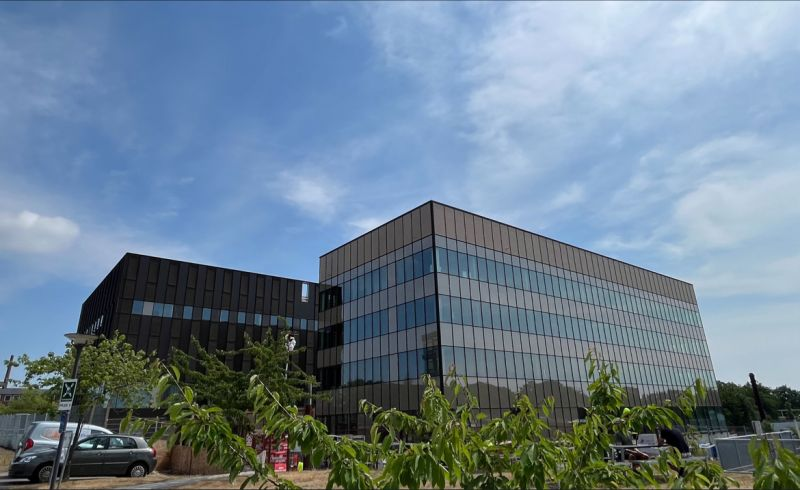
At Copenhagen, the company completed an 18,000m² manufacturing and support expansion in 2024, including quality control laboratories, technical areas and warehouses. That expansion added eight 2,000-litre single-use bioreactor production lines, a 500-litre perfusion bioreactor and two downstream purification lines. The figures describe the 2024 investment rather than the site’s entire present inventory, which AGC now lists as 14 single-use bioreactors of 2,000 litres each. The company has not assigned particular lines or batch volumes to the six new programmes.
Upstream manufacturing uses living cells under controlled conditions to express the target biological molecule. Bioreactor operation depends on variables such as nutrient delivery, dissolved gases, temperature and the timing of harvest. After cultivation, the product must pass through downstream purification and associated testing before material can be released for the next manufacturing stage. These steps need to be transferred as a coherent process, with the performance of equipment, analytical methods and materials evaluated together rather than as isolated items.
The proposed dual regulatory submissions are intended to qualify product-specific manufacturing at more than one site. An alternative facility can support regional supply once it is authorised for the relevant product and markets, with comparable quality records and release procedures. Scheduling, batch release and available capacity will continue to govern transfers of work after the regulatory requirements for each product have been met.
Equipment differences complicate a transfer even when two lines use nominally similar technology. Disposable vessels, tubing paths, sensors and downstream systems may vary by installation, supplier and configuration, while software recipes and sampling arrangements must be mapped to each plant’s procedures. Process comparability, analytical consistency and documentation become particularly important when established production moves between sites. Validation therefore forms part of the Copenhagen scope alongside process transfer and scale-up.
Copenhagen’s laboratories and warehouses support the same regulated manufacturing chain. Commercial biologics campaigns require controlled incoming raw materials, traceable single-use assemblies, in-process test results and defined handling of product intermediates. Throughput depends on the balance between upstream cultivation and downstream purification, as well as on the availability of quality control and batch-release resources. The added production equipment must operate within those wider processing and quality constraints.
Five commercial programmes had already been allocated to Yokohama before six were added at Copenhagen. Running the sites together would allow the customer and AGC to plan supply between regions, subject to each programme’s production schedule and authorisations. The companies have not identified the biologic products, annual batch numbers or the allocation of contract value between facilities. Commercial output will follow the technical and regulatory milestones applicable to each programme.
Cross-site operation requires consistent manufacturing records and release criteria at both facilities. Production planning can then respond to demand and campaign changes within the limits of each site’s authorised scope and available equipment. Maintaining that flexibility also entails control of process changes, material specifications and site-specific documentation throughout each product’s commercial life.
AGC says its Copenhagen teams have more than 25 years’ experience in drug substance development and regulated manufacturing, with customers at the site receiving more than 50 commercial approvals from over 20 regulatory agencies. The newly allocated programmes are due to pass through transfer and validation work before the intended regulatory submissions and commercial campaigns. Copenhagen’s present manufacturing network combines single-use production lines with analytical and quality control functions that will support that work.