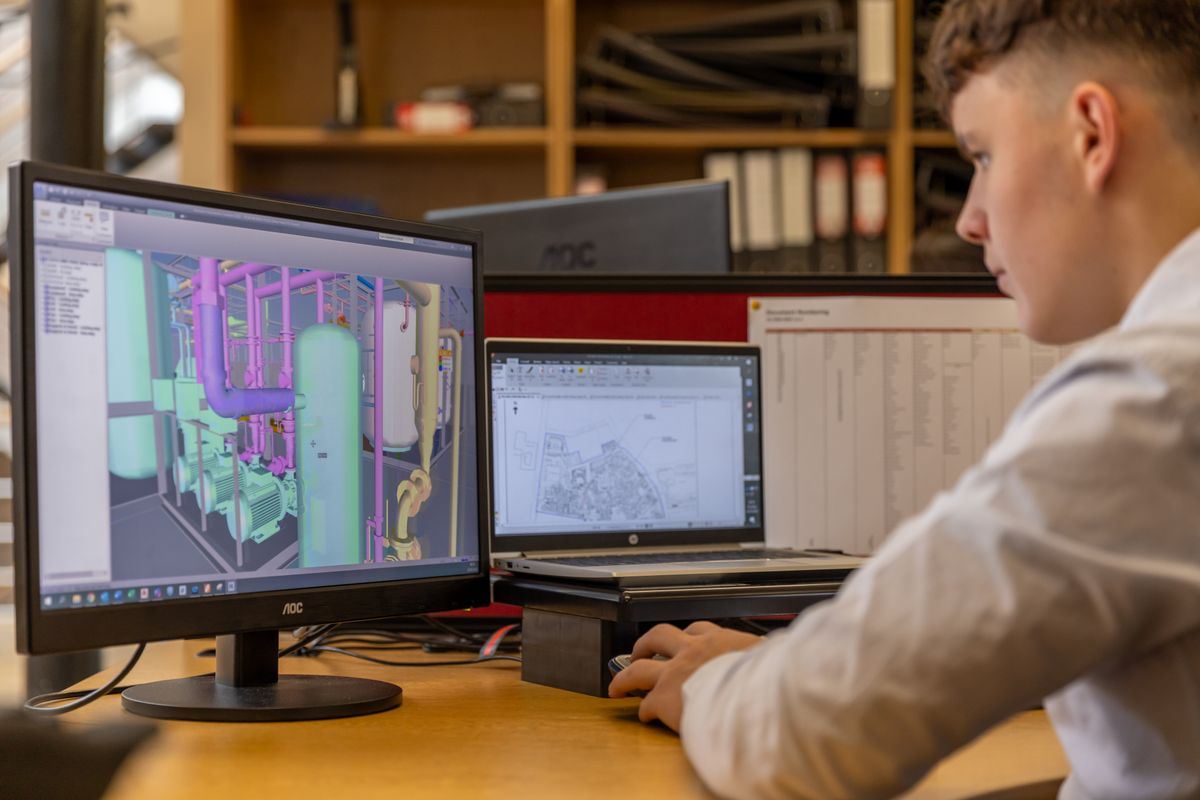
NCG CAM Solutions has introduced NCG CAD, a standalone three-dimensional design application intended to sit alongside its established NCG CAM manufacturing software. The new product combines direct, parametric and hybrid modelling with tools for developing individual components and assemblies, while supporting import and export of files used in other computer-aided design systems. The Cambridge-based business is positioning the application for concept development, product engineering and manufacturing preparation, providing a further design route for customers already using its machining software.
NCG CAD draws on technology from IronCAD and is offered with perpetual licensing. Its functionality includes drag-and-drop part and assembly design, rendering, motion animation and design review. The company provides a trial of the product and says the interface is intended to reduce the amount of specialist training needed to start modelling. Those features address different points in a design workflow, from shaping the first concept to checking the arrangement and movement of parts before downstream manufacturing work begins.
Direct modelling allows a designer to change the geometry of a solid without always rebuilding an ordered sequence of earlier operations. This can be useful when adapting imported parts or revising a shape whose original feature history is unavailable. Parametric modelling, by contrast, retains dimensions and relationships that can be adjusted systematically, so a change in one design parameter can propagate to dependent geometry. A hybrid approach gives the user a choice of these methods according to the information available and the nature of the revision.
That flexibility becomes useful when engineering models pass between customers, subcontractors and machine shops using different software. A supplier may receive a neutral solid model without the feature history used to create it, but still need to enlarge a clearance, reposition a mounting face or alter geometry for a fixture. Direct manipulation supports changes to those imported shapes, while parameter-controlled features remain useful where families of components share dimensions or design relationships. The method selected affects how efficiently later revisions can be made and reviewed.
Assembly tools extend the work from isolated geometry into the arrangement of parts that form a product or machine. Designers can place components relative to one another, inspect their spatial relationships and assess whether proposed movement is consistent with the intended mechanism. Motion animation provides a visual way to communicate those relationships during a review, although final verification of structural strength, durability or manufacturing tolerance requires the appropriate engineering assessment rather than a rendered animation alone.
Rendering and visualisation tools allow the same NCG CAD geometry to be used in design discussions and presentation views. Teams can inspect access, appearance and equipment placement before fabrication, then produce revised visuals as the underlying geometry changes. Keeping these functions connected reduces the need to rebuild presentation material separately, although project revision controls still determine which model is authorised for production and whether reviewers are looking at the same design state.
NCG CAD supports a range of CAD import and export formats, addressing exchanges among engineering offices, toolmakers and machine shops using different systems. Neutral formats can carry three-dimensional geometry between software environments, but feature history, assembly constraints and material information are not necessarily transferred in full. A supplier preparing a critical part for machining or inspection therefore needs to confirm dimensions, coordinate systems and revision status after conversion. Interoperability enables the exchange; the receiving engineering process still establishes whether the model is fit for use.
NCG CAD is being sold alongside NCG CAM, the company’s existing computer-aided manufacturing application. The design model defines the component geometry, whereas the CAM system generates machining operations from that geometry. Choosing cutters, tool access, machining allowances and cutting conditions all depends on having the correct model revision. Adding a standalone CAD application broadens NCG’s software portfolio while preserving the distinct tasks of designing a part, confirming it meets requirements and preparing instructions for its manufacture.
The application is available with a perpetual licence, giving purchasers an acquisition option alongside subscription-based design products. Licence type is only one consideration when a manufacturer adds software to established workflows: customer file formats, maintenance arrangements, training, technical support and revision controls determine how readily it can be deployed. NCG is offering the new product alongside existing CAD and CAM applications, allowing customers to evaluate it without having to replace every part of an established engineering toolchain.
NCG CAM Solutions sales and marketing director Estelle Dunsmuir said the company intends to offer CAD and CAM software together through its global reseller network. The company is offering NCG CAD through that network, with a 30-day trial available from its product site. Early deployments will show how effectively the direct, parametric and hybrid tools handle the mix of newly created models and exchanged engineering files that typically reaches a manufacturing business.