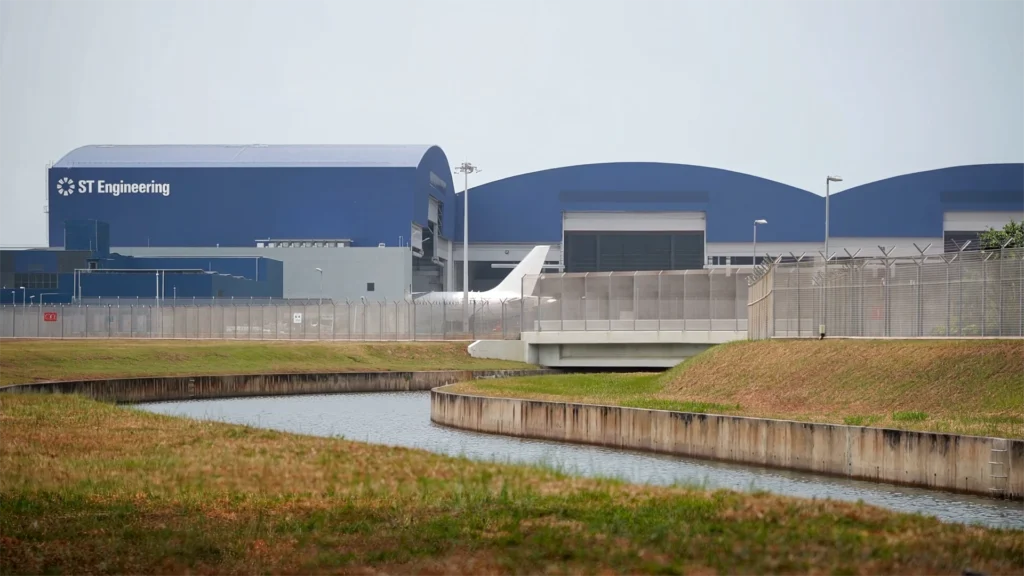
ST Engineering officially opened its 84,000-square-metre Changi Creek airframe maintenance, repair and overhaul facility in Singapore on 9 October 2026. The facility has four widebody aircraft bays and is the company’s fourth airframe MRO operation in the country, adding physical capacity for commercial aircraft maintenance.
The company expects the facility, when fully operational, to increase its Singapore widebody airframe maintenance capacity by 40%. It says that could equate to roughly 100 more widebody aircraft serviced annually. Those figures are capacity expectations rather than confirmed work completed at the new location.
The opening expands the company’s commercial aerospace maintenance network at an airport already serving international airlines. A dedicated widebody bay can accommodate aircraft undergoing planned inspections and repairs, but its availability depends on the duration and scope of each job. The facility’s importance therefore lies in the additional maintenance slots it can offer customers as airline fleets expand, rather than in any guaranteed annual number of completed aircraft visits.
Widebody aircraft require substantial indoor working space, specialist access equipment and personnel trained for particular airframes. The geometry of a hangar can constrain simultaneous maintenance activities. Four dedicated bays can support more parallel work, provided the required engineering and labour resources are available.
Capacity cannot be measured by floor area alone. Approved maintenance capabilities, tooling, spares availability, engineering staff and airline schedules all affect the number of aircraft a site can service. The figure of 100 additional aircraft a year depends on ST Engineering’s own assumptions about utilisation.
Airframe work is also governed by detailed airworthiness procedures. Each inspection, repair and release requires appropriate oversight and records. The presence of a new building does not automatically confer approvals for every aircraft type or category of maintenance.
Growth in air travel and the length of time fleets remain in service can increase pressure on maintenance availability. Operators seek predictable slots and turnaround times, particularly for widebody aircraft serving long-haul networks. New hangar capacity can improve scheduling flexibility without removing the need for licensed engineers and specialised parts.
Maintenance facilities rely on coordination between physical work and aircraft documentation. Defects found during inspections can change the planned job and lead to additional engineering tasks. Digital systems may support planning and recordkeeping, but maintenance teams must still confirm that work is complete and compliant.
Singapore’s aviation cluster brings together airlines, airports, supply chains and maintenance specialists. A fourth ST Engineering site strengthens the local industrial base, although the release provides no basis for calculating wider economic benefits or a specific number of new jobs at Changi Creek.
The company’s announcement specifies widebody MRO capacity; it should not be mistaken for a factory producing new aircraft. The industrial activity centres on sustaining operating fleets and extending the productive use of capital-intensive aviation equipment.
As operations ramp up, the number of aircraft inducted, the type of work performed and the turnaround times achieved will become clearer. These are the indicators needed to judge whether planned capacity translates into actual customer service.
ST Engineering confirms the opening of the Changi Creek facility. Its longer-term significance lies in how additional certified hangar space, personnel and process systems perform under live airline maintenance demand.
The physical expansion also requires coordination with airport movements, aircraft towing, emergency access and maintenance logistics. Those interfaces can affect how efficiently the facility converts a theoretical hangar slot into completed work.
MRO work can involve unscheduled findings once aircraft are opened for detailed inspection. Facilities need flexibility to source additional parts and extend planned tasks without disrupting other bookings. Extra bays can provide scheduling options, but trained labour and engineering approvals remain critical capacity constraints.
Large maintenance providers also serve multiple airline fleets with differing configurations and records. A common facility must manage those differences without weakening traceability. Approved processes, controlled tooling and accurate records are therefore central to delivering maintenance services at scale.
An aircraft returning to service after heavy maintenance represents the completion of a specific engineering and regulatory process. Announced building capacity should not be interpreted as an equivalent number of aircraft ready for release. The projected 100 additional annual visits will need to be tested against operating experience.
Singapore’s announcement highlights industrial services as well as manufacturing. The value created at Changi Creek will be measured through skilled work, supported aircraft availability and consistent standards rather than the production of new airframes.