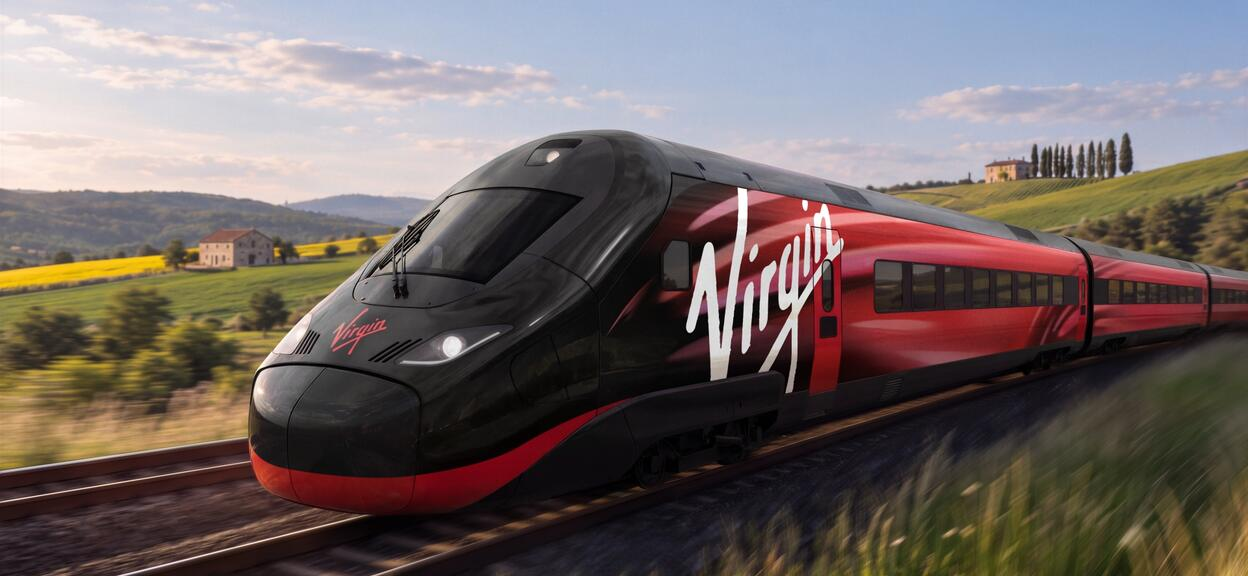
Alstom and Virgin signed conditional agreements on 9 October 2026 for a proposed fleet of twelve Avelia Stream high-speed trains and associated long-term maintenance to support cross-Channel services planned from 2030. Alstom says it expects to record the order only after regulatory approval and financial close. The companies have therefore named the proposed supplier and platform, but they have not announced an unconditional train purchase or commenced passenger operations. The proposed maintenance work would be undertaken in the United Kingdom, according to Alstom.
Virgin is planning international services from 2030. The rolling-stock agreement provides a clearer indication of the proposed fleet architecture, although the operator will still need to establish the route, timetable, station access, operational permissions and financing arrangements required for actual services. Alstom identifies the trains as its Avelia Stream platform, intended for high-speed passenger operations across existing rail infrastructure.
The agreements provide for twelve Avelia Stream trainsets and associated maintenance, with trains to be designed and manufactured in Savigliano, Italy, and maintained in the United Kingdom, according to Alstom. The manufacturer expects the order to be booked only after regulatory approval and financial close. Neither the start of passenger operations nor a confirmed manufacturing delivery timetable follows automatically from this agreement.
Eurotunnel operations place particular requirements on train design and emergency arrangements. A prospective operator needs confidence that its rolling stock can meet the approvals for the Channel Tunnel as well as the conventional and high-speed networks on either side. Those requirements can shape equipment configuration, safety documentation, operational testing and staff training. The 9 October announcement does not amount to certification for any of those networks.
Alstom and Virgin have worked together previously. The manufacturer supplied the Class 390 Pendolino fleet used on the West Coast Main Line, giving the parties an established relationship in British passenger rolling stock. That history is relevant as a record of supplying, maintaining and operating complex trains, but it does not remove the specific approval and financing conditions attached to the new cross-Channel project.
The manufacturing implications extend through a broad supplier base. High-speed fleets require specialised components, systems engineering, software verification, mechanical assemblies and long-term replacement parts. Production planning is linked to test capacity and acceptance procedures. Suppliers generally need confirmed specifications and contractual schedules before allocating capacity, particularly for components with long procurement lead times.
Maintenance is also a significant part of the announced agreements. A fleet intended for repeated international services must achieve consistent availability over many years, with planned servicing, fault diagnostics and repair work coordinated around timetable commitments. Long-term maintenance contracts can influence design choices from the outset, because the accessibility of components and the ability to exchange modules affect the time a train spends out of traffic.
Fleet size alone does not establish passenger capacity or operating frequency. Those depend on the final seating configuration, permissible train length, journey times, turnround periods, maintenance requirements and number of services per day. Alstom’s announcement states the number of proposed Avelia Stream trains but does not provide a final timetable or independently verified estimate of transport demand.
The agreement will also be watched in the context of infrastructure access. A new operator entering an established international corridor must coordinate station facilities, depots, border controls and paths across several networks. These issues are separate from the rolling-stock supply contract and may need to be settled before the proposed fleet can be commissioned or deployed.
For the industrial supply chain, the immediate development is the selection of a manufacturing partner and train platform. That creates a potential future production programme, rather than evidence that assembly has already commenced. Decisions on where units and components will be built, how suppliers will be selected and when vehicles will enter testing would require subsequent confirmed announcements.
Alstom describes the agreements as supporting future services rather than a completed acquisition. Its statement explicitly makes the order conditional on regulatory approval and financial close. Reporting the project as a completed 12-train purchase would therefore overstate the present status of the work.
The agreements still require procedural and commercial as much as technical. Financing, approvals and access arrangements will determine whether the proposed fleet progresses into firm industrial orders. If those conditions are fulfilled, attention will turn to detailed engineering, manufacturing scheduling, testing and commissioning ahead of Virgin’s stated ambition to begin international services in 2030.