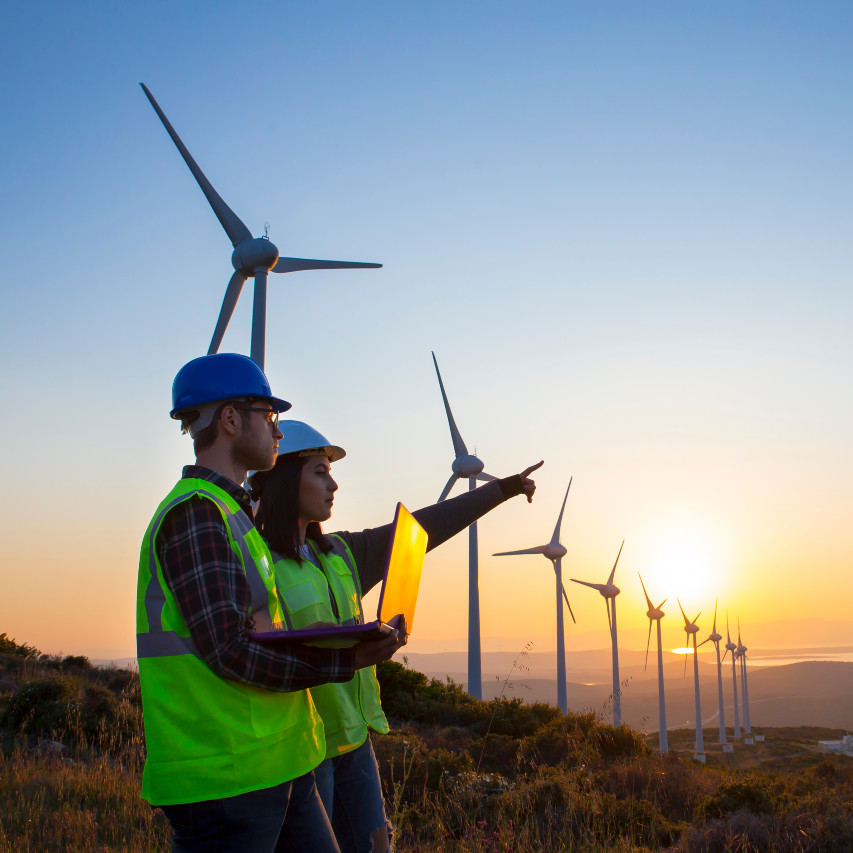
Nordex has secured orders for 35 onshore wind turbines with combined capacity of around 228MW across southern, central and eastern Europe, adding another group of projects to a recent run of orders for its Delta4000 platform. The contracts, received at the end of September and disclosed on 6 October, cover N175/6.X, N163/6.X and N149/4.X machines, with associated service agreements running for periods of up to 25 years.
Nordex has not disclosed the customers, individual sites or countries, but the use of three turbine families indicates that the projects are being configured around materially different operating conditions rather than supplied as one standard fleet. Rotor diameter, rated power, wind regime, site loading, planning limits and grid requirements all affect turbine selection, so the largest machine is not automatically the most productive or economic choice for every project.
The N175/6.X uses a 175-metre rotor and is positioned for low and medium wind conditions, with a swept area 15% larger than the N163/6.X. The N163 remains in the 6MW class with a smaller rotor, while the N149/4.X combines a 149.1-metre rotor with a lower standard rating. Keeping those platforms within one broader product family allows Nordex to vary rotor and power characteristics while retaining more common engineering than would be possible with entirely unrelated turbine designs.
Some machines in the latest order package will also use cold-climate configurations and Nordex’s Advanced Anti-Icing System, although the company has not disclosed which projects receive them. Ice on a blade changes its aerodynamic surface, reducing lift and increasing drag while potentially creating imbalance; under more severe conditions a turbine may have to stop, turning a meteorological problem directly into lost generation.
Nordex’s system uses electrical resistance heating beneath selected blade areas, activated when a nacelle-mounted ice sensor detects suitable conditions. The equipment is integrated with the turbine’s supervisory control and data acquisition system, allowing operators to monitor its status remotely, while the company says active anti-icing can reduce output losses during icing conditions by up to 80%.
That benefit has an energy cost because heating the blades consumes electricity. Nordex gives maximum consumption of approximately 125kWh to 185kWh across all three blades depending on turbine type, so the operating case rests on using a comparatively small amount of generation to avoid a larger loss from degraded aerodynamics or shutdown. Sites with frequent and persistent icing will therefore justify the equipment more readily than projects where ice is rare and short-lived.
Cold-climate configuration addresses a separate constraint: low ambient temperature affects lubricants, materials, electronics and other turbine systems even when no ice is present on the rotor. Nordex offers configurations designed to extend operation into lower temperatures, while anti-icing specifically addresses the blade surface, meaning the two measures solve related but distinct winter operating problems.
The 228MW package follows several separate European orders. Industrial News reported in September that Nordex had secured a 91MW Brandenburg project using 13 N163/6.X turbines under a 20-year service agreement, while subsequent announcements covered 175MW across France, Portugal and Spain and a 56MW Austrian project using the N175/6.X. The latest 35 turbines are additional projects rather than extensions of those contracts.
Repeated orders across the same platform create a manufacturing advantage only if configuration variety can be absorbed without losing commonality. Nacelles, drivetrains, controls and other systems can share architecture, while rotor, tower, climatic and project-specific requirements still have to be scheduled through factories and suppliers. The more variants introduced into one order book, the more valuable that common engineering becomes because production does not have to start from a unique turbine for every site.
Service agreements extending to 25 years also mean the manufacturing obligation does not end when the turbine is installed. Inspection, planned maintenance, replacement components and technical support remain tied to the installed fleet for decades, while the cold-climate machines create an additional expectation around winter availability. With customer identities and installation dates still undisclosed, the immediate industrial signal is the platform mix itself: Nordex has another 228MW of work to convert from orders into factory output, project logistics and long-term service commitments.