METLEN has signed a second long term agreement for gallium from a new Greek production facility, with an unnamed Japanese chemicals company set to take up to 16% of the plant’s planned annual output.
The agreement covers future supply from METLEN’s facility in Greece, which is under construction and designed to produce 50 tonnes of high purity gallium a year. Commercial production is scheduled to begin during the third quarter of 2027.
At full output, a 16% allocation would equate to as much as eight tonnes annually, although the precise contract volume and commercial terms have not been disclosed. METLEN expects the plant’s planned production to be effectively sold out before commercial operations begin following two strategic supply agreements.
Gallium occupies an unusual position in the metals supply chain because it is rarely mined as a primary commodity. It occurs at low concentrations in ores including bauxite and can be recovered as a byproduct during alumina production, linking availability partly to the economics and process design of a much larger aluminium industry.
METLEN intends to use that relationship through its existing Aluminium of Greece operations. During the Bayer process used to refine bauxite into alumina, aluminium bearing minerals are dissolved in caustic solution. Small quantities of gallium contained in the ore can accumulate in the circulating process liquor, allowing additional separation stages to recover the metal without creating a standalone gallium mine.
The company says it has developed proprietary technology to extract gallium from those bauxite processing streams. Integrating recovery with an operating alumina refinery provides existing feedstock, utilities and industrial infrastructure, although the gallium process still has to be commissioned and controlled without disrupting the primary refining operation.
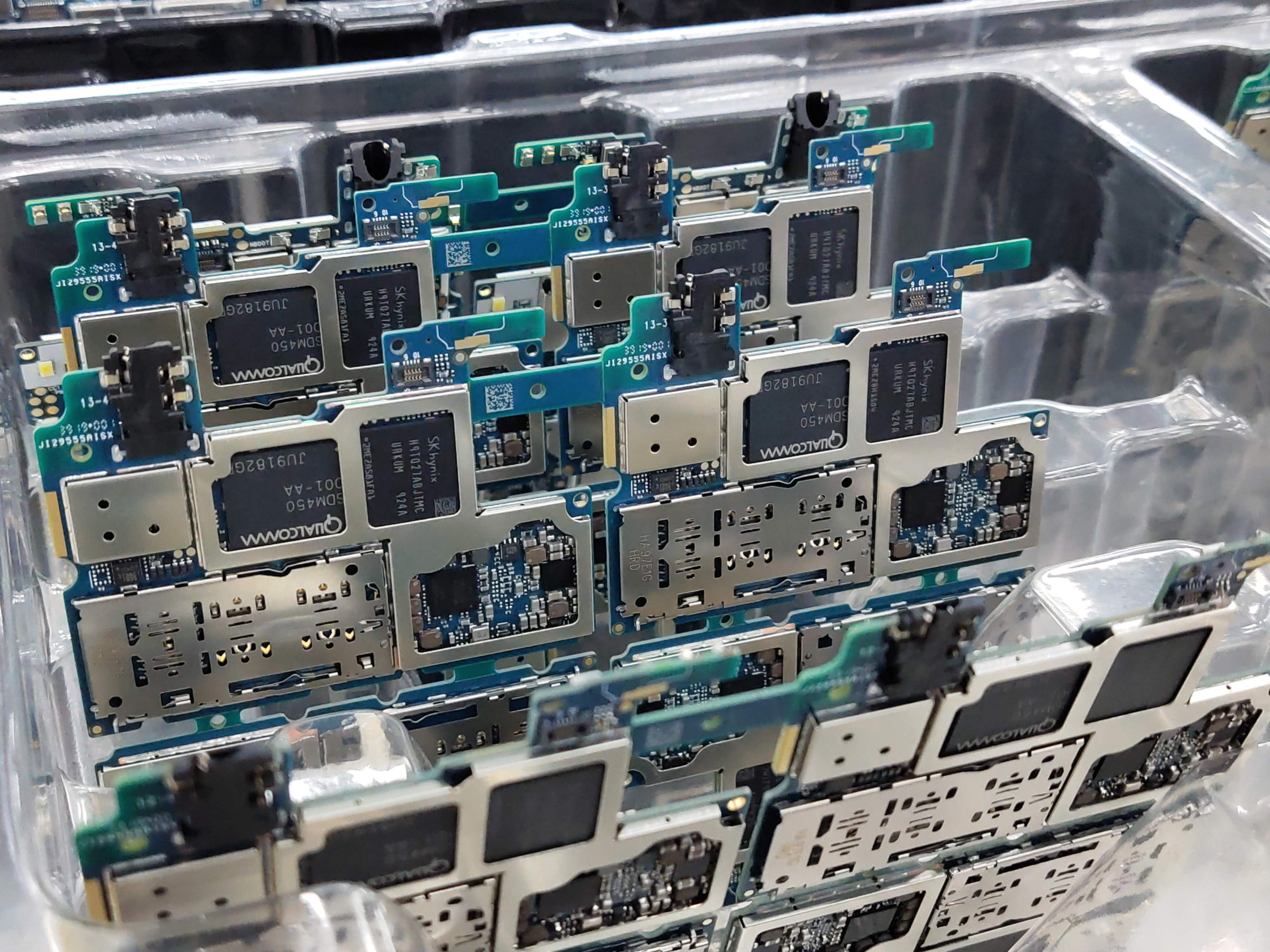
The resulting metal is used principally in compound semiconductor materials rather than conventional bulk metal applications. Gallium arsenide and gallium nitride are employed in radio frequency electronics, optoelectronics and high performance power devices, where their electrical and thermal characteristics can outperform silicon under particular conditions.
Only small quantities of gallium may be needed in each component, but semiconductor manufacture places tight requirements on purity and continuity of supply. A device process qualified around a particular compound semiconductor cannot substitute ordinary aluminium or another bulk metal simply because gallium becomes scarce.
Europe has consequently placed greater emphasis on diversifying sources of critical raw materials whose production is concentrated geographically. METLEN is positioning the Greek plant as a regional source produced from an established European industrial process rather than a wholly new mining chain.
Annual output of 50 tonnes is tiny beside aluminium, copper or steel production, yet gallium demand is measured on a correspondingly smaller scale. METLEN has previously said that capacity at that level could cover current European requirements, although semiconductor investment and changing device technologies could alter that balance before the plant reaches steady production.
Advance sales agreements reduce one of the commercial risks associated with building the facility. A critical materials project can have strategic value without generating an adequate industrial return if customers are unwilling to commit to future volumes or qualification work.
Long term agreements provide evidence of demand before capital has been fully deployed, while customers gain access to a prospective source outside the most concentrated parts of the existing supply chain. The Japanese contract also demonstrates that METLEN is targeting international buyers rather than reserving Greek output exclusively for Europe.
Export sales can strengthen utilisation and project economics, but contracted tonnage still depends on product qualification. Semiconductor material suppliers require tightly controlled impurities and consistent specifications, so the recovery and purification process must demonstrate repeatable output before customers can rely on it routinely.
Gallium recovery will also remain linked to the host refinery. Bauxite composition, alumina throughput and the chemistry of circulating process liquor all influence the stream from which gallium is extracted, making the new line dependent on the operating conditions of a much larger materials complex.
That integration can lower capital and feedstock requirements because METLEN does not need to establish an independent upstream mining operation. It also means the gallium facility has to operate around changes in the main alumina process rather than assuming a completely fixed raw material input.
The company is developing gallium as part of a broader critical and rare metals strategy within its metals division. Material previously present at low concentration in an existing refinery stream is being turned into a separate commercial product whose value comes from purity, scarcity and its role in specialised electronic materials.
With two customers committed before start-up, construction and process qualification now carry more immediate weight than market discovery. Commissioning, purity control and the ramp towards 50 tonnes a year will determine whether the Greek operation can convert advance contracts into a dependable industrial supply source from 2027.